Capita adds 500 staff to boost recovery on “unacceptable” NHS contract

By Tony Collins

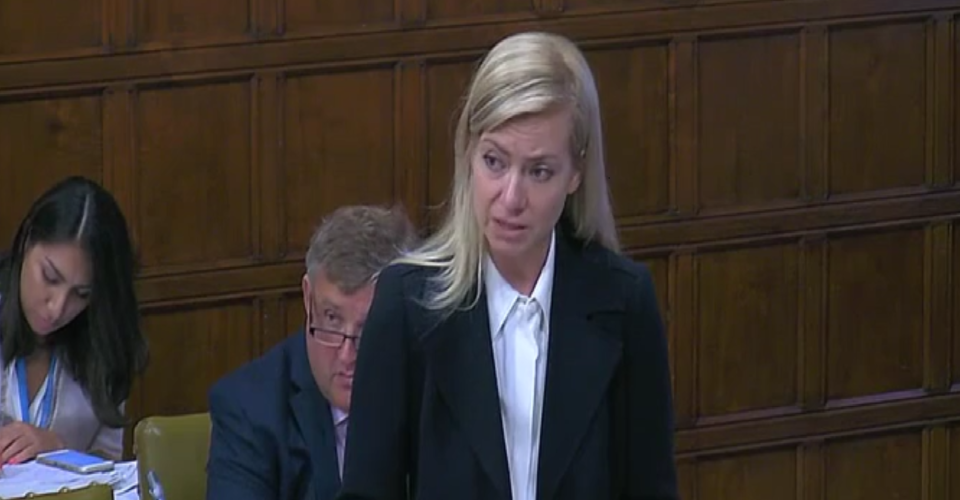
nicola-blackwoodNicola Blackwood, minister for public health and innovation at the Department of Health, yesterday described failings on Capita’s GP support services contract as “entirely unacceptable”.

Blackwood told MPs at an adjournment debate on failures relating to Capita’s £1bn Primary Care Support England contract,

“It was always clear that Capita’s services needed to be at least as good as those that they replaced… Capita put forward the most credible of any of the bids accepted on the short list, and at the time both the Department and NHS England had every confidence that the programme would be a success.

“However, it is evident that Capita was inadequately prepared for delivering this complex transition.”

Under its contract with NHS England, Capita is responsible for providing GP medical supplies such as needles and syringes, transferring medical records when patients switch GPs, payments to GPs and “performers list” applications.

Capita won the “Primary Care Support England” contract in 2015, amid unheeded warnings from some GPs that the private sector would be unable to successfully deliver the complexity of support services to GPs that were being provided by the NHS.

Blackwood said yesterday that MPs were “right to be concerned that the service provided by Capita under the primary care support services contract … has so far fallen well short of the standards that we expect, and GPs have borne the brunt of these failings, as we have heard today”.

She added,

“We need to make sure that GPs and their patients receive the service to which they are entitled.

“We want to restore acceptable services, and the contract contains sufficient financial incentives to ensure that Capita shares that goal, which is an important part of the contract and process.

“Let us be clear that the problems encountered with medical record transfers [in which thousands of records have gone missing, says the BBC] and overdue payments are entirely unacceptable. The Department shares that view.

“Both Capita and NHS England are co-operating fully with the Information Commissioner’s Office in order to address the implications for information governance, and I accept the need for urgent action in order to address the impact that this is having on patients and practitioners.

“That is why I have been holding regular meetings with Capita’s chief executive for integrated services, Joe Hemming, its new managing director for primary care support, Simon England, and NHS England’s national director for transformation and corporate operations, Karen Wheeler, and I will continue to hold such meetings.

“Both NHS England and Capita openly acknowledge that the service has not so far been good enough.

“NHS England has demanded and received rectification plans from Capita for the six most affected service lines, and has embedded a team of seven experts within Capita to support it as it resolves these issues…

“… it is also about having the right resources in the right place at the right time. Capita has informed me that it is adding around 500 more full-time equivalent staff to the service, at its cost, and that it is improving the training provided to ensure that new staff understand the importance of the service to both patients and practitioners.”

The minster denied that patients had been harmed (by GPs not having patient records).

“I know that these problems have caused great inconvenience and distress, but with reference to risk NHS England has assured me that it is not aware of any direct cases of patient harm that can be attributed to service issues.

“However, NHS England is working closely with regional and local medical directors so that we can be assured of patient safety. In particular, Dr Raj Patel, medical director of NHS England Greater Manchester, has joined the embedded team to ensure that clinical risks and concerns are appropriately addressed.

Backlogs

“The priority now is to deal with any backlogs, particularly with medical record requests, and to ensure that services are stabilised with the capacity to deal properly with new requests.

” There has been progress on that, which is encouraging. The backlog of medical record requests has reduced from 17,262 to 3,465 in the past two weeks. Capita assures me that it has an effective triage system in operation for new requests and is confident that the situate”ion will not recur. However, I will be monitoring the situation closely.”

Shortage of supplies

Blackwood continued,

“I am aware that some GPs were left short of basic supplies as a result, including syringes, and that they have had to source those from other suppliers at their own expense.

“NHS England tells me that it has reimbursed practices for any costs incurred from having to buy local supplies of needles and syringes.

Contact centre shortcomings

“I know that many of the members’ GP constituents have experienced frustration with Capita’s contact centre. I share those frustrations.

“Capita assures me that the contact centre has improved the way it responds to urgent queries by investing in more staff, improved processes and enhanced training. Capita is confident that these measures will deliver a quality service to customers. We will monitor its progress closely, including through meetings.

Late payments – compensation?

“I recognise that GPs, and ophthalmologists in particular, have suffered financial detriment as a result of late processing of payments.

“NHS England is working with Capita to explore what can be done to support affected stakeholders, and I have made it clear to Capita that I expect it to consider compensation as an option.”

Absence of medical records

Another Coventry MP Colleen Fletcher said that people who have requested a copy of a late relative’s medical records from the primary care support service have had to wait for more than twice the maximum 40 days that it should take to process such a request.

“It is utterly unacceptable to put anyone through that kind of delay, but it is inexcusable for it to happen to anyone who is already in an extremely vulnerable position following the death of a relative.”

New charges to the public for medical records

Geoffrey Robinson said,

“I have nothing against the private sector making profits—I am all for it—but the irony is that the companies cannot make a profit from a proper service, so they turn to such measures as imposing a £40 charge for access to a deceased relative’s records …

“They do not have to impose that charge. I think it used to be left to the GP’s discretion — but they now insist on it, and people have to pay postage and delivery charges on top, which is a disgraceful pursuit of short-term gain at the expense of the people they are meant to serve.”

Reinstate the old NHS support service?

Blackwood said,

“Some have suggested that the old model for provision of primary care support should be reinstated, but we must remember that it relied on localised services that did not connect with one another, with much duplication across processes.

“The quality of these services varied greatly—in some areas, it was outstanding; in others, it was quite poor. That was simply unsustainable.

“Furthermore, the system was unable to generate useful management information and so, honestly, issues such as the ones that we now face would be very unlikely to have surfaced. They would have gone unreported.

“A new model, with efficient and modernised processes, is the right approach to deliver to our primary care providers the service that they deserve.

“The Department and I will continue to closely scrutinise Capita and NHS England as they work to resolve current problems and build a quality service that is sustainable.”

A long way to go

“I acknowledge fully that there is a long way to go before the service can be considered acceptable and that Capita has much to do to earn the trust of practitioners and patients.

“This is clearly a live issue. I want to be clear today: I am listening. The issue is at the top of my priority list and will remain there until I am satisfied that an efficient and effective service is being delivered that meets the needs of patients and providers.”

Lessons

Coventry Labour MP Geoffrey Robinson, who secured the adjournment debate, told the minister,

“These contracts are gaily handed out to companies that do not have the skills, preparation or sheer commitment necessary to provide the service.”

He questioned whether the contract would make the intended 40% savings.

“… the irony is that we have ended up with a terrible service that is costing more than the previous service ever would, because the company was not properly prepared, did not have a commitment to providing the service, and was unable to do so, and because of the competing and irreconcilable claims about short-term gains in the form of profits and illusory savings for the health service…

“We should not have badly planned impositions from the private sector, which does not know what it is going to do or how to do it.”

He said that minsters and civil servants pride themselves on awarding a contract that they have won a hard-nosed negotiation.

 “We got them down from Y to X and we saved all this. It is great. We really screwed the private sector, didn’t we? That is all a total illusion.”

Labour MP Kate Green said that NHS England trialled the new system in west Yorkshire and it provided unsatisfactory. “Yet the contract was rolled out regardless.”

Savings?

Robinson said,

“How can the Minister talk of savings? How can any savings have been made when 9,000 patients records have been missing for more than two months, without which they cannot attend doctors surgeries? It is illusory to speak of savings.”

MPs to debate Capita NHS contract today

By Tony Collins

In the House of Commons today MPs will debate the Capita Primary Care Support Services contract.

It has been secured by Coventry North West MP Geoffrey Robinson, who wants GPs to be compensated for the failures arising from the outsourcing contract.

The debate comes a day after the BBC reported that “more than 9,000 patients’ records in Norfolk, Suffolk and Essex have gone missing” since Capita took on the task of transferring files.

As part of its contract Capita took on the job of transferring patients’ records, when people move from one GP to another.

A BBC survey of 78 GP practices showed that 9,009 records had been missing for more than two months.

Capita told the BBC it did not “recognise these claims”.

An NHS England spokesman said, “We know there have been serious issues with services delivered by Capita which have had an unacceptable impact on practices. We are ensuring Capita takes urgent steps to improve services.”

Patients “at risk”

Paul Conroy, a practice manager in Essex, has started a House of Commons petition on the delays, which has been signed by more than 3,000 people. It calls for an inquiry into the Capita contract and the impact it has had on GP practices.

“GPs rely on that full medical history in order to make key clinical decisions on patient care,” he said.

“If they can’t get hold of that physical record there could be vital information there could be vital information that puts a patient at risk.”

James Dillon, director of Practice Index – an organisation bringing together practice managers – told the BBC,

“GP practices are getting more and more frustrated by the missing patient records.

“Not only is this debacle putting the health of their patients at risk, it is putting added pressure on already stretched practices.”

In a statement, Capita said it had taken on the “challenging initiative” to streamline GP support services and there had been “teething problems”.

“[But] medical records are now being delivered securely up to three times faster than under the previous system,” it said.

“We do not recognise these claims regarding thousands of files being missing whatsoever.

“We request and move on average 100,000 files a week from multiple sites including GP surgeries and also third party run storage facilities which are contracted and managed by NHS England.”

GP magazine Pulse quoted MP Geoffrey Robinson as saying that the secretary of state should intervene directly “as this is extremely dangerous”. Robinson said that some medical records are not being delivered at all, or delivered late or delivered to the wrong practices.

Dr Richard Vautrey, deputy chairman of the British Medical Association’s GP Committee said that the problems arising from the outsourcing contract “are directly impacting on the ability of many GPs to provide safe, effective care to their patients in the area”.

He said, “They are in some cases being left without the essential information they need to know about a new patient and the tools to treat them.”

In August 2016, NHS England published the results of a User Satisfaction Survey of primary care support services over the previous six months. Only 21% of GPs were satisfied with the outsourced service, giving it an average overall score of 2.91 out of 10.

Lunacy?

An anonymous GP told Pulse how the problems are affecting him. He refers to the “performers list” that assures the public that GPs are suitably qualified, have up to date training, have appropriate English language skills and have passed other relevant checks such as with the Disclosure and Barring Service and the NHS Litigation Authority.

Said the GP,

“I moved 12 months ago and still haven’t been able to transfer performers list. I am 6 months late for my appraisal and unemployable except for my current salaried job as a result.

” It would have been easier to emigrate. The department responsible for the performers list at Capita is uncontactable except via a national email that isn’t responded to and a phone line that isn’t able to put you through to anyone.

“… As it is it’s virtually impossible to move region if you a UK GP. I am basically a slave bonded to a geographical region, forbidden to move house and work anywhere else other than short periods. Totally at the mercy of a faceless uninterested bureaucracy incapable of helping. Lunacy and utterly depressing. Why the hell did I become a GP? I curse the day.”

“I urgently need my medical records”

A patient who wrote to Campaign4Change said,

“My medical records were requested at the beginning of June 2016 when I changed to another health centre about 2 miles away.

“[I] phoned Capita today and was told there was no record of this request and to get my solicitor to contact them. Then they put the phone down. I don’t have and cannot afford a solicitor.

“I urgently need my medical records with my new doctor and am feeling helpless and extremely stressed by this.”

Pulse magazine reported yesterday (7 November 2016) the results of a snapshot survey of 281 GP practices carried out by the BMA’s GP Committee. It found:

  • 31% of practices had received incorrect patient records;
  • 28% failed to receive or have records collected from them on the date agreed with Capita;
  • 58% reported that new patient registrations were not processed within the required three days.
  • 81% of urgent requests for records were not actioned within three weeks.

GP practices also noted a reduction in the number of incorrect payments and fewer delays in registrations of the “performers list”.

Comment

It would be a pity if MPs today, in criticising Capita, lost sight of the bigger picture: how such outsourcing deals are considered and awarded.

The root of the problem is that before the contract is awarded officials concentrate their attention on the minutiae of the benefits: exactly how much will be saved, and how this will be achieved.

Pervading the pre-contract literature and discussions are the projected savings. This is understandable but wrong.

It’s understandable because it’s the projected savings that justify the sometimes-exciting time and effort that go into the pre-contract negotiations and discussions.

Large amounts of money are at stake. For officials, the pre-contract work can be a euphoric time – certainly more interesting than the day-to-day routine.

But what happens to negotiation and discussion of risk?

Risk is a table or two at the back of the reports. It’s a dry, uninspiring vaguely technical and points-scoring analysis of the likelihood of adverse events and the seriousness of the consequences materialising.

Sometimes the most serious risks are highlighted in red. But there’s always a juxtaposed “mitigation” strategy that appears to reassure. Indeed it appears to cancel out any reason for concern.

Risk is mentioned at the back of the internal pre-contract because it’s a cultural anathema. It’s the equivalent of visits by Building Regulations inspectors at a theme park under construction.

Who wants to talk about risk when a contract worth hundreds of millions of pounds is about to be awarded?

A bold official may dare to point out the horror stories arising from previous outsourcing contracts. That hapless individual will then be perceived by the outsourcing advisory group to have a cloud over his or her head. Not one of us.

And the horror stories will be dismissed by the officer group as the media getting it wrong as usual. The horror stories, it will be explained, were in fact successes.

Even when big public sector outsourcing deals end in a legal action between the main parties, officials and the supplier will later talk – without explanation or detail or audited accounts –  of the contract’s savings and overall success.

We’re seeing this on the Southwest One outsourcing/joint venture contract.

No doubt some will claim the GP contract support contract is a success. They’ll describe problems as teething. Marginalise them. And later, when it comes to the awarding of future contracts, supporters of the GP outsourcing contract will be believed over the critics.

And so the cycle of pre-contract outsourcing euphoria and post-contract rows over failure will be repeated indefinitely.

It would be of more use if MPs today debated the role of NHS England in the award of the GP support contract.

Blaming Capita will do little good. The supplier will face some minor financial penalties and will continue to receive what it is contractually due.

Countless National Audit Office reports show how contracts between the public and private sectors, when it comes to the crunch, strongly protect the supplier’s interests. The public sector doesn’t usually have a leg to stand on.

A focus today on Capita would be a missed opportunity to do some lasting good.

NHS England letter on Capita contract – September 2016

Capita NHS contract under scrutiny after “teething” problems – June 2016

GPs decry Capita’s privatised services as shambles – The Guardian

Did NHS England consider us in the Capita take-over?

NHS England vows to hold Capita to account

Capita mistakenly flags up to 15% of GP practice patients for removal  

Capita primary care support service performance “unacceptable”


Well done to Unite for challenging council’s joint venture “savings” claim

By Tony Collins

When councils make unexplained (and self-congratulatory) claims that they have made savings at the end of a joint venture, it will usually raise a series of questions.

So well done to Nigel Behan of the Unite union for putting a series of FOI questions to Taunton Deane Borough Council about its joint venture with IBM, as part of Southwest One.

In an “Efficiency Plan” published on its website last month, Taunton Deane
Borough Council announced that it was “part of the ground-breaking Southwest
One shared services joint venture partnership, between Somerset County
Council, Avon and Somerset Police and IBM”.

“This ten year partnership, which is now drawing to a close, has delivered significant savings to the Council and has made an important contribution to our finances.”

Unite is not so sure. Its officials believe the joint venture has, for Taunton Deane,  broken even at best. Its FOI questions to the council:

  • Please will you provide the unitary charge payable by TDBC to
    Southwest One/IBM for each financial year from 2007-2008 to date?
  •  For each financial year since 2007-2008 what was the cost of
    letting and managing the contract – including legal costs, procurement costs etc. etc.?
  • Re IT – software, hardware and peripherals. What was the value in 2007 of all IT (Hardware, software, peripherals and infrastructure) and what is the value of these assets now, ie what has been the depreciation on this asset class since 2007? What will cost of replacing these?
  • What are the net savings achieved by Southwest One for Taunton Deane Borough Council for each financial year since 2007-2008? Will you define “significant savings” (provide a measurable test)?

 Comment:

Taunton Deane Borough Council’s claim of savings was imperious, self-serving and unexplained. The council’s Efficiency Plan looks like a glossy commercial brochure that local residents have had no option but to pay for.

Were a newspaper to make a controversial claim without any explanation or justification, its readers would be entitled to question the article’s veracity.

Taunton Deane’s joint venture peripherally involved a costly legal action between the two main parties to the joint venture: IBM and Somerset County Council.

To make a claim of savings in such circumstances is like officials claiming a mission to space was a success even though the spacecraft blew up.

No rational judgement can be made without a detailed weighing up of the costs and benefits.

Even then the costs and benefits may be subjective. What costs have been excluded from the “savings” figure? What were the baseline costs on which the savings have been measured? And were those baseline figures audited as accurate  – or were they intelligent guesses? Have any benefits been double-counted? Are the benefits audited?

Without people like Nigel Behan and Somerset campaigner Dave Orr, and organisations like Unite, councils would get used to saying publicly whatever they liked, possibly without challenge.


Vodafone’s apology for poor customer service – a template for Whitehall?

By Tony Collins

In response to Ofcom’s fine of £4.625m, Vodafone has published a detailed and contrite apology  – albeit one that blamed computer systems more than senior management for a botched data migration exercise.

Nothing similar has been issued by a central government department, even after a major failure such as HMRC’s loss of 25 million records, or the DWP’s failure to provide timely benefits to people most in need of them, particularly the disabled.

Vodafone needs customers to stay in business. So an apology that explains in general terms what went wrong may be seen by some of its customers as a sign of remorse.

The Vodafone apology could be a template for government departments that tend not to apologise for anything that goes wrong, largely because they don’t have to.

This was Vodafone’s apology:

“Vodafone UK today issued its response to the Ofcom investigations into compliance matters related to Pay As You Go (PAYG) disconnections between December 2013 and April 2015 and general complaints handling between 1 January 2014 and 5 November 2015.

“The company also explained the background to the errors identified by Ofcom and set out the actions taken since to address the concerns raised.

“We deeply regret these system and process failures. We are completely focused on serving our customers: everyone who works for us is expected to do their utmost to meet our customers’ needs, day after day, and act quickly and efficiently if something goes wrong

“It is clear from Ofcom’s findings that we did not do that often enough or well enough on a number of occasions. We offer our profound apologies to anyone affected by these errors.

What happened – and why

“The matters under investigation were a consequence of errors during a complex IT migration which involved moving more than 28.5 million customer accounts and almost one billion individual customer data fields from seven legacy billing and services platforms to one, state-of-the-art system.

“The IT project began at the end of 2013 and was the largest of its kind ever undertaken by Vodafone anywhere in the world.

“Despite multiple controls in place to reduce the risk of errors, at various points a small proportion of individual customer accounts were incorrectly migrated, leading to mistakes in the customer billing data and price plan records stored on the new system.

“Those errors led to a range of different problems for the customers affected which – in turn – led to a sharp increase in the volume of customer complaints. This was the focus of the Ofcom investigation under General Condition 14.4.

“We accept that numerous customers were frustrated and affected by these issues and accept that we were not as effective as we should have been in handling and resolving customers’ issues fairly, consistently and in a timely manner.

“As Ofcom confirms, we were working to address the issues from October 2014 but also accept that that the steps taken weren’t effective or sufficient until November 2015.

The PAYG top-up error

“From late 2013 until early 2015, a failure in our billing systems – linked to the migration challenges explained above – meant that customers who had topped up a PAYG mobile which had been dormant for nine months or more received a confirmation message that the credit had been added to their account; however, the mobile in question continued to be flagged as disconnected on our systems.

“This meant that customers who had paid Vodafone in order to resume using a previously inactive mobile were led to believe – incorrectly – that they would be able to make calls, send texts and use data on Vodafone’s network.

“Affected customers continued to have access to the emergency services as all charged mobile phones can dial 999 via any mobile network, including when out of credit.

“This was a serious error that affected a total of 10,452 PAYG customers and forms the focus of the Ofcom investigation under General Condition 23.2 and 11.1.

“Unfortunately, as the circumstances of the IT failure in question were very unusual (at the time, less than 0.01% of all Vodafone UK PAYG customers’ phones were inactive for more than nine months before being reactivated), the teams responsible for the day-to-day operation of the relevant areas were not fast enough in identifying the issue and did not fully appreciate its significance once they did so.

“Once the issue was finally escalated to senior management there was a prompt, full and thorough investigation and every effort was made to fix the underlying failure and to refund in full all affected customers as quickly as possible.

What have we done to put this right?

“We have fully refunded or re-credited 10,422 customers out of the 10,452 affected. The average refund per customer was £14.35.

“We were unable to track down the remaining 30 customers affected. As we cannot refund those customers and have no intention of profiting from this issue in any way, we have instead made a donation of £100,000 to a number of UK charities.

“The IT failure involved was resolved by April 2015 – approximately 11 weeks after senior managers were finally alerted to it – with a system-wide change implemented in October 2015 that – as Ofcom acknowledges – means this error cannot be repeated in future.

“More broadly, we have conducted a full internal review of this failure and, as a result, have overhauled our management control and escalation procedures. A failure of this kind, while rare, should have been identified and flagged to senior management for urgent resolution much earlier.

Investment in improving our customer services

“Our new billing and customer management system is designed to give our customers the best experience possible. It puts the customers in control of every aspect of the Vodafone products and services upon which they rely.

” It also enables our customer service and retail employees to respond quickly and efficiently to changing customer needs and swiftly put things right if they go wrong.

“All of our consumer customer accounts have now been migrated successfully to the new system with a number of positive effects as a consequence.

“For example, there has been more than 50% reduction in customer complaints since November 2015 and our Net Promoter Score – which measures the extent to which our customers would recommend Vodafone to others – has increased by 50 points.

“We fully appreciate the consequences for our customers of various failures in the migration process over the last three years.

“We have sought to remedy these through an additional £30 million investment this year in customer service and training including hiring an additional 1,000 new UK-based call centre personnel and more than 190,000 hours of training to improve how we identify and resolve individual customer problems.

“We are also working with the Ombudsman to ensure that customers are able to escalate problems more effectively if we are unable to resolve these within our own systems quickly.

“This has been an unhappy episode for all of us at Vodafone: we know we let our customers down. We are determined to put everything right. We are also confident that our customers are already beginning to see the benefits of our substantial investment in new systems designed to meet their needs much more effectively in future.”


Comment:

The fine of £4.625m is the largest Ofcom has levied against any telecoms supplier.

No regulator exists that can force an admission of failure from any central government department, let alone extract an explanatory apology.

Margaret Hodge, former chairman of the Public Accounts Committee, concludes in her wonderful book Called to Account”

“There is a mind-boggling waste of taxpayers’ right across government.”

And not an apology in sight.

Botched IT migration – Computer Weekly


Long may Government Digital Service bring about “creative tension” in Whitehall

By Tony Collins

In a report published yesterday (25 October 2016) the National Audit Office said it will shortly be undertaking a review of the Government Digital Service.

It will study GDS’s “achievements and the  challenges it faces, looking in particular at whether the centre of government is  supporting better use of technology and business transformation in government”.

It mentioned its review of GDS in a report on Progress on the Common Agricultural Policy Delivery Programme. Among other things the report looked at the IT that is supposed to support payments of farmer subsidies.

With GDS’s help Defra’s Rural Payments Agency adopted an agile approach to paying subsidies but the two parties fell out and GDS stopped working on the programme.

The NAO’s report suggests that the Rural Payments Agency is glad to be rid of GDS.

“The GDS no longer has significant involvement in the Programme and the Rural Payments Agency told us it has not sought any further support.

“Its distance from the Programme has allowed the Department [DEFRA] to shift from a focus on agile and digital delivery to an approach that combines agile software development with programme management and governance arrangements with which the RPA is more familiar.”

Government Computing has a good analysis of the NAO report.

Mandarin power

Francis Maude, meanwhile, has warned that the work of GDS, which has helped to “stop the wrong things happening”, is being undermined, reports Public Finance.

Maude, who set up GDS in 2011, blamed mandarins who were trying to reassert their autonomy.

Maude said that developments such  as controls on spending and improvements in service standard assessment processes do not happen spontaneously.

“You have to drive it centrally, and departments, separate ministries and separate agencies prize their autonomy and they will always want to take it back, and that is now happening.

“Just at the moment when the UK has just recently been ranked top in the world for digital government, we are beginning to unwind precisely the arrangements that had led to that and which were being copied in America and Australia and also some other countries as well,” said Maude.

“This is, for me, a pity – there is a sense these old structures in government, which are essentially about preserving the power of the mandarins, are being reasserted.”

He said there was a “continuing need for very strong central strategic leadership with the power backing it up to stop the wrong things happening.”

Tom Kibasi, director of the Institute for Public Policy Research, said any dismantling of GDS illustrated “government’s extraordinary propensity to self harm”.

He said it was very odd that GDS was being “scaled back and unwound at just the moment that it appears to be successful”.

In August 2016 Maude warned that it would be a “black day” if GDS were dismantled.

That said, GDS has its critics.

Comment

A clash of cultures between GDS and the Rural Payments Agency made it almost inevitable that the two sides would fall out. This is also what happened between GDS and the DWP.

Agile-wedded idealists?

If some senior civil servants had their way, particularly at the DWP, GDS would slowly lose its identity and its staff gradually dispersed throughout the civil and public services.

Clearly civil servants at the Rural Payments Agency looked at GDS  as comprising mostly agile-wedded idealists obsessed with technological innovation rather than paying subsidies to farmers.

But long before the arrival of GDS, the RPA had a history of IT failure. Perhaps the RPA would rather be left on its own to fail without GDS’s help?

The latest NAO report is a little more positive about the RPA’s achievements than some past reports.

But this week’s Farmers Weekly, which has reported extensively on delays of correct subsidy payments to farmers, quoted the National Farmers Union as saying that problems from 2015 claims were still far from over.

The future of GDS?

How easy is it for senior officials in any large central department to work closely with the Government Digital Service?

Departments – particularly HMRC and the DWP – cherish their autonomy, so GDS is seen by some permanent secretaries as an unnecessary interference.

And when it comes to the IT of central departments, GDS has no clear role.

But GDS’s creation was a good idea. Without it, departments will be left alone to continue IT spending on a vast scale.

GDS’s admittedly brief challenge at the Rural Payments Agency and at the DWP on the Universal Credit IT programme has, arguably, slightly modernised IT approaches within those departments.

And even if the costs of big Whitehall IT contracts have not changed much, there’s no doubt that the public face of government IT has improved noticeably (eg using digital passport photos for online driving licence renewals),

The more its people are resented by high-ranking civil servants, the better job GDS is probably doing on behalf of the public.

Consensus can sometimes mean complacency. Long may GDS’s relationship with departments be characterised by a state of creative, noble tension.

National Audit Office report “Progress on the Common Agricultural Policy Delivery Programme”.

GDS’s departure from CAP programme leads RPA to ditch agile approach – Government Computing

Is Sir Humphrey trying to kill off GDS and the innovations it stands for?


Post Office prosecutions plummet

By Tony Collins

post officeThe number of Post Office prosecutions of postmasters has fallen sharply in recent years, from dozens a year to single figures, according to figures released under the Freedom of Information Act.

The Post Office has prosecuted subpostmasters in the past because of false accounting or theft after the Post Office’s Horizon IT system showed discrepancies in the accounts.

The law allows the Post Office to act as investigating authority – and prosecuting authority – when it suspects losses shown on the Horizon system are due to dishonesty by subpostmasters who run local post offices.

Some sub-postmasters have been jailed and some have been made bankrupt or ruined financially after the Post Office required that they repay losses shown on Horizon.

More than 150 subpostmasters are in the midst of a collective legal action against the Post Office. The action is being coordinated by the Justice for Subpostmasters Alliance. The Post Office is fighting it.

Subpostmasters say the losses were the result of faults in the Horizon or associated equipment and communications, which the Post Office denies. Subpostmasters say that evidence of discrepancies is not the same as evidence of theft.

These are the figures for Post Office prosecutions in the past six years:

post-office-prosecutions

The Post Office also gave figures for the number of postmasters suspended:

subpostmasters-suspended

Comment

In its Freedom of Information response the Post Office gave no reason for the plummeting number of prosecutions.

One possible factor is that the Post Office might have re-examined its approach to prosecutions. In 2013 forensic accountants Second Sight began reporting on complaints by about 150 subpostmasters that they were being incorrectly prosecuted or asked to repay money they did not owe.

In 2014 the BBC reported on the contents on of a leaked Second Sight report  that said Post Office investigators did not look for the root cause of the errors – and instead accused the sub-postmasters of theft or false accounting.

The Post Office has issued a point-by-point rebuttal of Second Sight’s reports.

In a separate blog post, I have suggested that the Post Office settle the Justice for Subpostmasters Alliance’s legal action – which would mean compensating the individuals and families involved – to avoid protracted legal proceedings causing more suffering.

Post Office Horizon IT – for Julian Wilson time ran out on justice

Justice for Subpostmasters Alliance

Second Sight’s report


Post Office Horizon IT – for Julian Wilson time ran out on justice

By Tony Collins

Julian Wilson was a subpostmaster, one of the founding members of Justice for Subpostmasters Alliance.

He and his wife Karen had their lives turned upside down after the Post Office’s centrally-run Horizon system, which was installed at the local branch they ran, showed unexplained losses.

He was one of more than 150 subpostmasters across the country whom the Post Office has blamed for losses shown on Horizon.

Subpostmasters run smaller post offices under a contract issued by the Post Office. Under their contracts, subpostmasters are personally responsible for deficits at their branches.

MPs and TV documentaries have raised concerns about whether the Post Office has accused subpostmasters of criminal actions when technical faults might have caused the losses.

The concerns of MPs were reinforced by the findings of forensic accountants Second Sight. At the request of MPs, the Post Office brought in Second Sight to investigate each of the subpostmaster complaints.

The Post Office criticised Second Sight’s findings and said there was no evidence that faults with the computer system caused money to go missing. “There is evidence that user actions, including dishonest conduct, were responsible for missing money,” said the Post Office.

Julian Wilson

TV investigative reporter Nick Wallis, who has reported on the Post Office Horizon IT system for the BBC’s The One Show, and has followed the story for many years, has written a moving post on the death of Julian Wilson who fought for justice for as long as he was able.

On his blog, Wallis says of Julian, “He was, I suppose, what we journalists call a contact.

“But his gentle manner, generous spirit and calm good humour made me think of him as more than that.”

Julian was prosecuted by the Post Office for false accounting. He pleaded guilty and went to his grave a near-bankrupt convicted criminal, says Wallis.

When Julian died, his conviction was one of 20 subpostmaster cases being considered by the Criminal Cases Review Commission.

Technical fault or crime?

More than 11,000 post offices have used Fujitsu’s £1bn Horizon system for branch accounting and rarely have had problems. At the close of each day, the system has balanced money coming in from customers and money going out.

If the system showed a shortfall, subpostmasters had few options: make up the deficit out of their own money, sign off the accounts as correct, or refuse to sign off – which might have meant closing the post office (and upsetting customers) while a financial audit took place.

The Post Office prosecuted subpostmasters who signed off the accounts as correct knowing there were unexplained losses; and it prosecuted in some cases for theft.

Dozens of subpostmasters have been jailed, made bankrupt or had their lives ruined after the Post Office took action against them in the light of discrepancies shown on Horizon.

Tears

Julian Wilson was determined to clear his name.

Wallis interviewed him in December 2014 alongside his wife Karen in a village hall in Fenny Compton, where the Justice for Subpostmasters Alliance met for the first time in 2009.

“Karen stood there with tears streaming down her face as Julian explained in his measured, Hampshire burr how problems with the computer system at their Post Office in Astwood Bank had caused their lives to fall apart.”

Wallis says there was never a trace of bitterness about Julian. “He accepted things with great patience even though he was still in danger of losing his house because of the Post Office’s pursuit of him.”

Julian found out he had terminal cancer towards the end of last year. “This summer he deteriorated rapidly,” says Wallis.

One of the comments on Wallis’s blog says of Julian,

“He carried on campaigning against the Post Office until he had no strength left to fight and I made him a promise – in the last few days of his life – that I would keep going along with the JFSA [Justice for Subpostmasters Alliance] until we got our long-overdue justice.

“What an absolute tragedy that such a good man should be taken from his beloved wife Karen and wonderful daughter Emma before his name had been cleared.”

Another said,

“RIP Julian – I am so sorry that we could not let you leave this world with the vindication you will certainly, but now posthumously, receive.”

Comment

Subpostmasters represented by Justice for Subpostmasters Alliance have issued a writ against the Post Office and the legal action is well and truly underway – but Julian Wilson’s untimely death shows that not all the individuals involved in complaints against the Post Office can afford the time to wait for justice.

In some cases, complaints go back at least eight years – so far.

The Post Office’s argument all along has been, in essence, that there is, and never has been, any evidence that Horizon caused the losses.

But neither is there evidence that more than 150 subpostmasters stole the money in question.

Institutional blindness?

In a BBC Panorama documentary on complaints about Horizon, Ian Henderson, a Second Sight investigator, told reporter John Sweeney,

“Horizon works reasonably well if not very well most of the time. In any large IT system it is inevitable that problems will occur.

“What seems to have gone wrong within the Post Office is a failure to investigate properly and in detail cases where those problems occurred. It’s almost like institutional blindness.”

The Post Office denies this and maintains that it has investigated each case thoroughly.

What strikes me, though, is the insularity of the Post Office’s case.

Crashes

Imagine if airlines and aircraft manufacturers were allowed to be the judge of whether pilots were to blame after major incidents.

The RAF’s hierarchy wrongly blamed two pilots for the crash of a Chinook helicopter on the Mull of Kintyre in June 1994. It took 17 years for the families of the dead pilots to win justice for their dead sons.

It was only after numerous independent inquiries, Parliamentary hearings and leaks of a mass of material about problems with the helicopter’s computer systems that the RAF’s finding of gross negligence against the two pilots was quashed.

The case showed that, despite the sincerely-held beliefs of two air marshals that the pilots were, without any doubt, at fault, the RAF was eventually found to have failed to take sufficient account of the possibility of a technical malfunction, or a chain of events involving a technical malfunction.

The restoration of the pilots’ reputation came about not because the RAF’s hierarchy changed its mind about the pilots’ gross negligence, but because there was a change of government in 2010 and setting aside the finding against the pilots was the will of Parliament.

The then Coalition government decided that a technical cause of the crash could not be ruled out.

Of course there was no air crash in the case of the subpostmasters. But there was a similarity: the RAF and Post Office are State institutions that dismissed complaints about their equipment and blamed the system “users”, with devastating consequences for the reputations and lives of the families involved.

There is also a fundamental difference: a regulatory authority always undertakes investigations into air crashes.

Airlines and aircraft manufacturers are not the legal investigating authority. In the UK it is the Air Accidents Investigation Branch. In its investigations into possible equipment failings, the AAIB has powers set out in law [including the Civil Aviation (Investigation of Air Accidents and Incidents) Regulations 1996] to require information from airlines and manufacturers.

In the case of the subpostmasters, the Post Office was the owner of the computer equipment that showed the losses; it was responsible for investigations into that equipment; and it was the prosecuting authority.

Contradictory evidence

There have been numerous commercial air crashes where regulatory investigating authorities have uncovered evidence that contradicted evidence from the airlines or manufacturers.

Sometimes it took regulatory authorities several years to discover the truth. Eventually they found technical faults where manufacturers had said initially there were none.

In the case of the Post Office Horizon controversy, there are no regulatory investigating authorities.

When accused subpostmasters have blamed the system for the losses, they have been unable to rely on an Air Accident Investigation Branch to produce a final report that could not be contested by the airline or manufacturers.

The Post Office could argue (rightly) that it operates under completely different laws, rules and regulations to the legal and regulatory framework that governs investigations of air crashes. In the Post Office cases, no public safety is involved.

But the Post Office has had a succession of serious incidents: the lives of 150 or more subpostmasters and in many cases their spouses have been thrown into turmoil.

Is this not a succession of serious incidents in which none has been the subject of an inquiry backed by a regulatory authority?

It’s a credit to the tenacity of Justice for Subpostmasters Alliance that legal proceedings have been issued. But the wheels of justice turn slowly. With appeals, the case could drag on for years.

More uncertainty and suffering for the families involved?

It’s also obvious that the Post Office has deeper pockets than those of individual subpostmasters.

That’s one reason why, after serious air incidents, the independent investigating authorities have complete control over their inquiries. Air accident investigators recognise that lawyers for airlines and manufacturers may seek to defend their organisations after a serious incident.

Sometimes air accident investigators will conduct parts of their investigations without relying on evidence from the manufacturers.

In the case of the accusations against subpostmasters, what powerful independent organisation exists to challenge the evidence of the Post Office?

The Post Office was able to commission Second Sight and later to discontinue its contract. The Post Office was also able to issue a point-by-point denial of Second Sight’s findings.

Imagine an airline or aircraft manufacturers being able to order independent investigators to discontinue their inquiries after a succession of serious incidents?

The Post Office said in response to Second Sight’s reports that it was “unable to endorse” the findings. After serious air incidents it would not matter if the airline or manufacturers disputed the report of regulatory authorities. The regulator’s report would stand.

Fairness?

The Post Office has a duty to prosecute subpostmasters who steal. But could it also do more to recognise that the imbalance of power and resources puts subpostmasters who have gained nothing – and lost much as a result of losses shown the system – at a severe disadvantage?

As the prosecuting authority, and the investigating authority, the Post Office is not open to serious challenge except through the courts where it has the money and resources to sustain costly and protracted battles.

Is this fair? Is this just?

The Post Office has every legal right to carry on exactly as it is, but could it not instead consider the cases on the basis of “benefit of doubt?”

In other words concede that there is doubt over whether subpostmasters had criminal intent?

Taking into account ordinary fairness and magnanimity in the face of its extraordinary power, the Post Office could settle the cases now, and not put the families of so many subpostmasters through any more suffering.

Nick Wallis’ post on Julian Wilson

Post Office faces group litigation over Horizon IT as subpostmasters fund class action

Justice for Subpostmasters Alliance

Jailed and bankrupt because of “unfit” Post Office IT? What now?

Communication Workers Union warns subpostmasters of flaw in Post Office Horizon accounting system

Horizon not fit for purpose at some branches?

Labelled as criminals – Telegraph

Jonathan Green-Armytage

By Tony Collins

Jonathan Green-Armytage, one of the most helpful and charismatic people I have had the pleasure to know, has died. He was a journalist at Computer Weekly in the 1980s and 1990s and later joined Gartner.

After I joined Computer Weekly he gave me a unique perspective on the ICT industry. He was proof of the old adage that the better you understand a complex subject the more simply you can explain it.

An Oxbridge classicist, he understood the origins of English well enough to dislike long words where short ones would do; and I often think of JGA – as we used to call him – when I’m tempted to use an abstract instead of a concrete word or phrase.

JGA is a reminder that saying things simply takes time and thought. [Bernard Shaw said he didn’t have the time to write a short letter.]

I’ll also remember JGA for his gruff-gleeful humble-professor explanations that could make anyone smile appreciatively.

John Riley, formerly Deputy Editor of Computer Weeky, has written a wonderfully memorable obituary. Sorry JGA – I couldn’t resist “wonderfully memorable”.

Jonathan Green-Armytage

“Teething” problems on Capita’s NHS contract turn more serious

By Tony Collins

capitaA senior official at NHS England has said that problems on a contract to outsource GP support services to Capita have “put patients at risk”, according to GPs magazine Pulse.

In June 2016 NHS England said problems on Capita’s £330m seven-year contract to provide primary care support services to GPs were “teething”.

The contract started in September 2015.

Directors at NHS England’s September board meeting said that problems with Primary Care Support England had ‘escalated’ this summer and that the problems were ‘creating some risks for patients’.

Karen Wheeler, NHS England’s national director for transformation and corporate operations, is reported by Pulse to have told the board,

“I just want to recognise that obviously this has impacts for users, which include of course primary care contractors – GPs, ophthalmic and dental practitioners – and recognise that that’s difficult for all those users, and indeed creating some risks for patients as well.

“So we are doing everything we can to make sure that we escalate, and address the risks particularly for patients, and we will be communicating with practitioners how we are planning on, with Capita, to try to improve services as quickly as possible.”

Problems include undelivered patient notes, which has led to GP practices chasing records. There have also been delays in GP payments and clinical supplies.

Angry GPs

NHS England’s chairman Professor Malcom Grant has angered some GPs by praising NHS England’s directors, and their teams, for the “huge amount of work” they have put in “trying to ensure people aren’t harmed by this at all.”

Pulse quotes Professor Grant as saying,  “As you know the board takes this extremely gravely. When we say unacceptable, we mean unacceptable. I think we need to pay tribute to you [Karen Wheeler] and the team for the huge amount of work that has gone into trying to ensure that people aren’t harmed by this at all.”

A Capita spokesperson told Pulse: ‘Across all PCSE [Primary Care Support England] services our focus is to ensure that GPs and primary care providers are supported so they can concentrate on patient care.

“We fully recognise that the administrative services we provide play a key role in supporting primary care providers and ensure that urgent work is always treated as a priority.

“We have openly apologised for the level and varied quality of service we have provided across a number of PCSE services. As NHS England acknowledges, we are working very closely with them, supported by their subject matter experts, to implement step changes to improve current services.”

Responses to the article on Pulse’s website criticised NHS England’s chairman for praising his officials when it was NHS England that had made the decision in the first place to outsource GP support services.

One comment: “Apologies aren’t worth anything currently. We are struggling at [GP] practice level and NHSE [NHS England] don’t give a damn.”

Another said, “So ‘hubs’ and combining ‘back office’ functions not always the cost saving, efficiency panacea then… Let’s hope we learn the lessons and value our ‘back office functions’ more highly.”

An anonymous NHS manager said the decision to outsource to Capita had been taken “behind closed doors, without any meaningful staff consultation and with zero knowledge of what primary care support services actually do”.

The manager added,  “NHS England is part of the problem. It’s about time they were held to account.”

Capita’s share price is currently less than half its 52-week high, for a range of reasons.

Record one-day fall in Capita share price – will customers care?

By Tony Collins

The share price of outsourcing specialist Capita fell 27% yesterday, a record one-day fall for the company. It was down a further 5% this morning (10.30 am, 30 September 2016).

The company said in a regulatory statement yesterday it is taking immediate steps to reduce the cost base in its underperforming businesses, which should benefit its 2017 results.

Some customers may be entitled to ask whether the transformation-based outsourcing services they are buying from Capita will be affected by any of the company’s financial pressures.

In local government Capita has what it calls “transformational partnerships” with Sheffield City Council, Southampton City Council, London Borough of Barnet, Blackburn with Darwen Council, North Tyneside, West Sussex County Council and Oxfordshire County Council.

Capita also has a joint venture agreement with Birmingham City Council, in a partnership that goes by the name of “Service Birmingham”.

Capita’s regulatory announcement yesterday said “our performance in the second half of the year to date has been below  expectations, as a result of a slow-down in specific trading businesses,  one-off costs incurred on the Transport for London (TfL) congestion charging contract and continued delays in client decision making”.

The company’s trading update said,

“Capita is taking immediate steps to reduce the cost base in the underperforming businesses, which should benefit 2017.”

Capita expects that capital expenditure will be lower than last year.

Outsourcing advocates may see the slow-down as temporary problem for Capita – and indeed the company has announced £949m of “major contract wins in the year to date,  including being recently selected by Three as the preferred bidder for a contract to provide customer management services in the UK, which is expected to start in 2017”.

It added, though, that “revenue from new major sales in the second half of this year is likely to be lower than expected, due to continued delays in decision making and lower conversion of our pipeline”.

Other observers of the outsourcing market may wonder whether major suppliers will always have enough margin to transform a customer’s business, including big new investments in ICT, while continuing to run the client’s operations successfully.

In yesterday’s trading update, Capita referred to problems on two contracts, one with Transport for London and another with the Co-op Bank. It said:

“We have experienced delays on the implementation of new IT systems on the  Transport for London (TfL) congestion charging contract.

“As a result, we expect  to incur between £20m and £25m of one-off costs, which will be included in our  underlying results. The systems have now gone live, the contract is performing  well operationally and these costs will not recur next year.

“Furthermore, we  are in a contractual dispute with the Co-op Bank regarding obligations relating  to the transformation of services.  The ongoing mortgage processing being  undertaken by Capita is performing well.  However, there is a risk of  litigation in respect of the transformation.”

Co-op dispute

Capita’s chief executive Andy Parker was reported in The Telegraph as saying there was a “high” risk of litigation with Co-op Bank over its contract to help administer mortgages.

“Everything’s ready to go and the client is refusing to sign off for one reason only – if they sign off, they have to pay us,” he is quoted s saying. “We’re still hitting targets and delivering for this bank.”

The Co-operative Bank, for its part, suggested it is owed money for delays, and denied it has failed to pay. “The bank strongly refutes Capita’s suggestion that they have delivered an element of the transformation programme which the bank has not paid for,” Co-op Bank was quoted as saying. “In addition, there are amounts which the bank regards as owing to it by Capita.”

Co-op added that it continues to “work through” the issues with the programme.

“The bank continues to work through the issues surrounding this transformation programme with Capita. The existing outsourcing of mortgage processing to Capita both for new and existing bank customers continues to operate in a satisfactory manner and the bank is committed to ensuring that this remains the case going forward,” said the Co-op.

Transport for London

On Capita’s TfL congestion charge contract, Andy Parker said,

“The upgrade proved more complex than we anticipated and the penalties ramped up very quickly.”

At Forbes, which has ranked Capita as one of the world’s most innovative companies, a writer and analyst warned (speculatively) of the possibility of “further profit downgrades in the months to come, allied with the possibility of subdued revenues growth in the years ahead.

Analysts say Capita’s prospects may be dented by uncertainties over Brexit.

The concluding paragraph of Capita’s trading update yesterday said,

“We remain confident of the strength of our business model and aim to return the Group to profit growth next year, excluding the benefit from TfL one-off costs  dropping out.”

Capita is a FTSE 100 company. In 1991 when it was floated its turnover was about £25m. Now it’s close to £5bn. It employs 75,000, about 17,000 of them abroad.

Thank you to campaigner Dave Orr for alerting me to Capita’s announcement yesterday.

Capita trading update
