Category Archives: NHS

The real reason NHS Risk Register is a State secret?

By Tony Collins

Yesterday  (15 May 2012) the Information Commissioner Christopher Graham issued a finely-crafted report to Parliament on his concerns about the Government’s use of a ministerial veto to stop publication of the Transition Risk Register relating to health service reforms.

Graham’s concern is that the veto represents a new and worrying approach to Freedom of Information.

Graham cannot do anything about the veto but he can warn MPs when he feels the Government has gone too far. This he has done in his report which says that the previous three occasions on which the ministerial veto has been exercised related to the disclosure of Cabinet material under FOIA. Now the Government has applied the veto to information held by the Department of Health.

Says yesterday’s report: “ The Commissioner would wish to record his concern that the exercise of the veto in this case extends its use into other areas of the policy process. It represents a departure from the position adopted in the Statement of Policy and therefore marks a significant step in the Government’s approach to freedom of information.”

The Government’s decision to ban publication of the health service risk register is particularly relevant to IT-related projects. This is because the government uses exactly the same arguments to ban contemporaneous publication of Gateway reviews and other independent assessments of IT-related projects and programmes.

Risk registers and Gateway reviews of IT-enabled change projects are similar. They are designed to identify all the main risks associated with the project or programme and have a red/amber/green system of rating the risks.

The Government’s argues that risk registers (and Gateway reviews) are researched and written in a “safe space” that allows civil servants to give advice and recommendations in a frank way. This candour would be compromised if the civil servants thought their advice would be published, says the Government.

In issuing a veto on the health risk register Andrew Lansley, the Health Secretary said, in essence, that he could not trust civil servants to be entirely honest if they knew their reports would be made public.

Said Lansley:  “If risk registers are routinely or regularly disclosed at highly sensitive times in relation to highly sensitive issues, or there is legitimate concern that they could be, it is highly likely that the form and content will change: to make the content more anodyne; to strip out controversial issues or downplay them; to include argument as to why risks might be worth taking; to water down the RAG [red,amber, green] system.

“They would be drafted as public facing documents designed to manage the public perception of risk; not as frank internal working tools. These consequences (many of them insidious) would be to the detriment of good government.”

Lansley also wanted to ban publication to pre-empt sensational media coverage.  In this he was repeating the arguments made by civil servants under Labour who refused, under the FOI Act, to publish risk registers and Gateway reviews.  Said Lansley “I consider that the form and the frankness of the content of TRR [health service Transition Risk Register] would have been liable to create sensationalised reporting and debate.

“The content would also have been inherently highly open to misinterpretation by both the press seeking a headline and/or for political reasons. The likelihood of this occurring is particularly acute where the subject matter is, as with the Transition programme, controversial and the proposals at a highly sensitive stage.”

But the Commissioner did not accept that disclosure of the Transition Risk Register would affect the frankness and candour of future risk registers. The Commissioner also said that a ministerial veto should, by law, be made only in exceptional circumstances.  But the Government has failed to explain why there are exceptional circumstances in this case.  Said the Commissioner:

“The Commissioner does not consider that sufficient reasons have been given as to why this case is considered to be exceptional, particularly in light of the [Information] Tribunal’s decision dismissing the Department’s [Department of Health’s] appeal.

“The Commissioner notes that much of the argument advanced as to why the case is considered to be exceptional merely repeats the arguments previously made to Commissioner and the Tribunal and which were in part dismissed by the Tribunal.”

Graham concludes:

“In light of previous commitments he has made, and the interest shown by past Select Committees in the use of the ministerial veto, the Commissioner intends to lay a report before Parliament under section 49(2) FOIA on each occasion that the veto is exercised. This document fulfils that commitment.

“ Laying this report is an indication of the Commissioner’s concern to ensure that the exercise of the veto does not go unnoticed by Parliament and, it is hoped, will serve to underline the Commissioner’s view that the exercise of the ministerial veto in any future case should be genuinely exceptional…

“The arguments employed by the Department at the Tribunal and by the Secretary of State in explanation of the subsequent veto, both in the Statement of Reasons and in exchanges in the House of Commons around the Ministerial Statement, certainly use the language of ‘exceptional circumstances’ and ‘matter of principle’. But the arguments are deployed in support of what is in fact the direct opposite of the exceptional – a generally less qualified, and therefore more predictable, ‘safe space’.

“As such, the Government’s approach in this matter appears to have most to do with how the law might be changed to apply differently in future. This question falls naturally to consideration by the Justice Committee who have been undertaking post-legislative scrutiny of the Act.”

Comment:

The reason for the veto in the case of the health service risk register has little to do with protecting a safe space for frank discussion.

Civil servants already compile risk registers, Gateway reviews and similar reports on the basis that they may, at some point, be published. Officials are no more likely to be frank if they know their reports will be confidential than more guarded if they know the documents will be published. They will do what their job entails. Their job requires honesty. They will do that job whether or not reports are published.

The real reason for the veto – and the refusal of departments to publish all contemporaneous internal reports on large and complex programmes, particularly those with a large IT element – is that some new schemes within Government operate at a shambolic level.

Any new government, whatever its hue, soon learns to keep secret the fact that such programmes are sometimes characterised by near anarchy.

One outsider to the UK government, Australian David Pitchford, discovered the truth when he became Executive Director of Major Projects within the Efficiency and Reform Group which is part of the Cabinet Office. Pitchford may not have realised his comments would be reported when he told a project management conference in 2010 that “nobody in the UK Government seems to know how many projects they have on the books, nor how much these are likely to cost”.

He found that projects were launched, and continued, without agreed budgets or business cases.  Today, there is better scrutiny of major projects, by the Cabinet Office’s Major Projects Authority. But the MPA is limited in what it can do or scrutinise. Which leaves government in a general mess when it comes to implementing anything new.

Evidence for this mess comes from the National Audit Office. Its auditors tend to investigate departments as a whole more than they do specific projects but when they do the careful reader can see that projects such as the Rural Payments Agency’s Single Payment Scheme (a scant regard for public funds, said the NAO) and the C-NOMIS project for the prison service (kindergarten mistakes, said chair of Public Accounts Committee) were without a structure. Chaos prevailed – and ministers were among the last to know.

Publication of project reports encourages professionalism. Departmental heads can be held to account if Parliament knows what has gone wrong. That’s precisely the reason departmental heads don’t want risk registers and other project reports published. It’s why all internal reports on Universal Credit, the government’s biggest IT-related project, are kept secret in spite of FOI requests.

The ministerial veto in the case of the NHS risk register is the government and civil service colluding in keeping the public and Parliament in ignorance of internal management’s inability to run complex new projects and programmes in a professional way.

Ministers and permanent secretaries don’t especially mind media criticisms that are based on speculation. They don’t want their critics having authoritative internal reports. That’s why the Cabinet agreed the health service veto – and it’s one reason the government has a not-very-hidden aversion to the FOI Act.

The coalition cannot justly claim to cherish open government while it is refusing so many requests under FOI to publish contemporaneous taxpayer-funded reports on its major schemes.

We agree with the Information Commissioner that use of the ministerial veto is a step too far. No number of announcements by the Cabinet Office on open government will gloss over the fact that the coalition is even more secretive about mega-projects than Labour. That’s saying something.
Cerner project over budget by 100 times amount of local heart monitor donations

By Tony Collins

When the Lord Mayor of Bristol presented a cheque for £20,000 to buy 10 cardiac monitors for local hospitals he could not have known that NHS officials were quietly spending more than 100 times that amount on an over-budget Cerner project.

A charity, the Frenchay Cardiac Support Group, raised the £20,000 through a shop and fund-raising events. It was 100th the amount  of the overspent element on a project to install an NPfIT Cerner patient administration system at the North Bristol NHS Trust.

Officials at NHS Connecting for Health and the Trust may consider it unfair of Campaign4Change to compare a charity donation with the unplanned extra costs of an IT-enabled change programme. But whereas North Bristol is accountable to local patients and fund-raisers for the £20,000 donation, it has no duty to explain to its patients (or anyone) how or why it has spent £5m on a Cerner project that was expected to cost the Trust about £3m.

The figures are buried deep in the Trust’s latest board papers. There has been no discussion of the overspend during the public part of the Board’s March meeting. Nor was it mentioned on the Board’s agenda for the meeting.

What the Trust says

The Trust declined our invitation to explain the overspend saying that it has commissioned a review of the Cerner project by PWC. Its statement to us said:

“North Bristol NHS Trust has commissioned an independent review into the issues surrounding the implementation of its new electronic patient record system. This will be carried out by PricewaterhouseCoopers LLP.  The outcome of the review will be published in due course.  We do not feel it is appropriate to comment further until the conclusion of the review, which is expected to take several weeks.”

The Trust’s papers say that the majority of capital spending in January and February was on the Cerner project. The anticipated spending on the project will be more than £5m which would see the Trust considerably overspent because of the difficulties encountered, say the papers.

The same Board papers put the Trust’s IM&T overspending at about £2.3m. This is on top of the hundreds of millions of pounds that NHS Connecting for Health is paying BT to install Cerner at sites in the south of England, including north Bristol.

Comment:

NHS Trusts across London and the south of England are expected to install new Cerner systems in the coming years. London is in the midst of a major procurement, as is the south. If the disruption is as serious as in some earlier implementations thousands of patients will be affected. So what?

At North Bristol the NPfIT implementation of Cerner has gone seriously awry. Besides the duplication of medical records, disruption to appointments, and, for the first time, the missing of a two-week wait target for cancer patients, there have been at least 16 clinical incidents; and the Trust’s papers say there has been a “significant increase in DNA [Did Not Attend an appointment] rates since the implementation of Cerner”.

Time heals?

Does it matter? It will all settle down in time say NHS officials.

Indeed some in the NHS and the scientific community in general have a view that taking known risks are part and parcel of achieving Progress. If lives are lost pushing back frontiers of knowledge it is for the greater good. Hence the justification for risks taken in launches of the Space Shuttle and building new designs of bridges, tunnels and aircraft.

The greater good

It’s a philosophy not lost on officials at NHS Connecting for Health. Go-lives of electronic patient record systems will be disruptive and may even affect the care and treatment of patients. But it’s for the greater good and the damage won’t last too long. Besides, if the health of any individual patients is affected, this will be supposition: no official evidence will exist.

So should patients fear the implementation of new hospital-wide systems? It’s a little like the early flights of commercial aircraft. Most flights will go without incident but now and again a passenger jet will crash.

One difference between aircraft crashes and hospital IT implementations is that crashes are usually investigated by law, and lessons applied by regulatory authorities to make flying safer. The NHS has no duty to investigate or apply lessons from its IT-related mistakes. Which is one reason that the lessons from the Cerner implementation at Nuffield Orthopedic Centre in Oxford in 2005 have still not been learned. For example there were important differences in the way the Nuffield’s staff and doctors worked, and the way the system was designed to work.

Who would want to fly in an aircraft that hasn’t been certified as safe? So should patients experience an NHS that has uncertified patient record systems?

In aircraft crashes deaths are obvious. There is often a clear cause and effect. In the NHS there is no certification of IT systems. A hospital can go live with whatever systems it wants, whatever the effect on patients. Indeed the reporting of any damage to patients is down to the Trusts. That’s a clear conflict of interest – like relying on the builders of a supertanker to report the effects on wildlife and fish of an oil spillage.

It’s time for a change.

It’s time for the NHS – and the Department of Health and particularly NHS Connecting for Health – to get professional about hospital-wide IT implementations.

It’s time for regulation and certification, minimum standards of safety and independent reporting of disasters.

Links:

Does Hospital IT need airline-style certification?

Halt NPfIT Cerner projects says MP

NPfIT Cerner installation at Bristol as “more problems than anticipated”

Why is North Bristol Cerner project so expensive?

An ongoing IT crisis case study – North Bristol NHS Trust

Lessons from Cerner go-live at Nuffield in 2005.

Summary Care Record plods on

By Tony Collins

Pulse reports that the Summary Care Record database had 13.1 million records by 22 March 2012, which is around the number the DH had expected for April last year.

It reports that the figures have prompted David Flory, deputy NHS chief executive, to call for ‘rapid further progress’ on the rollout.

In his latest quarterly report on NHS performance, Flory highlighted the SCR as an area for improvement. “Implementation does not meet expectations and rapid further progress is needed,” said Flory. “While performance has improved, the rate of this improvement is beneath the expected trajectory.”

The number of patients with an SCR has almost doubled from around seven million a year ago. Sixteen PCTs have more than 60% of patients with an SCR.

Critical Mass

In February, Kilburn GP and SCR director Gillian Braunold was reported in Pulse to have said the rollout has reached a ‘critical mass’ in some areas. Out-of-hours providers, and those in urgent care and hospitals are viewing about 1,600 records a week.

Braunold said information within the SCR was changing some therapeutic decisions. She also said there was also evidence from areas where end-of-life care plans had been uploaded to care records that more patients were dying in their preferred place.

Nurses at NHS Direct are to have access to care records and the DH is working on plans to replace HealthSpace and enable patients to access their full patient record.

Comment – The devil’s in the detail

It is difficult to put Dr Braunold’s comments into context without published independent evidence of which there is little or nothing that’s recent.

In public, NHS Connecting for Health has never wavered in proclaiming the success of the SCR but it has sought to control authoritative information on the SCR programme.

CfH commissioned an independent UCL report on the NPfIT SCR  “The devil’s in the detail”, but asked researchers to, for example, delete the cost of the SCR programme. CfH also removed passages from official SCR documents it gave the UCL researchers.

The final UCL report , which said in a footnote ” financial data deleted at the request of CFH”,   found that there were inaccuracies in the SCR database. UCL researchers also learned that the SCR database could not be relied on as a single source of truth.

Some CFH staff found the notion of possible ‘disbenefits’ of the SCR difficult to conceptualise, said the UCL report.

There is no doubt that an accurate and well-populated SCR would be useful, especially for out-of-hours doctors. They need to know – at least – what drugs patients are taking and what if any adverse drug reactions they have had.

As the DH tells patients: “Giving healthcare staff access to this (SCR) information can prevent mistakes being made when caring for you in an emergency or when your GP practice is closed.”

But a national database is not the way forward. It is unlikely to be trusted as accurate or up-to-date. It would be better to give patients and clinicians access to locally-held NHS-sourced information. We’ll report more on this separately.

Meanwhile the SCR plods on at a high cost – more than £220m so far. BT, the SCR’s main supplier, will be pleased the programme is continuing, as will those civil servants and consultants who have been involved with the programme for several years. But whether the database is of real value to doctors and patients we don’t know for certain. The DH tends not to publish its independent advice.

Summary Care Record a year behind schedule, DH warns – Pulse

CSC drops the iSoft brand name

By Tony Collins

CSC has announced that from today, 2 April,  it is dropping the iSoft brand name. It says that iSoft is now part of CSC’s Healthcare Group and will “adopt CSC branding and the CSC name in all communications”.

CSC acquired iSoft in July 2011.

Comment:

It’s the right thing to do. The iSoft name is associated with the failed National Programme for IT in the NHS, the NPfIT version of Lorenzo, court cases, a disciplinary hearing for iSoft’s former auditors and with legacy software.

Now that CSC is under new management the new broom can sweep clean.

It would be unfair to compare, of course, to compare the dropping of the iSoft name with the disappearance of “Ratner” or the renaming of Exxon Valdez to SeaRiver Mediterranean.

Is Choose and Book failing?

By Tony Collins

Choose and Book, which is one of the limited successes of the NHS National Programme for IT, may be “withering on the vine” says Pulse.

It reports that the Department of Health is investigating a fall in the proportion of GP referrals made through Choose and Book. Several PCTs have described Choose and Book as “failing”.

Pulse says that the Government’s notional target is for 90% of GP referrals to be made through Choose and Book, but the latest figures indicate usage has fallen from a high two years ago of 57%, to around 50% in January 2012

Initiated in 2004, Choose and Book is now in use in every PCT and provider organisation across the NHS in England, including many independent sector organisations that deliver services to the NHS under a standard, national contract.

Choose and Book provides patients with the offer of choice of hospital and clinic and a booked appointment.

The Department of Health told Pulse that there have been falls in use in some areas but it was committed to ‘embed Choose and Book into daily clinical practice’.

Choose and Book was classified as ‘failing and worsening’ in February board papers from Bristol, North Somerset and South Gloucestershire PCTs, says Pulse.

DH press release in 2003

A Department of Health press release on the award of a contract for an electronic booking system to Atos said in October 2003 said

“By the end of 2005, every hospital appointment will be booked for the convenience of the patient, making it easier for patients and their GPs to choose the hospital and consultant that best meets their needs.”

Pulse suggests the drop in interest may be because GP practices are no longer paid to use Choose and Book.

Through “local enhanced service” payments to GPs, primary care trusts have given family doctors a strong reason to use Choose and Book. The payments to GPs have ranged from about 50p to about £4 for every patient booked through Choose and Book. That funding is drying up.

A locum GP who commented on Pulse’s website suggests that Choose and Book will fall into disuse without financial incentives: “I couldn’t fit it [a Choose and Book appointment] into a ten minute consult what with QOF [quality and outcomes framework, part of the GP contract] the patient’s list etc – had to do referrals at the end of the day, so never used it.”

Comment

The failure of Choose and Book to reach anything like the original target of 100% use throughout the NHS shows the fallacy of paying people, in this case GPs, to use national IT systems.

New IT should be so needed that its use doesn’t depend on special payments to the end-users. Choose and Book was trumpeted by some major suppliers as a simple and obvious solution – rather like an airline reservation system; and after years of bedding down the technology works. But GPs cannot be forced to use it.

The Department of Health had considered the NPfIT  to be the centre of universe, and that doctors would want to use it for the common good.

The fact is that GPs  care only about their patients – which is as it should be – and if they consider the system detracts from the time spent with their patients the common good becomes an abstract, indeed meaningless, concept.

Choose and Book was always a good idea, a fun thing to work on. But does a 50% take-up after nine years justify the hundreds of millions spent on it? The Department of Health is hopeful the scheme will eventually succeed. But then the DH has always been confident the NPfIT would succeed.

DH to investigate fall in the use of Choose and Book – Pulse.

IT crisis management – an ongoing NHS case study

By Tony Collins

When a public-facing go-live goes wrong should communications be neutral in tone – or accentuate the positive?

On 8 December 2011 North Bristol NHS Trust went live with the Cerner Millennium electronic patient records system under the NPfIT programme.

At first Trust staff thought the difficulties were confined to a mix-up over outpatient appointments but it later transpired that there were 16 “clinical incidents” between 1 December 2011 and 17 January 2012 that were related to the Cerner Millennium implementation.

The Trust has published regular public information notices on the benefits, expected benefits, and problems arising from the Cerner implementation.

Reassuring in tone, the notices have made no mention of anything more potentially serious than administrative “issues”:  non-existent appointments were set up and letters sent to patients in error. The notices said that though the “issues” caused disruption and frustration, patient safety had not been compromised. The Trust apologised to staff and patients.

Clinical incidents

No mention was made in the notices of staff having reported clinical incidents in which the new patient records system was a causal factor. The NHS usually categorises  each clinical incident as a  “near miss” or “actual harm”.

In Campaign4Change’s various conversations with the North Bristol Trust over the potential seriousness or otherwise of its IT problems, one thing has been clear: it is pleased with the level of public information it has given out over the problems:

–       regularly-updated messages on its website,

–       briefings to the media including interviews for regional BBC and ITV channels by Ruth Brunt, the Trust’s chief executive,

–       board papers,

–       on-time answers to requests under the Freedom of Information Act

–       leaflets and posters placed in outpatient clinics and on car parking machines explaining that the Trust was implementing a new computer system and apologising for any delays patients may experience

The Trust also gave GPs a dedicated telephone number, fax number and email address for GPs or their patients to contact for further advice.

Profuse public information

We agree that the Trust has run a diligent public information campaign; and its communications staff have always responded quickly to our calls –  and with the documents we requested. The staff were frank in answering our questions. They told us that no decision has been taken yet on whether the Trust will publish the results of an independent inquiry into the Cerner implementation.

But if the Trust doesn’t publish the lessons from its Cerner implementation, it may wish to be reminded of a warning by the Local Health Board of Merthyr Tidfil, at the top on its Clinical Incident Reporting Policy paper: –  To err is human; to cover up is unforgivable; to fail to learn is inexcusable.         

If the Trust does not publish how will others learn from its mistakes?

Accentuate the positive?

The quantity of public information released by North Bristol NHS Trust is not an issue – but how informative is  it? Does the wider culture of the Trust still force staff to accentuate the positive?

The first of the Trust’s website statements on the problems of the Cerner implementation came about five weeks after the go-live. The opening sections of the statement made no mention of any problems. Indeed a series of bullet points listed the benefits of the system:

  • Patient records will now be securely stored electronically on a single system, replacing paper records.
  • Authorised clinicians can quickly find and share information on patients and their medical history and no longer rely on paper filing records.
  • Clinicians will also be able to access records at the patient’s bedside and can input information and statistics immediately.
  • Patients will no longer have to repeat their details to different clinicians as they will be accessible in one place.
  • Tests and outpatient appointments can be set up immediately with the patient.

The Trust’s website statement went on to say that “many”wards as well as A&E at Frenchay Hospital [Bristol] are using the new system.

Only if you’ve read this far will you see a reference to problems.

“However, we have experienced some unexpected problems in the last few weeks with outpatient appointments…”

“Huge improvements”

The current media statement is, again, more upbeat than neutral.  The vague mention of problems is countered by the equally vague claim of “huge” improvements.

“At North Bristol NHS Trust we have been implementing a new electronic patient record system to replace an outdated, less efficient system. Our wards, two minor injuries units, the Emergency Department, theatres and maternity are using the new system.

“However, we have experienced some unexpected problems with some of our outpatient clinics resulting in non-existent appointments to be set up and letters sent to patients in error. Our priority is always patient safety and we are clear that this has not been compromised.

“These issues have caused disruption and frustration for our patients and our staff and we recognise that this has not delivered the level of service that we expect, and the public expect, from us. We apologise wholeheartedly for that.

“Our staff have shown real commitment, hard work and dedication to continue to deliver patient care. Our Information Management & Technology Team worked very hard to rectify these problems as quickly as possible and we have seen huge improvements.

“The system in all outpatient clinics has now been rebuilt and relaunched. These clinics are now in a position to effectively use the new electronic records system. We anticipate there will be a further transition period for staff in those clinics. We firmly believe that the new system, once fully implemented, will improve services for our patients and provide real value.”

Campaign4Change pointed out to North Bristol that board papers on the troubled Cerner implementations at Barts and The London were commendably detailed and informative.

Barts had referred breaches of government targets on waiting times, complaints from patients, delays in the reporting of statutory and other trust performance information, extra costs, losses of income because of reduced activity, and the effect of data errors. There has been little of any of this from North Bristol’s public information campaign.

Freedom of information

Indeed North Bristol has refused to answer questions that were asked under the FOI Act by D Haverstock of the South West Whistleblowers Health Action Group.

The Trust refused Haverstock’s requests for:

–        a copy of your Cerner implementation plan, including pilot

–        the criteria on which the go-live decision was taken

–       a copy of the issues log for the implementation, with a full history of closed and open items.

–        reports on Cerner Project Board/Steering Committee meetings.

The Trust did give Haverstock a vague answer to her question on whether the Trust will have to take over the running costs of Cerner from 2015 when the Department of Health’s NPfIT contract with BT ends.

The Trust said the running costs for Cerner will become the Trust’s responsibility from October 2015 – but it doesn’t know for certain what the costs will be.

“The exact costs are still being calculated, but will be around the same levels as our previous patient administration system, we estimate,” said the Trust.

North Bristol declined to answer Haverstock’s other questions because “at this time the Trust feels that to answer your questions regarding the Cerner Millennium implementation would compromise our position with BT and Cerner”.

Rightly, Haverstock challenges the Trust’s use of the word “feels”. Rejections of FOI requests should be based on facts not its feelings.

Says Haverstock in her request to the Trust for an internal review: “Subjective feelings are not a valid reason for rejecting an FOIA request. What is your objective, evidence base for rejecting this request? [Thank to Theyworkforyou.com for this information.]

Comment

Poorly-designed health IT can kill, according to a US Institute of Medicine report “Health IT and Patient Safety Building Safer Systems for Better Care” in November 2011.

The report says:

“Poorly designed health IT can create new hazards in the already complex delivery of care.

“Although the magnitude of the risk associated with health IT is not known, some examples illus­trate the concerns.

“Dosing errors, failure to detect life-threatening illnesses, and delaying treatment due to poor human–computer interactions or loss of data have led to serious injury and death …”

There’s no evidence that the problems at North Bristol have caused any harm to patients. Indeed the Trust, in reporting the clinical incidents in response to a BBC’s reporter’s FOI request, says its “robust safeguarding processes, as well as additional checks and balances in all departments” have “ensured that clinical safety was not compromised and no patients were put at risk”.

It adds: “Our priority is always patient safety and there is no indication that this has been affected.”

But would we know if patient safety had been affected? In its public information campaign the Trust has been prolific. But the accent on the positive, rather than a neutral and factual account of the specific problems, has left us with little confidence that all the truth has yet come out.

In an IT-related crisis it is not a mass of information that the public and media regard as helpful but specific answers to specific questions. Has North Bristol managed its IT-related crisis well? Up to a point, Lord Copper.

MP questions costs of North Bristol Cerner system

Sir David Nicholson challenged on North Bristol’s Cerner costs

North Bristol system has more problems than anticipated.

North Bristol hits appointment problems

Cerner system “too entrenched” to be scrapped.

Lessons from “stupid” NHS IT scheme – Logica boss

Some wise words from Andy Green, CE of Logica, on lessons from the NPfIT and other failures

By Tony Collins

Andy Green, CE, Logica

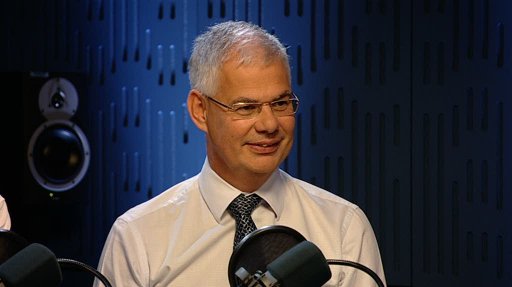
Andy Green, chief executive of Logica, speaking to the BBC’s Evan Davis about the NHS National Programme for IT, NPfIT, said:

“It is a stupid thing for the supply chain to have answered, and it’s a stupid thing for the customer to have asked for.”

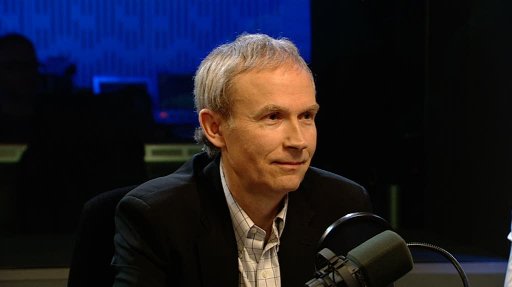
Green was speaking on Radio 4’s The Bottom Line about corporate “cock-ups and conspiracies”. Other guests were Phil Smith, chief executive of Cisco UK and Ireland, and entrepreneur Luke Johnson.

Green, who joined Logica as CEO in January 2008, said he was in one of the bidders for the NPfIT when he was at BT.

The plan, he said, had been to put the same system into every hospital but later foundation hospitals were able to opt out of the NPfIT.

“Half way through [the NHS IT programme] foundation hospitals were invented,  and suddenly foundation hospitals did not have to go with what the NHS said at all”.

He added: “There were fundamental errors in the whole procurement process, and then real difficulty in delivering what had been promised.”

Evan Davis said the NHS IT scheme had cost billions, achieved little and had been running for years. He asked Green: “What’s the story?”

Green said some things went well including the supply of a network that connects pharmacies and doctors. But …

“What  had been promised by the supply chain was fantastic software that had not been designed yet that was going to completely revolutionise hospitals and delivering that proved to be horrendous… in the end it is foolish to set out on a programme that is going to take seven years with a fixed procurement up front, which says we all know everything about it …”

Lessons

Green spoke of the need for the supplier to understand exactly what the customer wants and whether it is deliverable before the parties agree to draw up a project specification.

“I think the world is beginning to learn about incrementalism. Let’s do something that we can all see and understand.

“Some of our clients we now work with in common teams – we call it co-management – and only when we have worked out exactly what is going to work in the client, and we can deliver, do we specify it as a project.

“Those things tend to go a lot better. We have got used to the fact that we don’t know everything.”

Luke Johnson

Luke Johnson, who is a former chairman of Channel 4, criticised IT suppliers for not getting it right often enough.  “I have bought quite a lot of projects and been involved as a customer many times… As a customer it is a very scary thing because clearly you are not an expert. Your providers are experts and yet they do not seem to be able to get it right often enough it seems to me, given how much they charge.”

Green said there is a high failure rate in the IT industry. “The client sets out one view at the beginning and then they have to change. The sensible defence to this is the partitioning into smaller items and relationships.

“We bluntly always think of our clients over the long run. You need to know people so that you can sit down and have a decent conversation. Too often when these things start to go wrong everybody runs for the contract. Experienced buyers and sellers do not do that: they run for each other and they talk it through, and they work it out, and they put it back on track.

“It’s value that matters. It’s doing something that really changes Patisserie Valerie’s business. [Luke Johnson is chairman of Patisserie Valerie.] What can you do that would transform that. If you can get that done, then if it over-runs by 20% it probably does not matter.”

Luke Johnson: “It depends how much money you’ve got.”

Lowest-price bids

Phil Smith, Cisco

Phil Smith of Cisco said government often has the biggest problems because “they squeeze so much in procurement there is little good value and goodwill left”.He said that on good projects problems are tackled by cooperation but “if every piece of value has been squeezed out before you procure it, your only option is to get something back from it”.

Beware procurement experts

Johnson said if procurement experts take control, and their mantra is to save money, it can often lead to trouble. “I fear that in many aspects of business, it gets down exclusively to price rather than value.

“Quality is out the window. They [procurement experts] can show a saving so they have justified their bonus but the supplier may be rubbish.”

Green said government is in a difficult position when a project starts to go wrong. “You are stuck in a procurement and the poor individual responsible is almost certainly facing a union or a consumer group or a doctor who doesn’t want the thing to happen anyway.”

Evan Davis made the valid point that the costs of projects in the public sector have to be underestimated to get approved. Realistic estimates would be rejected as too costly.

“… The person who is championing this project has to demonstrate to superiors that it is not too expensive. It is only by taking the cheapest bid and starting the thing off that you can sell the project higher up and of course down the line it costs a heck of a lot more.”

Luke Johnson: “We all know in many sectors there are providers that will take things at cost or even less with a view that they will somehow bulk it out and make a margin on the way. They know the client will need variations.

Innovation means taking risks

Luke Johnson: “If you want an innovative society, if you want one that is willing to take risks, to generate new technologies, new jobs, new businesses, then it involves failures and cock-ups.

“I think the British have got vastly better in recent years in accepting that as part of the journey and that is incredibly healthy.”

BBC R4’s The Bottom Line – Cock-ups and conspiracies.

TPP stops gift offers to GPs

By Tony Collins

IT supplier TPP has stopped offering gifts to GPs while it has talks with NHS Connecting for Health and CSC.

TPP has offered tea at The Ritz, theatre tickets, Marks and Spencer vouchers and chocolates to GPs in return for their hosting demonstrations of its SystmOne  product.

Parts of the NHS have clearly-defined rules on the acceptance of gifts or hospitality, though the rules do not apply to GPs. NHS Sheffield tells its staff:

“All offers of hospitality should be approached with caution. Modest hospitality, for example, a drink and sandwich during a visit or a working lunch is normal and reasonable and does not require approval of a manager. Offers of hospitality relating to theatre evenings, sporting fixtures, or holiday accommodation, or other hospitality must be declined…”

The guidance adds:

“Casual gifts by contractors or others, e.g. at Christmas time, must not be in any way connected with the performance of duties …”

On 30 January 2012 Campaign4Change reported that TPP has offered gifts to tea at The Ritz or two tickets to a West End show to GP leaders in return for helping to organise an event that would give the company a chance to demonstrate its systems.

TPP SystmOne has said in its marketing literature that its systems hold a third of the country’s patient records and have about 100,000 users.

In reply to our questions about TPP’s offers to GPs, the Department of Health said in January that TPP had ceased offering the incentives after a DH intervention.

“We were made aware and asked the supplier about this activity,” said a Department of Health spokesperson. “The supplier has subsequently confirmed that they have ceased offering incentives to GPs.”

Ten days later Pulse reported that TPP was still offering incentives to GPs. Pulse quoted TPP as saying that it had “momentarily stopped offering the incentives over Christmas but will be resuming during February”.

TPP told Pulse: ‘The incentives were offered only to GPs and practice managers and were completely optional … ‘Our ‘Tea at the Ritz’ offer actually costs considerably less than the cost of catering for such a practice meeting. We at TPP appreciate that GPs and their staff are extremely busy and so any thank-you gifts we offer staff are simply that, a thank-you for an hour or two of their time.’

Campaign4Change then questioned whether the DH is powerless to stop TPP offering gifts.

We said that a level playing field for suppliers would mean that all suppliers offered tea at the Ritz or Marks and Spencer vouchers in return for a chance to demo their systems to GPs. Alternatively suppliers could agree that none offers gifts.

Now Pulse has reported that TPP has stopped offering gifts to GP, at least while it has talks with CSC and  NHS  Connecting for Health. TPP is quoted in Pulse as saying:

Obviously TPP would not have begun offering incentives as a thank-you for a GP’s time, if we were not highly confident that we are not doing anything wrong legally or ethically. That remains our position.

However following recent communication with CSC and Connecting for Health we have postponed the sending of marketing material that offers incentives for SystmOne demonstrations, until all parties have agreed a way forward.

There may have been miscommunications in the past about what incentives were offered, when and to whom, but TPP has always been upfront about any promotional incentives that are offered. All parties are now keen to ensure we can agree on ways to advertise and promote our products whilst maintaining our high ethical standards.’

‘In the meantime we will continue to consult with GPs, their staff and any NHS guidelines, in order to gain feedback about the best ways to demonstrate SystmOne to them.

Comment:

Whether or not the talks between TPP, CSC and the Department of Health might have been prompted, in part, by recent publicity over TPP’s offering of gifts, we’re pleased the talks are taking place.

If all IT suppliers to the NHS offered gifts to GPs then some doctors could end up seeing IT demos based in part on the attractiveness of the gifts on offer.

Links:

IT company’s “tea at the Ritz” offer to GPs.

Can officials stop TPP offering gifts to GPs?

Is TPP defying assurance on gifts to GPs? – Pulse

Software firm pulls tea at the Ritz incentives for GPs – Pulse

Cerner system “too entrenched to be scrapped”

By Tony Collins

A report by Deloitte on problematic Cerner installations at some hospitals in Australia calls for the government to appoint a chief medical information officer to oversee computer projects across the State.

The Deloitte report is a reminder that new IT in hospitals can have good – and adverse – safety implications for patients.

Obtained by the Sydney Morning Herald under Australia’s Freedom of Information Act, the Deloitte report is said to accept complaints last year that the system put patients’ health at risk by providing insufficient alerts to clinicians when messages did not reach their destination.  Deloitte found no evidence of harm to patients.

Though the Deloitte report is specific to the Cerner “FirstNet”  system as installed at some emergency departments in New South Wales, the idea of a chief medical information officer is arguably a good one for the UK where the Department of Health’s CIO (currently Katie Davis, interim Managing Director, NHS Informatics) is not responsible for the medical implications of IT go-lives in NHS hospitals.

New systems bypass the sort of regulation that helps protects the public against harm from medical devices. After hospital IT disasters there is no requirement for a genuinely independent investigation, as happens after airline crashes.

The Sydney Morning Herald [SMH] reports Deloitte as saying that the FirstNet system, which was installed to help run emergency departments across New South Wales, is chronically underfunded.

Deloitte was asked to report on the system after some hospital staff last year lost confidence in the software and returned to manual record-keeping.

Despite continuing problems and excessive time spent on data entry, the FirstNet system is too entrenched to be scrapped and the government should instead invest in bringing it up to scratch, said Deloitte.

”With some exception, FirstNet reporting is inadequate for effective governance of [emergency department] operations,” said Deloitte as reported by the SMH.

Nurses and doctors had complained that the system increased the amount of time they spent at a screen and reduced contact with patients. But the Deloitte report said more time spent on data entry ”was essential to realise the eventual benefits of an eventual [electronic medical record]”, such as greater accuracy of test results and medicine orders.

Upgrades were improving safety at some hospitals but needed to be across the state.

The government should appoint a chief medical information officer to oversee computing projects across the state, and pay for continuing development and training for FirstNet, said Deloitte.

The Health Minister, Jillian Skinner, said clinicians did not want to scrap FirstNet because they didn’t “want to start anew”.

The list of hospitals that have had serious problems after IT installations is growing, in part because the increasing use of technology in healthcare. Though hospital staff tend to learn in time to manage new systems, the unanswered question is whether patient care and treatment – and potentially their health and safety – should be damaged in an unregulated way until the problems are solved or mitigated.

Below is the UK list where it is known that the installation of new IT has caused serious disruption.  Any effect on individual patients has gone unreported:

Barts and The London

Royal Free Hampstead

Weston Area Health Trust

Milton Keynes Hospital NHS Trust

Worthing and Southlands

Barnet and Chase Farm Hospitals NHS Trust

Nuffield Orthopaedic

North Bristol.

St George’s Healthcare NHS Trust

University Hospitals of Morecambe Bay NHS Foundation Trust

Birmingham Women’s Foundation Trust

NHS Bury

**

Links:

Does Hospital IT need airline-style certification?

Hospital computer system found lacking – Sydney Morning Herald

Jon Patrick’s essay on the effectiveness and impact of Cerner’s FirstNet system in some hospitals in New South Wales.

CSC may cut 500 jobs after NHS write-off – end of NPfIT?

By Tony Collins

CSC has confirmed in a statement to Techweekeurope that it may cut 500 jobs on its NHS account.

“We can confirm that, regrettably, we have recently started a formal 90-day consultation process in the UK which could reduce the number of people working on our NHS account by up to a maximum of 500 people,” CSC told TechWeek Europe.

“This action is necessary mainly because we have now substantially completed many key development activities with NHS, and are now moving away from a focus on development work.”

CSC told The Register that it regretted having to take put jobs at risk, but it was necessary because its NHS workload was getting smaller.

CSC has confirmed it is to write-off almost $1.5bn (£957m) as a result of its involvement in the National Programme for IT (NPfIT).

Comment:

CSC is by no means quitting the NHS. Its NPfIT contract is still in force although it remains unrevised, out of date and subject to legal discussions. CSC has large numbers of UK trusts and GP practices as customers, which will need support and upgrades. If it cuts 500 jobs this may indicate the effective end of the monolith that was the NPfIT which will continue in a much diminished, though still expensive, form, largely because of contracts between the Department of Health and BT.

It appears that the dismantling of the NPfIT has begun in earnest, thanks largely to Cabinet Office officials, its Major Projects Group, the Cabinet Office minister Francis Maude, David Cameron and the Department of Health’s Managing Director of NHS Informatics Katie Davis.

The campaign to stop a new deal being signed with CSC was led by the Conservative MP Richard Bacon, a member of the House of Commons’ Public Accounts Committee who was concerned that a new deal would not be good value for money.

It’s to be hoped that CSC will manage to find other work for the 500. The company says it hopes to achieve the job changes through voluntary redundancies and redeploying people within other parts of its business, without the need for compulsory redundancies.

Techweek europe article that includes CSC’s statement.

MP contacts No 10 and Cabinet Office over future of the NPfIT.