Category Archives: IT projects

Change division helps Bendigo Bank transform IT project outlook

By David Bicknell

A report from Australia has suggested that scrapping the chief information officer’s (CIO) role and replacing it with a change division enabled Bendigo Bank in Australia to slash its IT project failure rate.

According to an article in ITNews, establishing the change division  prompted better project delivery priorities and outcomes over the past two years, and may have  improved the rate of successful projects by 50 percent.

ITNews reported that, “In early 2010, the bank’s CIO Andrew Watts became the executive of a new ‘change’ division, which included 140 technologists, such as business analysts and project managers.

“Those technologists joined some 60 staff from elsewhere in the business, with the division aimed at overseeing business architecture and project delivery across ‘people, process and technology’.

“Other technologists formed a rebranded ‘technology services’ team, led by general manager Gary Doig and charged with managing the bank’s IT operations.”

Bendigo Bank believes that high business ownership across its projects has become  one of the most important foundations to deliver project success.

Related Links

Reuters: Banks team up to cut tech spend burden

ITNews (Australia) site

Lessons from “stupid” NHS IT scheme – Logica boss

Some wise words from Andy Green, CE of Logica, on lessons from the NPfIT and other failures

By Tony Collins

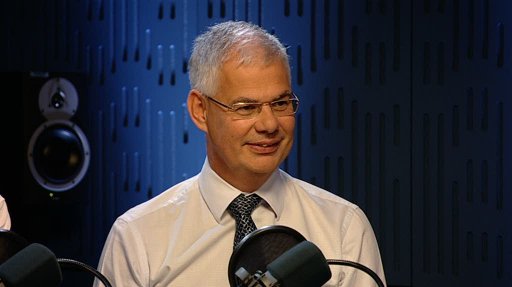
Andy Green, CE, Logica

Andy Green, chief executive of Logica, speaking to the BBC’s Evan Davis about the NHS National Programme for IT, NPfIT, said:

“It is a stupid thing for the supply chain to have answered, and it’s a stupid thing for the customer to have asked for.”

Green was speaking on Radio 4’s The Bottom Line about corporate “cock-ups and conspiracies”. Other guests were Phil Smith, chief executive of Cisco UK and Ireland, and entrepreneur Luke Johnson.

Green, who joined Logica as CEO in January 2008, said he was in one of the bidders for the NPfIT when he was at BT.

The plan, he said, had been to put the same system into every hospital but later foundation hospitals were able to opt out of the NPfIT.

“Half way through [the NHS IT programme] foundation hospitals were invented,  and suddenly foundation hospitals did not have to go with what the NHS said at all”.

He added: “There were fundamental errors in the whole procurement process, and then real difficulty in delivering what had been promised.”

Evan Davis said the NHS IT scheme had cost billions, achieved little and had been running for years. He asked Green: “What’s the story?”

Green said some things went well including the supply of a network that connects pharmacies and doctors. But …

“What  had been promised by the supply chain was fantastic software that had not been designed yet that was going to completely revolutionise hospitals and delivering that proved to be horrendous… in the end it is foolish to set out on a programme that is going to take seven years with a fixed procurement up front, which says we all know everything about it …”

Lessons

Green spoke of the need for the supplier to understand exactly what the customer wants and whether it is deliverable before the parties agree to draw up a project specification.

“I think the world is beginning to learn about incrementalism. Let’s do something that we can all see and understand.

“Some of our clients we now work with in common teams – we call it co-management – and only when we have worked out exactly what is going to work in the client, and we can deliver, do we specify it as a project.

“Those things tend to go a lot better. We have got used to the fact that we don’t know everything.”

Luke Johnson

Luke Johnson, who is a former chairman of Channel 4, criticised IT suppliers for not getting it right often enough.  “I have bought quite a lot of projects and been involved as a customer many times… As a customer it is a very scary thing because clearly you are not an expert. Your providers are experts and yet they do not seem to be able to get it right often enough it seems to me, given how much they charge.”

Green said there is a high failure rate in the IT industry. “The client sets out one view at the beginning and then they have to change. The sensible defence to this is the partitioning into smaller items and relationships.

“We bluntly always think of our clients over the long run. You need to know people so that you can sit down and have a decent conversation. Too often when these things start to go wrong everybody runs for the contract. Experienced buyers and sellers do not do that: they run for each other and they talk it through, and they work it out, and they put it back on track.

“It’s value that matters. It’s doing something that really changes Patisserie Valerie’s business. [Luke Johnson is chairman of Patisserie Valerie.] What can you do that would transform that. If you can get that done, then if it over-runs by 20% it probably does not matter.”

Luke Johnson: “It depends how much money you’ve got.”

Lowest-price bids

Phil Smith, Cisco

Phil Smith of Cisco said government often has the biggest problems because “they squeeze so much in procurement there is little good value and goodwill left”.He said that on good projects problems are tackled by cooperation but “if every piece of value has been squeezed out before you procure it, your only option is to get something back from it”.

Beware procurement experts

Johnson said if procurement experts take control, and their mantra is to save money, it can often lead to trouble. “I fear that in many aspects of business, it gets down exclusively to price rather than value.

“Quality is out the window. They [procurement experts] can show a saving so they have justified their bonus but the supplier may be rubbish.”

Green said government is in a difficult position when a project starts to go wrong. “You are stuck in a procurement and the poor individual responsible is almost certainly facing a union or a consumer group or a doctor who doesn’t want the thing to happen anyway.”

Evan Davis made the valid point that the costs of projects in the public sector have to be underestimated to get approved. Realistic estimates would be rejected as too costly.

“… The person who is championing this project has to demonstrate to superiors that it is not too expensive. It is only by taking the cheapest bid and starting the thing off that you can sell the project higher up and of course down the line it costs a heck of a lot more.”

Luke Johnson: “We all know in many sectors there are providers that will take things at cost or even less with a view that they will somehow bulk it out and make a margin on the way. They know the client will need variations.

Innovation means taking risks

Luke Johnson: “If you want an innovative society, if you want one that is willing to take risks, to generate new technologies, new jobs, new businesses, then it involves failures and cock-ups.

“I think the British have got vastly better in recent years in accepting that as part of the journey and that is incredibly healthy.”

BBC R4’s The Bottom Line – Cock-ups and conspiracies.

US Government opens its books on IT projects

By David Bicknell

The Office of Management and Budget in the US has gone some way to opening up the books on IT investments to public scrutiny with the updating of the Agency’s IT Dashboard.

The move,  announced by Federal Chief Information Officer Steven VanRoekel, makes publicly available detailed IT investment information in support of the President Obama’s FY 2013 Budget.

The Obama Administration launched the IT Dashboard in 2009 to create  more transparent and open government.

As VanRoekel says in his blog,  “By publicly posting data on more than 700 IT investments across the Federal government, we armed agencies with the tools needed to reduce duplication in IT spending, strengthen the accountability of agency CIOs, and provide more accurate and detailed information on projects and activities. We also gave Americans an unprecedented window into how their tax dollars were being spent.”

VanRoekel says the latest dashboard will provide greater transparency of IT investment performance and empower CIOs to intervene in troubled projects sooner. Changes include:

Making the Dashboard more accessible: the Dashboard will now provide access to individual projects and activities associated with an investment, link investments to funding sources, and include visualisations to track investment performance from year-to-year.

Identifying duplication: New data on what kind of services each investment provides will help US agencies identify and address duplication in their IT portfolios.

Improving data quality: Improved validations and warnings will prevent erroneous data from coming into the system,  while new data quality reports will help agencies identify improvements they can make to their existing data

More data and tools: More datasets are now being made available, as well as additional tools to enable the public to participate by downloading and building their own applications.

According to VanRoekel, the  transparency enhancements will improve the way US taxpayers’ dollars are spent. He argues that by using the IT Dashboard and Techstat accountability developments to focus on the most challenged critical projects, agencies and the Office of Management and Budget have driven reforms that have saved taxpayers upwards of $4 billion since the initial launch.

Why prompt decision-making is critical to the success of IT projects

By David Bicknell

Research from the US-based IT projects specialist Standish Group suggests latency between decisions is a major contributor to project delays and failures.

“Projects get behind a day at a time. My observation is they get behind because people cannot make decisions. Therefore, it is important to establish a process that enables you to quickly gain the decision information you need,” says Mike Sledge, chief executive of corporate performance company Robbins-Gioia.

There are literally thousands of decisions that have to be made during the life of a project. Standish Group research shows that for every $1,000 in project cost, the organisation will need to make 1.5 decisions. A $1 million project will produce 1,500 decisions, while a $5 million project will have 7,500 decisions. During a typical medium-size ERP system implementation the organisation will have to make more than 10,000 decisions.

“The key reason for making fast decisions has nothing to do with always making right decisions. It has everything to do with being open to mistakes,” says Richard Mark Soley, chairman and CEO of the Object Management Group (OMG). 

Standish Group took the case of two US companies in the same sector that were both implementing customer relationship management (CRM) systems. Both companies were similar in size, number of accounts, and salespeople. They even used the same software package.

Both started to implement a CRM system about four years ago. One finished in six months and the other has still not finished. The key difference was the one that finished in six months had a hard stop and had set up a rapid decision process to reduce decision latency.

Standish Group goes on to say that while the volume of decisions comprising a project can be a problem, it is actually the time that lapses from when an issue first arises until a decision is made that causes most difficulties.

For example, if the average decision latency is only one-hour, then the added decision time to a $1 million project is six months (1,500 decisions = 1,500 hours). On the other hand, if the project team can cut the latency time in half, it adds only three months to the project time (1,500 decisions = 750 hours).

With this insight into the corrosive effect of slow decision-making on project success, and after years of research in project management performance, the Standish Group decided to develop The Dezider, a real-time information decision support solution to help organisations cut decision-making time in half through greater stakeholder participation and more information.

The intention behind The Dezider is to connect individuals with their co-workers, stakeholders, peers, superiors, friends, and family as an aid to decision-making.

One way to increase decision velocity, decrease latency, and increase people’s participation is to simplify large issues by breaking them into smaller issues and decisions. (You may recognise something of an Agile-like approach to decision-making here)

The Dezider enables the ability to create a series of minor or micro issues and to construct a stream of responses to achieve quicker, easier, and more comprehensive answers. Each of these micro issues can then be directed to the proper level, role, and/or responsible person(s).

What usually happens in organisations is that people are busy doing their main jobs and often put off project tasks such as participating in project decisions. The Dezider offers a feature that gently reminds project participants that they have an outstanding issue and the team is waiting for their response.

Another feature within Dezider provides the ability to match the type of decision with the roles of the people making the decisions. For example, a technical decision should have a technical person making the decision. On the other hand, a business decision should have a business person making the decision.

There are more details about the impact of decision-making on projects, and about The Dezider on the Standish Group blog. Standish Group is probably best known for its Chaos research into project management leadership and best practices.

Shared services disaster: a gain for some officials and ERP suppliers?

By Tony Collins

Today an impressive report by the National Audit Office shows in detail how various shared services ventures in central government have, over time, cost rather than saved money.

Five shared services centres studied by the NAO have cost £1.4bn so far; they were supposed to have saved £159m by 2010-11 but the net cost has been £255m. Setting up the centres since 2004 has been good, though, for some suppliers (and officials who wanted to gain new skills in Oracle and SAP enterprise resource planning systems).

The Cabinet Office has now intervened and plans a new shared services strategy, based on the DWP [Oracle v11i ERP) and Department for Transport [SAP ERP] offering independent major shared service centres to departments and agencies.

One of the urgent drivers for the Cabinet Office’s publishing a new strategy in July 2011 was that three shared service centres face an investment of £47m to upgrade their Oracle ERP systems before November 2013, says the NAO.

“The current version of Oracle will not be supported by the manufacturer past this date,” says the NAO. “This means that if their core system fails, there is a high risk that they would not be able to re-instate it quickly. This gave the Cabinet Office an opportunity to see if it could derive better value-for-money options for shared services.”

Saving £32m on Oracle upgrade costs?

The Cabinet Office expects its new plans to save £32m on Oracle upgrade costs, says the NAO. Indeed the Cabinet Office has questioned whether departments need to use large ERP systems. It acknowledges that smaller, simpler software solutions may be appropriate, says the NAO.

Civil servants in search of new ERP skills rather than saving money?

The NAO report hints that civil servants at the five service centres might have wanted to implement new Oracle or SAP ERP software more than to save money.

Says the NAO: “The [shared service] Centres have prioritised increasing the number of customers or implementing new software, rather than working with existing customers to drive efficiency… There are other options to reduce costs in addition to increasing the number of customers or implementing a new ERP system.”

Indeed the NAO questions why the service centres bought big and expensive ERP systems that are now under-used, without looking at smaller and simpler accounting packages.

“These ERP systems [installed at five shared service centres studied by the NAO] are complex and it is not easy to modify them when needs change, such as when an organisation is restructured or processes are redesigned.

“We found the Centres are only using a small part of the capability their ERP systems provide. The systems are capable of handling larger volumes of transactions and more services and it is not clear why such expensive solutions were bought. Other smaller and simpler accounting packages were not looked at to see if they may have provided the required functionality.”

Concludes the NAO:

The shared services initiative has not so far delivered value for money for the taxpayer. Since the Gershon Review recommended the creation of shared services in 2004, the Government has spent £1.4 billion against a planned £0.9 billion on the five Centres we examined.

“By creating complex services that are overly tailored to individual departments, government has increased costs and reduced flexibility. In addition, it has failed to develop the necessary benchmarks against which it could measure performance. The Cabinet Office has issued an ambitious new shared services strategy to address these issues.”

Failing to standardise ways of working

Shared services are about standardising ways of working, not running separate services for every client but the NAO found that the five centres replicated old ways of working.

“The services provided are overly customised. We found shared services to be more complex than we expected. They are overly tailored to meet customer needs. This limits the ability for the Centres to make efficiencies as they have an overhead of running multiple systems and processes.”

Big cheques to big ERP suppliers?

The NAO said departments have wasted money on ERP systems – and now plan to spend more on DRP systems.:

“The software systems used in the Centres have added complexity and cost. All the Centres we visited use Enterprise Resource Planning (ERP) software systems. These are complex and have proven to be expensive. They are designed to manage all the information generated by an organisation by using standard processes. These systems work most effectively with large volumes of heavily automated transactions.

“With a lack of scale and usage in some Centres, limited standardisation and low levels of automation, the cost to establish, maintain and upgrade these systems is high. As a result two Centres intend to totally re-implement their existing systems with simpler, standard ERP software, despite the significant investment already made.

“All the Centres acknowledge they need to simplify and standardise their systems and reduce customisation.”

Cabinet Office took a back seat instead of driving sensible change

Says the NAO: “The Cabinet Office and Civil Service Steering Board could have done more to ensure shared services were implemented appropriately. While the Cabinet Office led by example in initiating their own shared service arrangements, more could have been done to challenge the performance achieved by customers and providers.

“They could have established reliable cost and performance benchmarks and done more to document best practice and lessons learned for customers. Also, they could have done more to remove the barriers to departments and agencies joining shared services.

“The Cabinet Office relied on a collaborative model of governance, which was consistent with the role of central government at the time. Under this model it was left to individual departments to implement shared services and eight shared services have been established. There has been little actual sharing of services between departments…”

Should officials have been forced to take part in shared services?

“Departments have struggled to fully roll-out shared services across all their business units and arm’s-length bodies,” says the NAO. “This is because participation has largely been voluntary. Of the five Centres we examined, three had not attracted the customers they had expected and two had potential spare capacity of 50 per cent.”

Cabinet Office is trying to repair the damage

Using DWP and DfT centres the Cabinet Office plans to have two independent shared service centres and a host of sub centres. But the NAO suggests the strategy may fail unless the Cabinet Office mandates the use of the centres. [But there’s no point in mandating change unless working practices are standardised.  If they cannot be standardised shared services may end up – again – costing more.]

Says the NAO  “The Cabinet Office did not have the powers to mandate shared services. Without a mandate, we do not think that coherent shared services are likely to be achieved. If there is an overall value-for-money case for the taxpayer, the Cabinet Office should seek appropriate authority to mandate the shared services strategy and its implementation.

“The Cabinet Office should also make sure that there is clear accountability for implementing its new shared services strategy.”

MPs ignored

“…the Committee of Public Accounts set out recommendations (on shared services) for the Cabinet Office in 2008,” says the NAO. “None of the recommendations have been fully implemented. All are relevant to shared services today.”

The five shared service centres under NAO scrutiny – and their ERP

• The Department for Environment, Food and Rural Affairs (Defra) Centre provides services to 16,000 customer users (full-time equivalents)7 from the Department and 13 of its agencies. Enterprise Resource Planning System: Oracle 11i, upgrade to Oracle v12 in 2012-13.

• The Department for Transport (DfT) Centre provides services for 14,000 customer users from the Department and four of its agencies. SAP ERP.

• The DWP Centre provides services for 130,000 customer users from the Department, the Cabinet Office and the Department for Education. Main site Norcross. ERP system: Oracle 11i, upgrade to Oracle v12 planned in 2012-13.

• The Ministry of Justice Centre manages two separate systems – serving 47,000 customer users for its National Offender Management Service and 27,000 for the Home Office. Enterprise Resource Planning System: Oracle 11i, upgrade to Oracle v12 in 2012-13 and plans to completely re-implement its system to remove all customisation.

• Research Councils UK Centre provides services to 11,000 customer users from seven Research Councils. ERP is Oracle 12.

Three major shared service centres not under NAO scrutiny

• The Ministry of Defence’s Defence Business Services, which was established in July 2011. ERP is Oracle 11i. An upgrade to Oracle v12 in planned for 2012-13.

• The Department of Health NHS Shared Business Services Ltd (joint venture with Steria) which does not provide services to central government. (ERP is Oracle v12)

• HMRC which set up a shared service centre – but no other departments used it. ERP is SAP.

Comment:

Anyone reading the NAO report could be forgiven for thinking that civil servants setting up shared service centres have aimed to fail, perhaps to prove to ministers that major change within central government is a bad idea. We doubt this.

What is more likely is that civil servants, encouraged by some suppliers, thought it a good idea to buy big ERP systems from which they thought savings would naturally flow. But big has not proved to be better. When will this message get through? Isn’t it time for civil servants to stop throwing money at big suppliers?

[And there may be some substance in the NAO’s hint that some civil servants have preferred to work on big ERP systems rather than save money. Having strong ERP skills is an insurance against job loss.]

NAO report  

NAO says HMRC is tackling tax evasion but needs to further exploit IT systems’ potential

By David Bicknell

A report by the National Audit Office (NAO) has applauded HM Revenue & Customs’ (HMRC) work in tackling tax evasion to deliver £4.32 billion of additional tax yield between 2006 and 2011. HMRC also reduced staff numbers and introduced a range of improvements in its compliance work.

But, the NAO says, although the Department has introduced new IT capabilities to identify incidences of evasion more effectively, it is not yet exploiting the full potential of the new systems. It has also had to defer and reduce the scope of projects to keep within annual budgetary limits, leading to reductions in benefits.

According to the NAO’s report, the Compliance and Enforcement Programme cost £387 million to 2011-12 and was made up of over 40 projects intended to increase compliance yield – the measure of additional tax arising from compliance work – by £4.56 billion between 2006-2011.

Against that target, the Programme actually reported additional yield of £4.32 billion over the five years to March 2011, with HMRC forecasting that it will generate an additional £8.87 billion of yield between 2011-12 and 2014-15. However, the NAO points out, HMRC will not achieve all of the Programme’s forecast benefits because of changes to scope or slippage in delivering projects, as well as over-optimism in its forecasts.

HMRC reduced staff numbers by the planned amount of 3,374 full time equivalents by the end of 2008-09, two years ahead of schedule. It also generated an improvement in productivity -defined as the level of yield generated by each full time equivalent – of approximately 36 per cent, below its forecast of a 42 per cent improvement. HMRC did not routinely measure the impact of the Programme on customer experience.

Amyas Morse, head of the National Audit Office, said:

“This major programme has helped HMRC to increase tax yield substantially and has introduced ways of working which will strengthen HMRC’s compliance work in future.

“The Department could, though, achieve better value for money from its investment in compliance work by improved understanding of the impact of individual projects and ensuring that its staff have the capacity to exploit new systems to the full.”

On improving HMRC’s compliance work, the NAO report says the following:

 “The Programme has improved HMRC’s ability to undertake compliance work but it has yet to exploit the full potential of the new systems. In particular, the new ICT systems can substantially improve how HMRC assesses evasion risks to identify cases for investigation. HMRC is embedding new systems and approaches into working practices. We assessed the implementation of a sample of projects:

Project design. Overall, HMRC managed design phases well but, particularly on projects to implement new ICT systems, it did not sufficiently consider redesigning business processes or developing the staff capability needed to exploit the full potential of the new technologies.

Implementation. HMRC did not always communicate clearly the rationale for projects and, although it provided training and guidance, these were not always timely or requirements were underestimated.

Assessing the performance of new systems. HMRC has established management information on the use and performance of new systems and, over time, will seek to use this to better understand the impact on business performance.

HMRC – The compliance and enforcement programme

Australian Gateway Review key in revealing extent of Victoria Police IT project deficiencies

By David Bicknell

A report has found that the police in the state of Victoria in Australia lacked the capacity to deliver a major IT project and wasted millions of dollars on a failed system.

According to The Australian, the force had lost around $30 million as a result of the decision to abandon the replacement of its Law Enforcement Assistance Program (LEAP) system, said the report by an Australian QC, Jack Rush.

“The investigations of the inquiry into the LEAP replacement and two other IT projects at Victoria Police revealed a lack of project management methodology and discipline leading to systemic mismanagement,” the report said.

“The inquiry identified a culture within Victoria Police that cost overruns were acceptable but above all, there was a lack of any form of strategy to define the IT needs and requirements of Victoria Police for the future.”

Victoria Police admitted last year it had underestimated the cost of replacing its inefficient, ageing LEAP system by $100m, before it abandoned the replacement project. 

Chief Commissioner Ken Lay said he would adopt the report’s recommendation that the force seek external assistance through an advisory group and had already been consulting external experts.

“Victoria Police needs help in delivering these projects and I will certainly be reaching out both nationally and internationally to make sure that we get this right,” he said.

A key Gateway Review was instrumental in the ending of LEAP, as the report discusses:

“The PIMS preliminary business case was subject to a Gateway Review in late July 2011. The scrutiny of this review process appears to have been the cause of considerable reflection at senior levels of Victoria Police command. The Gateway Review indicated interviewees advised that the preliminary business case did not provide sufficient justification for additional funding to complete the replacement of LEAP; and varied greatly in their expectations and understanding of what outcomes the Policing Information Management System (PIMS) would provide and the technology necessary to achieve outcomes.

The Gateway Review observed “… that best practice and strategic assessment begins with a fundamental understanding of what the problem is that requires fixing and the strategic response that the organisation is looking for.” The review found that the PIMS project was deficient in these respects:

  • the strategic vision for Victoria Police as it related to the PIMS project;
  • current and preferred policing workflow;
  • business requirements based upon the operational needs of modern policing; and
  • information management plan

Rush Report

New child support system has 90,000 requirements – in phase one

                               A new old-style government IT disaster?

By Tony Collins

While officials in the Cabinet Office offcials try to simplify and cut costs of Government IT, a part of the Department for Work and Pensions has commissioned a system with 90,000 requirements in phase one.

The projected costs of the child maintenance system have risen by 85% and the delivery date has slipped by more than two years.

Even with 90,000 requirements, phase one, which is due to go live in October, excludes 70 requirements that are “deemed critical” says a report published today by the National Audit Office.

The NAO report indicates that the Child Maintenance and Enforcement Commission has commissioned an old-style large IT system using traditional developing techniques and relying on large companies.

G-Cloud and SMEs have not featured in the Commission’s IT strategy – and it abandoned agile techniques last year on its child maintenance project.

The Commission put the cost of its new child maintenance system at £149m in January 2011. Ten months later it put the cost at £275m, an 85% increase. The Commission was unable to give the NAO a full explanation for the difference.

Lessons from past failures not learned?

Today’s NAO report says there is a risk the Commission will repeat mistakes by the Child Support Agency whose IT system and business processes were criticised in several Parliamentary reports. The Commission takes in the work of the Child Support Agency – and indeed runs its own systems and the Child Support Agency’s in parallel.

Officials at the Commission told the NAO they have a good track record of holding back IT releases until they are satisfied they will work.  “Nevertheless, we found that the Commission is at risk of repeating many of the mistakes of 2003,” said the NAO. Those mistakes include over-optimism and a lack of internal expertise to handle suppliers.

Mixing “agile” and “waterfall” doesn’t work

Initially civil servants at the Commission tried to “mix and match” agile and traditional developing techniques – which Agile advocates say should not be attempted.

In 2011 the Commission gave up on agile and “reverted to a more traditional approach to system development” says the NAO report.

The mix and match approach meant there were two distinct routes for specifying requirements and “resulted in duplicated, conflicting and ambiguous specifications”.  The Commission did not have previous experience of using the agile approach.

The Commission’s child maintenance system was due to go live in April 2010 but the delivery date has slipped three times. Phase one is now due to go live in October 2012 and phase two in July next year but the NAO report raises questions about whether the go-lives will happen successfully. The Commission has not planned in its financial estimates for the failure of the system.

The NAO finds that the Commission has struggled to make its requirements for the new system clear. The Commission’s main developer Tata Consulting Services has had protracted discussions over the meaning and implementation of requirements.

The NAO also hints that IT costs may be out of control. It says the Commission may not secure value for money without properly considering alternative options for restructuring and “adequately controlling its IT development …”

These are some of the NAO’s findings:

IT costs could increase further

“The new system is based on ‘commercial off-the-shelf’ products. However, a recent audit by Oracle identified that the performance, maintainability and adaptability of the new system would be key risks. This could increase the cost of supporting the system. The scheme does not yet include plans for the integration with HM Revenue & Customs’ Real Time Information system due to be implemented in 2013, or introducing Universal Credit because of the differing timescales,” says the NAO which adds:

“Achieving the Commission’s plans without further cost increases or delays appears unlikely. The Commission reported to the audit committee in October 2011 on the high risk that the change programme may not deliver phase two functionality within agreed timescales … The Commission did not develop a benefits realisation plan until November 2011.”

103,000 of Commission’s 1.1m cases are handled manually

“Ongoing technical problems have resulted in a large number of cases being removed from the IT system and managed manually. These are known as clerical cases … The Commission has had to operate the ‘old’ and ‘current’ schemes in parallel.  Due to flaws in the IT systems for each scheme, some 100,000 cases have had to be processe:d separately by clerical staff at a cost of £48 million,” says the NAO. It takes 900 contractors to manage the clerical cases.

Comment

Despite numerous NAO reports on failures of Government IT-based projects over the past 30 years the disasters are still happening, with the same mistakes repeated: over-optimism in every aspect of the project including timetables and financial estimates; excessive complexity and over-specification, no sign of cost-consciousness and, worst of all, an apparent indifference to being held accountable for a major failure.

A glance at the monthly outgoings of the Commission (well done to the coalition for requiring departments and agencies to publish contracts over £25,000) show sizeable and regular payments to familiar names among the large suppliers: HP Enterprise Services (formerly EDS), Capgemini, Tata Consultancy Services, BT Global Services and Capita. There is hardly an SME in sight and no sign of imaginative thinking.

Meanwhile some senior officials at the Commission put in monthly expenses for thousands of pounds in travel, accomodation and subsistence for “Commission meetings”. One wonders: to what useful effect?

Officials at the Cabinet Office are trying to change the culture of departments and agencies. They are encouraging departmental heads to do things differently. They advocate the use of  SMEs to show how new ways of working can trounce traditional approaches to projects.

But the Cabinet Office has little influence on the Department of Work and Pensions. Indeed the DWP has lost its impressive chief innovator James Gardner.

We praise the NAO for noting that the Commission risks repeating the IT-related and project management mistakes of the Child Support Agency. But we note with concern that the NAO still puts up with Whitehall’s non-publication of  Gateway reviews, which are independent reports on the progress or otherwise of big and risky IT-based projects.

Would the Commission have been so apparently careless of the risks if it had known that regular Gateway reports on its shortcomings would be published?

How many more government IT-based projects are late, over budget and at risk of failing, their weaknesses hidden by an unwritten agreement between the coalition and civil servants to keep Gateway reviews secret?

NAO report – Child Maintenance and Enforcement Commission: cost reduction

Government repeating child support mistakes – ComputerworldUK

Has the CIO become the Chief Invisible Officer?

I read an article in the Wall St Journal today all about the role of chief financial officers (CFO) in increasing investments in IT to maintain a competitive edge.

The piece refers to a Colorado company, CH2M Hill, which is cutting back on expenses like corporate events and bonuses for employees, yet it plans to boost its $100 million-a-year IT budget by upto 20% this year. In part, the money will go to fund new systems that will make it easier for workers to use a variety of mobile devices on the job.

“We’re very concerned about the economy and trying to take some measures to cut costs,” says Mike Lucki, CH2M’s chief financial officer. “But this is an investment that we need to make to stay competitive. If you don’t do it, you’re not in the game.”

The thought struck me that when I read that quote that how often do you ever hear a CFO talking about getting a competitive edge? Shouldn’t that be the language of the CEO? And, aspirationally, what the CIO should be saying?

There’s nothing in this Wall St Journal piece about the role of the CIO. That’s not a criticism of the piece at all, simply  the fact that CIOs seem to be anonymous in the corporate culture.  As the article suggests, ‘CFOs are often the executives calling the shots on tech purchases. According to research firm Gartner, for instance, 44% of IT departments report to CFOs.’ The article seems to suggest that there are IT departments – but no IT leaders. (Or at least, in this case, none that the Wall St Journal deemed noteworthy enough to speak with)

Has the CIO become the Chief Invisible Officer? Perhaps, to take a line from Mike Lucki’s quote, it’s time CIOs made a strategic investment (in their visibility) to stay competitive, because, to nick another line, “If you don’t do it, you’re not in the game.”

Or has the corporate balance of power so shifted in current times that the corporate officer that pays the piper is so clearly now calling the tune?

Is it time that CIOs started to shout more from the rooftops about their value?

Heads of finance hate big-bang IT projects

Ambitious health records IT project bags US budget increase

By David Bicknell

Electronic health records appear to be the three magic words to help unlock an increase in your IT budget, especially if you’re looking to deliver a groundbreaking health IT project for US services veterans.

According to this story,  the Department of Veterans Affairs (VA) would see a 6.9% increase, with much of the money being spent on improved electronic health records. The 2013 budget proposal put forward by the Obama Administration would see $3.3bn being spent on IT, a $216m increase over the current budget.

2012 will see major investment in an ongoing IT project to integrate Department of Veterans Affairs health records with Department of Defence health records. Currently, more than 100 VA employees are working on the programme, with over 20 projects in planning mode, including single sign-on and a plan to unify VA and DOD pharmaceutical systems.

Department of Veterans Affairs press release referring to IT budgets