Category Archives: Campaign4Change

itSMF UK launches professional IT Service Management scheme as users await ITIL 2011

By David Bicknell

For those with an interest in IT Service Management in the public sector, one of the highlights of the forthcoming week will be the update of the ITIL best practice books available on Friday 29th July. In the meantime, here is a post detailing some recommendations for the ITIL updates.

The itSMF has some more details on its website here which includes a link to some FAQs.  Incidentally, itSMF UK, the UK’s largest service management user group, last week formally launched its own professional service management credentials programme,  priSM (Professional Recognition for IT Service Management).

Available exclusively to itSMF members, the programme provides a structured path for professional growth and is expected to help ITSM professionals better define their career and enhance their earning potential. There are more details about priSM here

Meanwhile back to ITIL. There is a link here to 7 must-see websites on ITIL

Mutuals: “Explore your potential” – says law firm Capsticks

By David Bicknell

Chris Brophy from law firm Capsticks has put together some useful thoughts on the Open Public Services White Paper

His conclusions make interesting reading. He says:

“It might be said that there are a lot of aspirational aspects to the White Paper but the crucial point for those that are open to inspiration, to changing their own public organisation or to developing a business from the public body, is that the mutual or social enterprise pathway is still being encouraged and people should really be reaching for the stars on it. The time is right to leave behind old, comfortable ways because they are simply not going to survive in the new financial era – even if you want them to. It is time to explore the potential in your own colleagues and the desire at Board level of your own organisation to fundamentally change the way in which you are operating. It is not quite now or never but the early bird catches the worm. And the worm is important for sustaining you through the winter. It is time to put into practice all you have learned about how to improve services from an intimate knowledge of the difficulties of doing it within the public sector. Applying that knowledge to latent, innovatory tendencies and grabbing on to all the help and support you can from around you might just well lead you to another place. If things get tough and people are having a go at you but you are enjoying doing things that you want to what you do, keep doing them; it is the only way to get where you want to be.

A listening period will now follow the publication of the White Paper until September, when a programme of work will be set out, followed by the government’s establishment of the priorities of the departments in November. Then, the proposals for legislation. Plenty of opportunity to gear up in the meantime.”

There are some further thoughts here too

Cameron needs to ride out Murdoch affair

Comment

By David Bicknell and Tony Collins

It would be a pity if David Cameron were forced to stand down over the phone hacking affair. Cameron is the force behind Francis Maude’s reform plans for central government, in particular the plans for finding and implementing innovative ways of cutting costs, mutualisation, simplifying and standardising ways of working and breaking the stranglehold  of the few big IT suppliers to government. Cameron and Maude are trying genuinely to find ways of giving creative SMEs more government work.

Were Cameron to go, Maude would probably be much more isolated. As it is permanent secretaries would be more than happy to see Maude’s reforms melting away, though they would continue to express support for radical change. As the Cabinet Secretary Sir Arnold says in the first episode of “Yes Minister” on Open Government:  “The less you intend to do about something, the more you have to keep talking about it.”

The signs we have seen are that Maude and his team are full of good ideas that some senior civil servants in departments would rather talk about than implement. We’ll shortly be publishing a piece on how officials at the Department for Work and Pensions still default to secrecy despite Maude’s attempts to change the mindset of the civil service.

Cameron will make some mistakes. Nobody is perfect. And prime ministers are always at the mercy of a previous Conservative prime minister, Harold Macmillan’s warning of “events, dear boy”.

Even Churchill made mistakes such as the Dardanelles landings. The media loves scalps and Cameron’s opponents will make the most of Murdoch’s woes. We hope for the sake of the reforms of central government – and the huge savings to be made – that Cameron stays.

David Cameron is an asset. His would be a resignation too far.

Mutuals: ‘Managers are the biggest barrier to employee ownership’

By David Bicknell

In the aftermath of the Open Public Services White Paper, Stephen Kelly, who is in charge of the Coalition’s plan to mutualise the public sector, has been interviewed in the Daily Telegraph here.

Meanwhile, in this clip from a Policy Exchange debate on mutuals, Julian Legrand has been quoted as saying managers are the biggest barrier to employee ownership

A major change in departmental policy

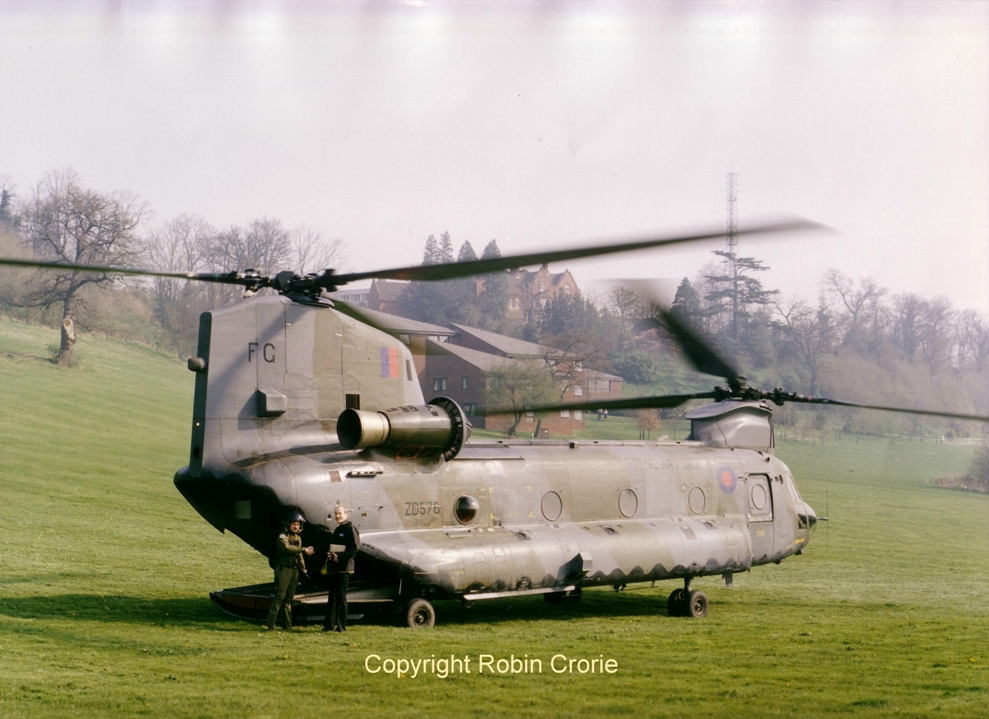
The quashing of the findings of gross negligence against the pilots of Chinook ZD576 shows, among other things, that independently-minded ministers can make decisions that countermand the wishes of their senior officials.

Chinook ZD576 crashed on the Mull of Kintyre on 2 June 1994 killing all 29 on board including 25 senior police and intelligence officials. RAF air marshals blamed the two pilots but the Government set aside the finding last week after an independent review by Lord Philip said the air marshals were wrong.

Nobody knows the cause of the crash but it transpired that the helicopter type that crashed had unreliable safety-critical software which had hundreds of bugs. The MoD’s purchase of the Chinook Mk2’s Full Authority Digital Control [Fadec]  proved to be one of the worst IT-related procurements in Whitehall: the RAF’s software engineers had little control or say over the developing or final Fadec product. In the end the RAF could not verify the software as safe.

Separately a senior RAF engineer categorised the Fadec system as “positively dangerous” nine months before the crash on the Mull of Kintyre.

Successive defence secretaries in the last administration, including government spokespeople in the House of Lords, were unwilling to upset officials and air marshals. They rejected all well-argued calls for a review of the decision of two air marshals to find the pilots of ZD576, Flight Lieutenants Jonathan Tapper and Rick Cook, grossly negligent.

But the coalition’s defence secretary Liam Fox has proved to be much less susceptible to the influence of his officials.

The quashing of a decision by the air marshals could not be set aside by the defence secretary or even a prime minister acting alone. It required a decision of the Defence Council which is the MoD’s most senior departmental committee.

The Defence Council is chaired by the defence secretary, and includes other ministers, the Chief of Defence Staff, senior officers and officials who head the armed services and the department’s major corporate functions. It has a range of powers vested in it by statute.

At a specially-convened meeting of the Defence Council on Monday last week, Liam Fox drove its decision not simply to accept the report of the Lord Philip panel, which said that the MoD should consider apologising to the families of Cook and Tapper, but to quash the finding of a properly-constituted RAF Board of Inquiry.

The Defence Council decided that the finding of two air marshals that Tapper and Cook were grossly negligent was “no longer sustainable and must therefore be set aside”, said Fox in the House of Commons on Wednesday this week. The Council ordered that “those findings shall be set aside”.

And to his further credit Fox, after his announcement to Parliament, had the grace to meet the families of Cook and Tapper in a room near the main debating chamber of the Commons.

As Fox told the Commons:

“It shows the House of Commons at its best when pressure from the House of Commons can cause an injustice to be overturned.”

If a minister can achieve what Fox has achieved – a fundamental change of thinking within a major department of state – coalition ministers can achieve anything within reason.

Labour MP Frank Field, in congratulating Fox for driving the decision to clear the pilots’ names, put it succinctly in his short speech in the House of Commons on 13 July 2011:

“May I congratulate the Secretary of State on showing the guts to get his Department’s public stance to where justice demanded it should have been for many a year?”

All the defence ministers in the last administration will soon be forgotten. If for nothing else Liam Fox will be long remembered for overturning a miscarriage of justice, one of the most grievous in the past 100 years.

Chinook campaign – the 16-year campaign for justice.

Did officials tell MPs the whole truth on NPfIT payments to CSC?

By Tony Collins

Conservative MP Richard Bacon wrote to the NHS Chief Executive Sir David Nicholson yesterday warning that a failure to disclose information to the Public Accounts Committee was a “very serious matter”.

Bacon, a long-standing member of the Public Accounts Committee, wrote to Nicholson about advance payments to CSC under the NHS National Programme for IT.

The MP is concerned that the Department of Health did not mention a £200m advance payment to CSC at a hearing of the Public Accounts Committee on the NPfIT detailed care records systems on 23 May 2011; and the payment wasn’t mentioned in the Department’s subsequent memo to the committee.

Said Bacon in his letter:

“I understand that the advance payment of £200m to CSC was made in April 2011 but the Department of Health’s memo of 7 June 2011 doesn’t mention it. 

“The failure to disclose to the PAC an advance payment of £200m is a very serious matter.  The fact that the payment appears to have happened after 31 March 2011 is scarcely the point.

“What is going on? … 

CSC declared the £200m advance payment in regulatory announcement

CSC has told regulatory authorities in the US that on 1 April 2011, pursuant to the NPfIT contract, the “NHS made an advance payment to the Company of £200 million ($320 million) related to the forecasted charges expected by the Company during fiscal year 2012”.

The payment was reported by E-health Insider last month.

It appears that the Department decided to give the committee details of advance payments to CSC up until 31 March 2011. The undisclosed £200m payment to CSC was made the next day, 1 April.

As the Department of Health wrote to the committee on 7 June there is no clear reason for its choice of 31 March as the cut-off date for informing MPs of advance payments to CSC.

It would not be the first time the Department has withheld the latest information on the NPfIT from what it regards as outsiders, such as Parliament and the media.

When the National Audit Office was investigating the NPfIT several years ago it was not told of the latest Ipsos MORI survey on NHS perceptions of the National Programme.

The Department instead gave the NAO an older and more positive Ipsos MORI survey. The NAO confirmed to me it had not seen the latest survey [which had some negative findings on the NPfIT].  

Today some in the Cabinet Office are exasperated at the disdain with which some officials at the Department of Health – not all – treat outside supervisory organisations such as the NAO, the Public Accounts Committee and the Cabinet Office.

It appears that some in the Department regard these organisations as necessary by-products of democracy that must be tolerated but not encouraged.

Comment:

Major change is unlikely to happen in Whitehall or at least within the Department of Health and NHS Connecting for Health if officials are allowed, with ease, to dismiss their scrutineers with a wave of their hand.

The culture of allowing the DH to withhold the truth about the NPfIT needs tackling. All credit to Bacon and the Cabinet Office for trying to do just that. It’s likely that Katie Davis, the interim health CIO, will also seek to make the DH less introspective and defensive, at least in terms of the NPfIT and health informatics generally.   

**

Bacon’s letter to Sir David Nicholson

This is Bacon’s letter dated 14 July2011 to Nicholson, copied to the head of the National Audit Office Amyas Morse, the chair of the Public Accounts Committee Margaret Hodge, and the Cabinet Office. 

Dear Sir David

NATIONAL PROGRAMME FOR IT IN THE NATIONAL HEALTH SERVICE

I do not seem to have received a reply to my email of 27 June below.

Making advance payments of any kind at all is wholly at variance with the Department of Health’s long-stated boast that the NPfIT contracts “only pay for delivery”, but let us leave aside this basic point for the moment.

I understand that the advance payment of £200 million to CSC was made in April 2011 but the Department of Health’s memo of 7 June 2011 doesn’t mention it.  The failure to disclose to the PAC an advanced payment of £200 million is a very serious matter.  The fact that the payment appears to have happened after 31 March 2011 is scarcely the point.

What is going on?  Please reply to my email below with its various questions without further delay.

Yours sincerely

Richard Bacon MP for South Norfolk, Member of the Public Accounts Committee

Bacon’s earlier letter to Nicholson, dated 27 June 2011

Dear Sir David

NATIONAL PROGRAMME FOR IT IN THE NATIONAL HEALTH SERVICE

I am writing following the hearing of the Public Accounts Committee on Monday 23 May 2011, to follow up on two important issues that were raised during your evidence:

1.       ADVANCE PAYMENTS TO SUPPLIERS

In your supplementary memorandum to the PAC following the hearing you gave a total of advance payments made up to 31 March 2011, in respect of all contracts over the whole period of the Programme, of £2,532m of which suppliers have retained £1,328m. You also identified a further £119 million of advance payments to be earned or refunded.  Since the memorandum was received by the PAC, it has been reported that the NHS made an advance payment of £200 million to CSC in April 2011. http://www.ehi.co.uk/news/acute-care/6971/nhs-made-£200m-april-advance-to-csc

I should be most grateful if you would let me know the answers to the following questions:

1.       Is this report accurate?

2.       Why was this payment was not reported to the PAC, either during the hearing or in the subsequent memorandum?

3.       What was the justification for this payment and what value does it represent to the NHS?

4.       What will happen in respect of this payment if a new memorandum of understanding is not in fact signed with CSC?

5.       I would also be grateful if you would comment on the CSC filing with the US Security and Exchange Commission, which states that in the opinion of the company, if the NHS were to terminate the current contract “for convenience” it would owe fees totalling less than the $1 billion asset value CSC now has on its books for the contract.   How is this consistent with the claim at the PAC  hearing by Ms Connelly that the cost of terminating the CSC deal could “potentially leave us exposed to a higher cost than if we completed as it stands today”?

2. THE COST OF DEPLOYING CERNER MILLENNIUM AT NORTH BRISTOL

Second, I would be grateful if you could comment on the cost of deploying Cerner Millennium at North Bristol, reported in your memorandum as £21 million, including service for 56 months, and on the current expected go-live date.  Specifically:

6.       Can you explain why the delivery date agreed with BT at the contract “reset” was 4th June 2011?

7.       Why it was then revised to 2nd July 2011?

8.       And why it now appears that there is no agreed delivery date at all?

9.       Can you also give your best comparison of the cost of deploying the Cerner Millennium system at North Bristol, with the cost to University Hospitals Bristol of deploying the System C Healthcare Medway system outside the National Programme?  It would appear from media reports that this latter contract includes deployment of functionality including PAS, Accident and Emergency, maternity, theatres, clinical data collection, and a data warehouse and reporting system, as well as integration of third party and current Trust applications.  According to the National Audit Office, the average cost for each new site under the BT South contract is £28.3 million, but the cost of the Medway system to UHB has been reported as £8.2 million over seven years. (http://www.guardian.co.uk/healthcare-network/2011/may/19/university-hospitals-bristol-foundation-trust-awards-e-patient-contract)   What is the justification for this apparent difference?

10.   As the Senior Responsible Owner for the National Programme, can you give your explicit undertaking that the North Bristol contract represents value for money for taxpayers?

I look forward to receiving your reply.

With many thanks

Yours sincerely

Richard Bacon

Mutuals: Government must deliver on radical public services agenda, says Institute for Government

By David Bicknell

Responding to the Government’s Open Public Services White Paper launched by David Cameron this week, the Institute for Government says the agenda is a radical one, but failure to deliver will come at a cost.

Commenting on the launch, the Institute’s Programme Director, Tom Gash said:

“There’s not much that is new in this white paper but it is still a radical agenda for change. Other governments have tried and failed to remodel public services. The difference this time is that the stakes are higher. With massive cuts to public spending, if these measures don’t work, the state will not be in a position to shore up services.

“A white paper by itself doesn’t change anything. To make this vision a reality, a lot of work lies ahead. Failure to take these next steps in any of the policy areas covered by the paper will lead to the risk of future u-turns, uncertainty and failure”.

The Institute argues that several key issues need to be addressed going forward. These include:

  • Mechanisms for accountability in service delivery must be thought through. Voting in a local election is very different from choosing your GP but in future there are likely to be different combinations of accountability mechanisms for different services.
  • Whilst removing top-down targets  and giving greater autonomy to frontline professionals, government must still be clear on the lowest level of service permissible before this autonomy is withdrawn or restricted.
  • Transparency – data will need to be accurate, timely and accessible if people are going to be able to use it to exercise their choices.
  • Ministers will have to be willing to relinquish power. They’ll still be held responsible for local decisions even though they no longer have control over them.
  • As public services are opened up to new providers, ministers must be absolutely clear about who is responsible for what.
  • Mutuals will need to have the scope to blend state and private investment and not be soley dependent on a single source of funding.
  • Commissioning for outcomes must focus on those outcomes that are measurable. But measuring outcomes is often harder than measuring outputs. For example, it is easy to measure whether a hip operation took place. It is less easy to measure whether or not the operation has improved the patient’s quality of life.

The Institute argues that policies in the white paper are at different stages of their development.  Ministers, central and local government and practitioners will all have work to do if they are to ensure that they are implemented in a way that genuinely improves public services and the lives of citizens. Drawing on its publication Making Policy Better, the Institute recommends that departments will need to:

  • Carry out a “reality check” on policies, involving implementers and/or users of services in testing or piloting them.
  • Consult those affected by changes and address the issues that arise as a result of these consultations.
  • Ensure that policies have been properly costed and that they are resilient to external risks.
  • Make sure the role of central government is properly thought through and that it is clear who is accountable for delivering particular services and the criteria on which they will be judged to have succeeded or failed.
  • Have plans in place for collecting feedback on how policies are being delivered in practice and the mechanisms are in place to act on this feedback.
  • Make sure that policies are implemented in a way that allows government to assess whether they have worked or not and how they can be adapted and strengthened.

 Gash added:

“In order to avoid repeating the experience of the beleaguered NHS reforms, the coalition will need to invest a good deal of time and resources in delivering its radical programme for reforming public services. To publish a white paper and then walk away will not be enough but today’s announcement, with its emphasis on consultation and analysis seems to show that government has learnt from its mistakes and is ready to take the time to deliver something which could change forever the way citizens choose and receive their services”.

Employee-led mutuals: should the public services white paper have gone further?

By David Bicknell

Some commentators believe that the Government could and should have gone further with the publication of the Open Public Services White Paper.

Writing in the Guardian, Colin Cram, the former chief executive of the North West Centre of Excellence, makes some constructive suggestions. He argues that publishing the white paper is “a bold step. It is an attempt to create a coherent and different approach to providing public services. My feeling is that the consultation will be genuine, which will provide an opportunity for criticisms to be addressed and the government to back off from impracticable ideas or change its approach. The risks for the government are that the rhetoric looks likely to exceed the scale of delivery and it could be easy for the parliamentary opposition and the electorate to hold it to account.

Under the sub-heading ‘Making a Change’, Cram makes the following points:

“The white paper places much emphasis on consultation and facilitating change rather than directing. A weakness is that many proposals are projects or programmes and should be subject to the established public sector controls such as “starting gate” and “gateway”. These are not bureaucratic, help identify what should not go ahead, whether the necessary success factors are in place at each stage of the project and whether there need to be changes. These robust approaches save time and money and greatly increase chances of success. The white paper should have provided assurance about applying these disciplines.

“The paper argues that the public sector should be a commissioner of services rather than a provider, yet appears to run out of ideas on where this might operate, focusing mainly on social care and to a lesser degree the hackneyed “back office services”. The government is attracted by employee-led mutuals, but suggests that these will be created voluntarily.

“The potential contribution of the private sector to the diversity of service providers is scarcely mentioned. Lib Dems 3, Conservatives 0? However, local government will increasingly outsource front and back-office services, and we can expect the NHS to continue to do so.”

“Critics might argue that the white paper represents little more than bringing together government policy announcements in a coherent form: health and wellbeing boards, strengthening the powers of local government over the NHS, removing excessive monitoring and oversight by central government, community budgets and retention of business rates. However, it does provide a narrative and context.”

“Absent from the paper is how one might manage the anticipated increasing diversity of service providers. The wider public sector has not been good at this, hence the Southern Cross debacle. Integrated commercial management of markets and suppliers throughout the public sector is vital.

“New commercial models include incentivising suppliers to deliver successful outcomes and assigning the risk to them, though I would question whether payments to suppliers under the work programme will be “based primarily on the results they achieve” unless the bar is set very low. Risk sharing would rule out many social enterprises.”


Chinook crash – the 16-year campaign to right an injustice

By Tony Collins

Chinook ZD576

The day after the fatal crash of Chinook ZD576 on the Mull of Kintyre an RAF Board of Inquiry convened.

There was little to go on: what could be retrieved from the fire at the crash site, and records of recent trouble with the aircraft type, including difficulties with the Chinook Mk2’s software-controlled “Fadec” system.

There had been so much trouble with the Fadec, in fact, that test pilots had ceased flying the Mk2 the previous day. But operational flights continued.

The crash of ZD576 left no survivors: all 29 on board were killed. There was no cockpit voice recorder. No flight data recorder. Particularly for John Cook, the father of one of the pilots, the absence of black boxes compounded his grief.

While a Concorde pilot for British Airways, John Cook led successful negotiations with the Air Accidents Investigation Branch for the installation of cockpit voice recorders on large passenger aircraft.

He recognised the importance of flight data and cockpit voice recorders to investigators and the families of dead pilots because they could show how an aircraft was performing in the moments before it crashed. A cockpit voice recorder could record audible warnings, pilots expressing concern about a possible malfunction and any unusual noises.

Without black boxes it would be easy to blame dead pilots for a major, fatal accident.

Said John Cook in 1999: “I fought to have the recorders installed and then I lost a son in an aircraft which didn’t have one.”

The campaign begins

In crashes of civil airliners the data from the black boxes often gives the best clues as to the likely cause or causes. Even when the black box data is fully recovered the likely causes of an accident can elude investigators.

So how could anyone know what happened in the moments before the crash of ZD576? In 1995, nearly a year after the accident, the RAF Board of Inquiry produced its findings.

The campaign to restore the reputations of the two pilots of ZD576, Flight Lieutenants Jonathan Tapper and Rick Cook, began.

MoD  and RAF attack their own software experts

In some ways the investigation into the crash was exhaustive. In other ways it was limited. It reflected the mindset of the RAF at the time, which was that Chinooks were needed desperately, and, if possible, in greater numbers. The last thing the RAF hierarchy needed was credibility being given to the internal concerns about the helicopter’s Fadec system, in which software controlled fuel to the Chinook’s two jet engines.

Days after the crash on the Mull of Kintyre in June 1994, a senior RAF officer expressed his frustration at the internal concerns over the Fadec.

In a signed, draft memo, the RAF officer attacked the MoD’s own software experts at Boscombe Down. He said their “ongoing stance towards the Mk2 contrasts sharply with the considerable efforts being made by the front line to bring the aircraft into service and maintain a capability”.

Boscombe Down’s attitude, he said, “does nothing to engender aircrew confidence in the aircraft”.

It was beginning to look as if the RAF would not tolerate an investigation that concentrated too much on the integrity of the helicopter and its software. But, to its credit, the RAF brought in the civil Air Accidents Investigation Branch.

The AAIB did not have a free hand, however. The limits of its investigation were agreed with the RAF. The AAIB could not simply require all relevant documents. It was up to the MoD and RAF what documents it showed the AAIB.

And the MoD supplied the bare minimum.

Documents not shown to investigators

Many potentially-relevant documents were to emerge years later, long after the RAF Board of Inquiry had been disbanded. The documents came to light, in part, because of leaks by well-intentioned insiders who were concerned that possible flaws in the airworthiness of the Mk2 were being overlooked.

Back in 1994, the AAIB’s chief investigator Tony Cable knew there had been problems with the Fadec, none of which the RAF hierarchy regarded as serious. Among the many things Cable wasn’t told was that the Superintendent of Engineering Systems at the MoD, Boscombe Down had, nine months before the crash, found flaws in the Fadec that he said in an internal memo were “positively dangerous”.

And Cable didn’t know at the time of his investigation that the MoD was suing the Fadec suppliers because of faults in the system’s software that were exposed by a ground test of a Chinook at Wilmington in the US, Boeing’s “Center of Excellence”.

When the Fadec was working properly, which was most of the time, it made the job of Chinook pilots easier: they could fly the helicopter without controlling power to the engines. When the Fadec systems were not working properly they were apt to leave no trace of a fault, and could endanger the lives of all on board, said Squadron Leader Robert Burke who, at the time of the crash, was one of the most experienced Chinook Mk2 unit test pilots.

A near-catastrophe that left no trace

Four years after the crash of ZD576, Bric Lewis, the pilot of a US Chinook, exclaimed involuntarily “Oh God” into the microphone of his headset. His words were transmitted to all on board. His Chinook was falling out of the sky … upside down.

The displays in the cockpit showed no warning lights… no evidence of any technical malfunction. Then, as inexplicably as the Chinook had turned over, it flipped back again, into a normal, wheels-down position. After it landed safely no serious fault was found.

Bric Lewis and his crew lived to provide evidence that their Chinook had turned over. If they had died in the incident, would they have been blamed on the basis that no serious malfunction capable of causing the crash had been found?

An extraordinary campaign

That the campaign to clear the names of Cook and Tapper has succeeded is extraordinary, and yet it’s not in the least extraordinary. It has been a campaign characterised by its intensity, perseverance, and the status and number of those involved.

It has been a campaign that pivoted on the tenacity of the families of the two pilots and their pro bono advisers. Some of the campaigners cannot be named.

MoD spin

The campaign has also been marked by the determination of the MoD and RAF hierarchy not to attach any credibility or relevance to newly-disclosed information.

In the words of then independent MP Martin Bell in 2001: “The MoD is being anything but straightforward… clearly civil servants are trying to spin the facts to suit the air marshals’ agenda.”

With a manipulative use of language, and an evasive but self-confident way of answering of difficult questions – sophistry exemplified – the MoD was a decisive influence on defence ministers of the last administration.

Every defence minister in the last government was persuaded that there could be only one cause of the accident, and that was pilot error. Tony Blair wrote in his own hand that the pilots were to blame.

So how did one of most grievous military miscarriages of justice in the last 100 years come to be corrected? It was thanks, in part, to the injustice’s enduring visibility in Parliament and in the media, such that David Cameron, when in opposition, promised, if elected, to launch a formal review of the decision to blame the pilots.

And only a prime minister or his defence secretary could, in effect, take the steps necessary to overturn the judgement of a properly-constituted RAF Board of Inquiry. In ordering the Philip review, Cameron proved as good his word.

Liam Fox, too, unlike defence secretaries in the last government, has shown by his actions that he is not prepared to be putty in the hands of his civil servants and RAF air marshals. All credit also to Nick Clegg for his support of the Philip review.

Did the RAF try to dissuade Cameron from holding a review?

It’s unclear whether the RAF tried to discourage Cameron from setting up a review. What is not in doubt is that, in January 2010, a few months before the general election, four former chiefs of the air staff, and a former RAF Chief Engineer, wrote to the Daily Telegraph saying they would wish to brief ministers if there were to be “yet another” review of the RAF’s decision to blame the pilots for the crash of Chinook ZD576.

In their letter, Sir Michael Graydon, Sir Richard Johns, Sir Peter Squire, Sir Glenn Torpy, and Sir Michael Alcock said the finding of gross negligence against the pilots of ZD576 was “inescapable”.

“We understand that in the event of a Conservative administration coming to power it will revisit the Mull of Kintyre Chinook accident and consider the negligence finding,” said the letter of the five knights. “Each one of us has reviewed separately the findings of the Board of Inquiry and reached the same conclusion, namely that basic airmanship failings caused this tragic accident.

“If yet another review is to take place then we would welcome an opportunity to brief ministers and discuss in necessary detail why this finding remains inescapable. In particular, it will be explained precisely why it cannot be overturned by recourse to a hypothesis for which there is no evidence and which is revealed as wholly implausible when tested against the known facts.”

Sir Michael Graydon
Chief of the Air Staff 1992-1997
Sir Richard Johns
Chief of the Air Staff 1997-2000
Sir Peter Squire
Chief of the Air Staff 2000-2003
Sir Glenn Torpy
Chief of the Air Staff 2006-2009
Sir Michael Alcock
Chief Engineer (RAF) 1994-1999
London W1

It is likely that the Philip review came under pressure from the MoD and the RAF not to question the finding of gross negligence. The fact remains, though, that nobody knows the cause of the crash. It could have been pilot error. It could have been a chain of events that had little or nothing to do with pilot error. Indeed the AAIB investigation of equipment recovered from the wreckage revealed several anomalies that were never explained.

That said Tony Cable noted that there was little evidence to be gleaned from the investigation. Cable told a House of Lords select committee on 7 November 2001: “Throughout this investigation the evidence was remarkably thin, from my point of view, I must say”.

What could have caused the crash?

There were many potential causes of the loss of ZD576. What can be said with certainty is that we don’t know why it happened, or the events that preceded it.

One of the lessons is that “evidence” from aircraft manufacturers and their subcontractors should be treated with the same scepticism as speculation about the actions of the pilots. After the crash of ZD576, the main attention of the RAF and the MoD was on the possible actions of the pilots, not on the possible behaviour of the aircraft.

Nobody in the RAF hierarchy questioned the fact that most of the allegations against the pilots were made on the basis of manufacturers’ “evidence”. If that evidence is set aside as lacking impartiality, and indeed the AAIB does not confirm the accuracy of that evidence, there is no basis even for speculation about the actions of the pilots.

One of the things the campaign for justice has shown is that the RAF hierarchy took a circumscribed investigation of equipment found in the wreckage as the basis for a case against the pilots.

Black boxes found in the debris of civil airliners are sometimes transported under armed guard to independent investigators. Manufacturers are not always allowed to look at their equipment until it has been studied independently. Yet in the case of ZD576 manufacturers’ evidence has been taken as the whole truth. An Mod lawyer at the ZD576 Fatal Accident Inquiry in Scotland in 1996 sought to persuade the Sheriff that the manufacturer’s evidence was “hard fact”.

To my knowledge there has never been an investigation by the National Transportation Safety Board, the US equivalent of the AAIB, in which uncorroborated, unchecked evidence from aircraft manufacturers been taken as hard fact.

Today, the lack of understanding at the top of the RAF over how much information is needed after crashes of civil airliners to establish the likely chain of events may help to explain why air marshals still blame the pilots of ZD576.

In their eyes, the lack of evidence of serious technical malfunction appears to mean that the pilots were in control of the aircraft. Such a simplistic assumption would not be made in a full civil aircraft crash investigation.

Justice has now prevailed thanks to the Cameron government, supported by Sir Menzies “Ming” Campbell, Martin O’Neill, and numerous other parliamentarians including Lord ChalfontJames ArbuthnotDavid Davis and Frank Field . There are too many other campaigners to name, though I make exceptions with Hooman Bassirian, Karl Schneider and Mike Simons who, at Computer Weekly, were willing to shape and publish innumerable stories in support of the Chinook campaign. David Harrison, a freelance producer  at Channel 4  News, which has covered developments since the day of the crash, first alerted me to the flaws in the Chinook Mk2’s Fadec.  Most of the documents relevant to the crash came to me from the Tapper family.

Air marshals will never accept that the pilots were not to blame. But that’s a hallmark of institutional disasters: once a decision is taken on the main cause that decision will be supported and stuck to whatever the facts. Thank goodness the Philip review, when it came to its investigation, had an open mind.

**

The campaign for justice for the pilots of Chinook ZD576 – Brian Dixon’s website

PPrune – hundreds of online pages of thoughtful discussion on the crash.

RAF Justice – how the RAF covered up problems with the Chinook Mk2’s Fadec.

Chinook ZD576 – report by Michael Powers QC.

Macdonald report on the crash of ZD576 – by three fellows of the Royal Aeronautical Society.

Flawed Chinook software updated after crash of ZD576.

The Chinook Fadec in-depth – by Malcolm Perks, another of the campaigners

Reaction to white paper publication concerns asset locks, finance, resourcing and support for mutuals

Much of the immediate reaction to the Government’s publication of its Open Public Services White Paper concerns issues surrounding assets, definitions of mutuals and most importantly, support for them, and financing.

Dom Potter from the Transition Institute says, “Noticeable by it’s absence is any provision in the paper to establish a mechanism for ensuring that publicly-owned assets such as council buildings or parks will remain in some form of public, common or shared ownership by communities.

“This will be taken by some as evidence of wholesale privatisation looming around the corner. But in my view the political discourse that will swirl around the issue of asset locks shouldn’t obscure the need to utilise these assets for the wider, long-term public good.

“There is also an issue that isn’t addressed in the paper around how public assets could potentially be used to leverage external investment into public services.

“As long as the assets are secured for public/shared ownership, I would be interested to see what mechanisms might emerge from the Big Society Bank and out of central and local government to enable assets to be sweated in order to raise the initial cash to get emerging mutuals up and running with a sustainable business model.

On mutuals definitions, he says:

“Thankfully for those of us who are keen that each individual spin-out is set up with the legal and governance structures appropriate to it’s unique local context, the one-member-one-vote implication of calling them mutuals is not quite as literal is it could have been.

“There is a clear indication that a variety of ownership models – ‘wholly employee-led, multi-stakeholder and mutual joint venture models’ – are mentioned, although further clarification is needed as to exactly what is meant by these terms.

On finance and support:

“There is mention of an ‘Enterprise Incubator Unit’ set up within the Cabinet Office to ‘provide advice, challenge and resources for public service providers from central government departments and their agencies who want to move from the public sector to the independent sector’. This sounds interesting, but I am wary of the idea of government advising itself on how to set up independently of itself. In my view, the Unit at least needs to be staffed by individuals who have experience of the transition to independent delivery or by individuals with experience of running independent organisations (or, ideally, both) in order to have the desired impact.”

“The Mutual Support Programme is due to come on stream in autumn 2011 according to the White Paper.  This means that there will be support available for entrepreneurial public sector staff more quickly than had been anticipated, given how quiet the Cabinet Office had become around getting the MSP up and running since it was first mentioned last year.”

“Recognised within the paper is the need to look for innovative ways of routing external finance into public services. The Big Society Bank will be a key part of this, and this may be a fruitful way of expanding, for example, the pool of social impact bonds beyond the one pilot in Peterborough prison.

CBI Director General John Cridland says:

“The Work Programme shows how companies of all sizes are successfully working in partnership with social enterprises, community groups and charities. While it is right to recognise the benefits mutuals and smaller providers can offer, the principle of any willing provider also means that larger firms should be able to bring their expertise to bear, and when they achieve better outcomes they should be able to make a reasonable profit. We think the Government could have made this much clearer in the White Paper.”

However, Peter Holbrook, Chief Executive of the Social Enterprise Coalition, takes a different view:

“We are concerned that the proposed reforms will create an unequal playing field in which social enterprises are unable to compete with large private sector providers for public sector contracts.  Social enterprises often do not have the capital or scale required to compete with big private businesses in open markets.

“These reforms must protect our public services, not put them at risk.  Without the necessary safeguards, the consequence of these proposals will be that private providers will dominate public sector markets.  Taxpayers’ money will flow into profit seeking organisations that exist only to satisfy the needs of their shareholders.  Public services must operate for the communities and people they serve, nobody else.

“The Government’s plans to extend Payment by results across a number of other public services will put private sector organisations at an automatic advantage.  The reality is that without decisive action to use public spending to improve social outcomes, the big organisations will simply use their stronger balance sheets and ability to attract private investment to win contracts.

“We only have to look to the Department for Work and Pensions Work Programme to see that when markets open up, large private sector providers move in and squeeze out smaller organisations.  A very small proportion of the contracts went to social enterprises, despite it being hailed by Government as a boost for the Big Society.”

Ed Mayo, Secretary General of Co-operatives UK, says:

“The government’s public services reform white paper presents an important opportunity for co-operatives and mutuals to bid for and deliver public services. As trusted organisations that are able to unleash the talents and energies of their employees and users, co-operatives can provide good quality public services.

“Longstanding examples of thriving and successful co-operatives running services like foster care, leisure centres and affordable housing and out of hours GP services show that the co-operative model works extraordinarily well.

“As the trade association for co-operatives we want to see co-operatives thrive in all areas of the economy, including delivering public services. Like many, however, we are wary of some elements of the government’s approach to opening up public services to outside providers.

“First, there are serious issues facing public sector employees and users looking into the co-operative option – from uncertainty about jobs and pensions to the challenge of public sector workers setting up new businesses – that need to be addressed if public sector mutuals are to succeed.

“Second, in the current context, it won’t help staff or users if all the government does is to open the door to privatisation with fake mutuals that fail basic quality tests of member ownership and democracy.

“Third, there is a gap between national policy and local practice, with a lack of understanding of the benefits of co-operatives delivering public services amongst local authority councillors and officers.

“Fourth, there is an urgent need for high quality advice and support with sufficient resource to make sure that this is in place for all who need it.”