Category Archives: operational issues

Cerner project over budget by 100 times amount of local heart monitor donations

By Tony Collins

When the Lord Mayor of Bristol presented a cheque for £20,000 to buy 10 cardiac monitors for local hospitals he could not have known that NHS officials were quietly spending more than 100 times that amount on an over-budget Cerner project.

A charity, the Frenchay Cardiac Support Group, raised the £20,000 through a shop and fund-raising events. It was 100th the amount  of the overspent element on a project to install an NPfIT Cerner patient administration system at the North Bristol NHS Trust.

Officials at NHS Connecting for Health and the Trust may consider it unfair of Campaign4Change to compare a charity donation with the unplanned extra costs of an IT-enabled change programme. But whereas North Bristol is accountable to local patients and fund-raisers for the £20,000 donation, it has no duty to explain to its patients (or anyone) how or why it has spent £5m on a Cerner project that was expected to cost the Trust about £3m.

The figures are buried deep in the Trust’s latest board papers. There has been no discussion of the overspend during the public part of the Board’s March meeting. Nor was it mentioned on the Board’s agenda for the meeting.

What the Trust says

The Trust declined our invitation to explain the overspend saying that it has commissioned a review of the Cerner project by PWC. Its statement to us said:

“North Bristol NHS Trust has commissioned an independent review into the issues surrounding the implementation of its new electronic patient record system. This will be carried out by PricewaterhouseCoopers LLP.  The outcome of the review will be published in due course.  We do not feel it is appropriate to comment further until the conclusion of the review, which is expected to take several weeks.”

The Trust’s papers say that the majority of capital spending in January and February was on the Cerner project. The anticipated spending on the project will be more than £5m which would see the Trust considerably overspent because of the difficulties encountered, say the papers.

The same Board papers put the Trust’s IM&T overspending at about £2.3m. This is on top of the hundreds of millions of pounds that NHS Connecting for Health is paying BT to install Cerner at sites in the south of England, including north Bristol.

Comment:

NHS Trusts across London and the south of England are expected to install new Cerner systems in the coming years. London is in the midst of a major procurement, as is the south. If the disruption is as serious as in some earlier implementations thousands of patients will be affected. So what?

At North Bristol the NPfIT implementation of Cerner has gone seriously awry. Besides the duplication of medical records, disruption to appointments, and, for the first time, the missing of a two-week wait target for cancer patients, there have been at least 16 clinical incidents; and the Trust’s papers say there has been a “significant increase in DNA [Did Not Attend an appointment] rates since the implementation of Cerner”.

Time heals?

Does it matter? It will all settle down in time say NHS officials.

Indeed some in the NHS and the scientific community in general have a view that taking known risks are part and parcel of achieving Progress. If lives are lost pushing back frontiers of knowledge it is for the greater good. Hence the justification for risks taken in launches of the Space Shuttle and building new designs of bridges, tunnels and aircraft.

The greater good

It’s a philosophy not lost on officials at NHS Connecting for Health. Go-lives of electronic patient record systems will be disruptive and may even affect the care and treatment of patients. But it’s for the greater good and the damage won’t last too long. Besides, if the health of any individual patients is affected, this will be supposition: no official evidence will exist.

So should patients fear the implementation of new hospital-wide systems? It’s a little like the early flights of commercial aircraft. Most flights will go without incident but now and again a passenger jet will crash.

One difference between aircraft crashes and hospital IT implementations is that crashes are usually investigated by law, and lessons applied by regulatory authorities to make flying safer. The NHS has no duty to investigate or apply lessons from its IT-related mistakes. Which is one reason that the lessons from the Cerner implementation at Nuffield Orthopedic Centre in Oxford in 2005 have still not been learned. For example there were important differences in the way the Nuffield’s staff and doctors worked, and the way the system was designed to work.

Who would want to fly in an aircraft that hasn’t been certified as safe? So should patients experience an NHS that has uncertified patient record systems?

In aircraft crashes deaths are obvious. There is often a clear cause and effect. In the NHS there is no certification of IT systems. A hospital can go live with whatever systems it wants, whatever the effect on patients. Indeed the reporting of any damage to patients is down to the Trusts. That’s a clear conflict of interest – like relying on the builders of a supertanker to report the effects on wildlife and fish of an oil spillage.

It’s time for a change.

It’s time for the NHS – and the Department of Health and particularly NHS Connecting for Health – to get professional about hospital-wide IT implementations.

It’s time for regulation and certification, minimum standards of safety and independent reporting of disasters.

Links:

Does Hospital IT need airline-style certification?

Halt NPfIT Cerner projects says MP

NPfIT Cerner installation at Bristol as “more problems than anticipated”

Why is North Bristol Cerner project so expensive?
An ongoing IT crisis case study – North Bristol NHS Trust

Lessons from Cerner go-live at Nuffield in 2005.

Summary Care Record plods on

By Tony Collins

Pulse reports that the Summary Care Record database had 13.1 million records by 22 March 2012, which is around the number the DH had expected for April last year.

It reports that the figures have prompted David Flory, deputy NHS chief executive, to call for ‘rapid further progress’ on the rollout.

In his latest quarterly report on NHS performance, Flory highlighted the SCR as an area for improvement. “Implementation does not meet expectations and rapid further progress is needed,” said Flory. “While performance has improved, the rate of this improvement is beneath the expected trajectory.”

The number of patients with an SCR has almost doubled from around seven million a year ago. Sixteen PCTs have more than 60% of patients with an SCR.

Critical Mass

In February, Kilburn GP and SCR director Gillian Braunold was reported in Pulse to have said the rollout has reached a ‘critical mass’ in some areas. Out-of-hours providers, and those in urgent care and hospitals are viewing about 1,600 records a week.

Braunold said information within the SCR was changing some therapeutic decisions. She also said there was also evidence from areas where end-of-life care plans had been uploaded to care records that more patients were dying in their preferred place.

Nurses at NHS Direct are to have access to care records and the DH is working on plans to replace HealthSpace and enable patients to access their full patient record.

Comment – The devil’s in the detail

It is difficult to put Dr Braunold’s comments into context without published independent evidence of which there is little or nothing that’s recent.

In public, NHS Connecting for Health has never wavered in proclaiming the success of the SCR but it has sought to control authoritative information on the SCR programme.

CfH commissioned an independent UCL report on the NPfIT SCR  “The devil’s in the detail”, but asked researchers to, for example, delete the cost of the SCR programme. CfH also removed passages from official SCR documents it gave the UCL researchers.

The final UCL report , which said in a footnote ” financial data deleted at the request of CFH”,   found that there were inaccuracies in the SCR database. UCL researchers also learned that the SCR database could not be relied on as a single source of truth.

Some CFH staff found the notion of possible ‘disbenefits’ of the SCR difficult to conceptualise, said the UCL report.

There is no doubt that an accurate and well-populated SCR would be useful, especially for out-of-hours doctors. They need to know – at least – what drugs patients are taking and what if any adverse drug reactions they have had.

As the DH tells patients: “Giving healthcare staff access to this (SCR) information can prevent mistakes being made when caring for you in an emergency or when your GP practice is closed.”

But a national database is not the way forward. It is unlikely to be trusted as accurate or up-to-date. It would be better to give patients and clinicians access to locally-held NHS-sourced information. We’ll report more on this separately.

Meanwhile the SCR plods on at a high cost – more than £220m so far. BT, the SCR’s main supplier, will be pleased the programme is continuing, as will those civil servants and consultants who have been involved with the programme for several years. But whether the database is of real value to doctors and patients we don’t know for certain. The DH tends not to publish its independent advice.

Summary Care Record a year behind schedule, DH warns – Pulse

Time for truth on Universal Credit IT

By Tony Collins

A normally-reliable contact says that the IT project for Universal Credit is in trouble.

A deadline this month to lock-down features in the scheme will not be met, says the contact. This failure will jeopardise the go-live date of October next year for the start of Universal Credit.

The contact also says that the Government will make an announcement on the scheme in September which may refer to a write-off of at least £150m on the IT project. The suggestion is that although the scheme is in trouble officials may be reluctant to impart the whole truth to ministers.

We wonder about the difficulties of agreeing system features when there are so many parties involved in the IT project: HMRC, DWP, local authorities, banks and private sector employers. The contact also says Oracle is having trouble handling functionality.

Officially all is well. The Secretary of State for Work and Pensions, Iain Duncan-Smith, spoke with confidence about the future of the scheme in the House of Commons last week.

That said, he told Parliament on 5 March about the “issues and problems” related to HMRC’s Real-Time Information project which is an essential part of the Universal Credit IT project. He said: 

HMRC, which is now responsible for this measure, meets me and others in the Department regularly. We have embedded some DWP employees in the HMRC programme; they are locked together. They are, as I understand it, on time, and they are having constant discussions with large and small employers about the issues and the problems, and assessing what needs to be done to make this happen and to make all the changes.

“We must remember that all those firms collect those data anyway; the only question is how they report it back within the monthly cycle. We are on top of that but, obviously, we want to keep our eye on the matter.”

Problems with the IT for Universal Credit – the Government’s leading “agile” software project – may bring a smirk to the faces of those who believe that departments cannot manage agile-based schemes. But agile proponents have long said that Universal Credit is only partially agile – and they have argued that agile should not be mixed with traditional software-writing approaches.

Suppliers on Universal Credit, which include HP, Accenture, IBM,Capgemini and Oracle, are not particularly well known for their love of agile on Government IT projects.

Time for the truth  

The Department for Work and Pensions is refusing to publish any of its reports and assessments on the IT for Universal Credit. The secret reports include:

–   A Project Assessment Review in November 2011

– Universal Credit Delivery Model Assessment Two (McKinsey and Partners)

– Universal Credit end-to-end Technical Review (IBM).

Comment

Officials and ministers speak publicly about the solid progress on Universal Credit IT while refusing to publish their internal reports on progress or otherwise of the scheme.

Past NAO reports have shown that ministers and sometimes senior officials are sometimes kept in the dark when major IT-related projects go wrong. Project steering groups are told what they want to hear. The Programme Board on the NPfIT discussed successes with enthusiasm and hardly mentioned serious problems, judging by minutes of its meetings.

We hope that all is well with Universal Credit IT. The project is, after all,  an advert for innovation in the public sector. If it’s in trouble the truth should come out. Keeping it quiet until September means that suppliers will continue to be paid for several months unnecessarily – perhaps to keep them supportive?

Labour was overly defensive and secretive about its many IT-related failures whereas “openness” is the coalition’s much-favoured word. It’s a pity it has yet to be applied to the Universal Credit IT project.

Secret DWP reports.

Who’ll be responsible if Universal Credit goes wrong?

Banks “unlikely to deliver” Universal Credit

Universal Credit IT plans too optimistic warn MPs.

Universal Credit latest

Is Choose and Book failing?

By Tony Collins

Choose and Book, which is one of the limited successes of the NHS National Programme for IT, may be “withering on the vine” says Pulse.

It reports that the Department of Health is investigating a fall in the proportion of GP referrals made through Choose and Book. Several PCTs have described Choose and Book as “failing”.

Pulse says that the Government’s notional target is for 90% of GP referrals to be made through Choose and Book, but the latest figures indicate usage has fallen from a high two years ago of 57%, to around 50% in January 2012

Initiated in 2004, Choose and Book is now in use in every PCT and provider organisation across the NHS in England, including many independent sector organisations that deliver services to the NHS under a standard, national contract.

Choose and Book provides patients with the offer of choice of hospital and clinic and a booked appointment.

The Department of Health told Pulse that there have been falls in use in some areas but it was committed to ‘embed Choose and Book into daily clinical practice’.

Choose and Book was classified as ‘failing and worsening’ in February board papers from Bristol, North Somerset and South Gloucestershire PCTs, says Pulse.

DH press release in 2003

A Department of Health press release on the award of a contract for an electronic booking system to Atos said in October 2003 said

“By the end of 2005, every hospital appointment will be booked for the convenience of the patient, making it easier for patients and their GPs to choose the hospital and consultant that best meets their needs.”

Pulse suggests the drop in interest may be because GP practices are no longer paid to use Choose and Book.

Through “local enhanced service” payments to GPs, primary care trusts have given family doctors a strong reason to use Choose and Book. The payments to GPs have ranged from about 50p to about £4 for every patient booked through Choose and Book. That funding is drying up.

A locum GP who commented on Pulse’s website suggests that Choose and Book will fall into disuse without financial incentives: “I couldn’t fit it [a Choose and Book appointment] into a ten minute consult what with QOF [quality and outcomes framework, part of the GP contract] the patient’s list etc – had to do referrals at the end of the day, so never used it.”

Comment

The failure of Choose and Book to reach anything like the original target of 100% use throughout the NHS shows the fallacy of paying people, in this case GPs, to use national IT systems.

New IT should be so needed that its use doesn’t depend on special payments to the end-users. Choose and Book was trumpeted by some major suppliers as a simple and obvious solution – rather like an airline reservation system; and after years of bedding down the technology works. But GPs cannot be forced to use it.

The Department of Health had considered the NPfIT  to be the centre of universe, and that doctors would want to use it for the common good.

The fact is that GPs  care only about their patients – which is as it should be – and if they consider the system detracts from the time spent with their patients the common good becomes an abstract, indeed meaningless, concept.

Choose and Book was always a good idea, a fun thing to work on. But does a 50% take-up after nine years justify the hundreds of millions spent on it? The Department of Health is hopeful the scheme will eventually succeed. But then the DH has always been confident the NPfIT would succeed.

DH to investigate fall in the use of Choose and Book – Pulse.

IT crisis management – an ongoing NHS case study

By Tony Collins

When a public-facing go-live goes wrong should communications be neutral in tone – or accentuate the positive?

On 8 December 2011 North Bristol NHS Trust went live with the Cerner Millennium electronic patient records system under the NPfIT programme.

At first Trust staff thought the difficulties were confined to a mix-up over outpatient appointments but it later transpired that there were 16 “clinical incidents” between 1 December 2011 and 17 January 2012 that were related to the Cerner Millennium implementation.

The Trust has published regular public information notices on the benefits, expected benefits, and problems arising from the Cerner implementation.

Reassuring in tone, the notices have made no mention of anything more potentially serious than administrative “issues”:  non-existent appointments were set up and letters sent to patients in error. The notices said that though the “issues” caused disruption and frustration, patient safety had not been compromised. The Trust apologised to staff and patients.

Clinical incidents

No mention was made in the notices of staff having reported clinical incidents in which the new patient records system was a causal factor. The NHS usually categorises  each clinical incident as a  “near miss” or “actual harm”.

In Campaign4Change’s various conversations with the North Bristol Trust over the potential seriousness or otherwise of its IT problems, one thing has been clear: it is pleased with the level of public information it has given out over the problems:

–       regularly-updated messages on its website,

–       briefings to the media including interviews for regional BBC and ITV channels by Ruth Brunt, the Trust’s chief executive,

–       board papers,

–       on-time answers to requests under the Freedom of Information Act

–       leaflets and posters placed in outpatient clinics and on car parking machines explaining that the Trust was implementing a new computer system and apologising for any delays patients may experience

The Trust also gave GPs a dedicated telephone number, fax number and email address for GPs or their patients to contact for further advice.

Profuse public information

We agree that the Trust has run a diligent public information campaign; and its communications staff have always responded quickly to our calls –  and with the documents we requested. The staff were frank in answering our questions. They told us that no decision has been taken yet on whether the Trust will publish the results of an independent inquiry into the Cerner implementation.

But if the Trust doesn’t publish the lessons from its Cerner implementation, it may wish to be reminded of a warning by the Local Health Board of Merthyr Tidfil, at the top on its Clinical Incident Reporting Policy paper: –  To err is human; to cover up is unforgivable; to fail to learn is inexcusable.         

If the Trust does not publish how will others learn from its mistakes?

Accentuate the positive?

The quantity of public information released by North Bristol NHS Trust is not an issue – but how informative is  it? Does the wider culture of the Trust still force staff to accentuate the positive?

The first of the Trust’s website statements on the problems of the Cerner implementation came about five weeks after the go-live. The opening sections of the statement made no mention of any problems. Indeed a series of bullet points listed the benefits of the system:

  • Patient records will now be securely stored electronically on a single system, replacing paper records.
  • Authorised clinicians can quickly find and share information on patients and their medical history and no longer rely on paper filing records.
  • Clinicians will also be able to access records at the patient’s bedside and can input information and statistics immediately.
  • Patients will no longer have to repeat their details to different clinicians as they will be accessible in one place.
  • Tests and outpatient appointments can be set up immediately with the patient.

The Trust’s website statement went on to say that “many”wards as well as A&E at Frenchay Hospital [Bristol] are using the new system.

Only if you’ve read this far will you see a reference to problems.

“However, we have experienced some unexpected problems in the last few weeks with outpatient appointments…”

“Huge improvements”

The current media statement is, again, more upbeat than neutral.  The vague mention of problems is countered by the equally vague claim of “huge” improvements.

“At North Bristol NHS Trust we have been implementing a new electronic patient record system to replace an outdated, less efficient system. Our wards, two minor injuries units, the Emergency Department, theatres and maternity are using the new system.

“However, we have experienced some unexpected problems with some of our outpatient clinics resulting in non-existent appointments to be set up and letters sent to patients in error. Our priority is always patient safety and we are clear that this has not been compromised.

“These issues have caused disruption and frustration for our patients and our staff and we recognise that this has not delivered the level of service that we expect, and the public expect, from us. We apologise wholeheartedly for that.

“Our staff have shown real commitment, hard work and dedication to continue to deliver patient care. Our Information Management & Technology Team worked very hard to rectify these problems as quickly as possible and we have seen huge improvements.

“The system in all outpatient clinics has now been rebuilt and relaunched. These clinics are now in a position to effectively use the new electronic records system. We anticipate there will be a further transition period for staff in those clinics. We firmly believe that the new system, once fully implemented, will improve services for our patients and provide real value.”

Campaign4Change pointed out to North Bristol that board papers on the troubled Cerner implementations at Barts and The London were commendably detailed and informative.

Barts had referred breaches of government targets on waiting times, complaints from patients, delays in the reporting of statutory and other trust performance information, extra costs, losses of income because of reduced activity, and the effect of data errors. There has been little of any of this from North Bristol’s public information campaign.

Freedom of information

Indeed North Bristol has refused to answer questions that were asked under the FOI Act by D Haverstock of the South West Whistleblowers Health Action Group.

The Trust refused Haverstock’s requests for:

–        a copy of your Cerner implementation plan, including pilot

–        the criteria on which the go-live decision was taken

–       a copy of the issues log for the implementation, with a full history of closed and open items.

–        reports on Cerner Project Board/Steering Committee meetings.

The Trust did give Haverstock a vague answer to her question on whether the Trust will have to take over the running costs of Cerner from 2015 when the Department of Health’s NPfIT contract with BT ends.

The Trust said the running costs for Cerner will become the Trust’s responsibility from October 2015 – but it doesn’t know for certain what the costs will be.

“The exact costs are still being calculated, but will be around the same levels as our previous patient administration system, we estimate,” said the Trust.

North Bristol declined to answer Haverstock’s other questions because “at this time the Trust feels that to answer your questions regarding the Cerner Millennium implementation would compromise our position with BT and Cerner”.

Rightly, Haverstock challenges the Trust’s use of the word “feels”. Rejections of FOI requests should be based on facts not its feelings.

Says Haverstock in her request to the Trust for an internal review: “Subjective feelings are not a valid reason for rejecting an FOIA request. What is your objective, evidence base for rejecting this request? [Thank to Theyworkforyou.com for this information.]

Comment

Poorly-designed health IT can kill, according to a US Institute of Medicine report “Health IT and Patient Safety Building Safer Systems for Better Care” in November 2011.

The report says:

“Poorly designed health IT can create new hazards in the already complex delivery of care.

“Although the magnitude of the risk associated with health IT is not known, some examples illus­trate the concerns.

“Dosing errors, failure to detect life-threatening illnesses, and delaying treatment due to poor human–computer interactions or loss of data have led to serious injury and death …”

There’s no evidence that the problems at North Bristol have caused any harm to patients. Indeed the Trust, in reporting the clinical incidents in response to a BBC’s reporter’s FOI request, says its “robust safeguarding processes, as well as additional checks and balances in all departments” have “ensured that clinical safety was not compromised and no patients were put at risk”.

It adds: “Our priority is always patient safety and there is no indication that this has been affected.”

But would we know if patient safety had been affected? In its public information campaign the Trust has been prolific. But the accent on the positive, rather than a neutral and factual account of the specific problems, has left us with little confidence that all the truth has yet come out.

In an IT-related crisis it is not a mass of information that the public and media regard as helpful but specific answers to specific questions. Has North Bristol managed its IT-related crisis well? Up to a point, Lord Copper.

MP questions costs of North Bristol Cerner system

Sir David Nicholson challenged on North Bristol’s Cerner costs

North Bristol system has more problems than anticipated.

North Bristol hits appointment problems

Cerner system “too entrenched” to be scrapped.

Lessons from “stupid” NHS IT scheme – Logica boss

Some wise words from Andy Green, CE of Logica, on lessons from the NPfIT and other failures

By Tony Collins

Andy Green, CE, Logica

Andy Green, chief executive of Logica, speaking to the BBC’s Evan Davis about the NHS National Programme for IT, NPfIT, said:

“It is a stupid thing for the supply chain to have answered, and it’s a stupid thing for the customer to have asked for.”

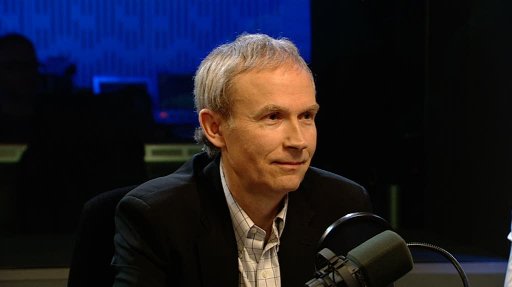
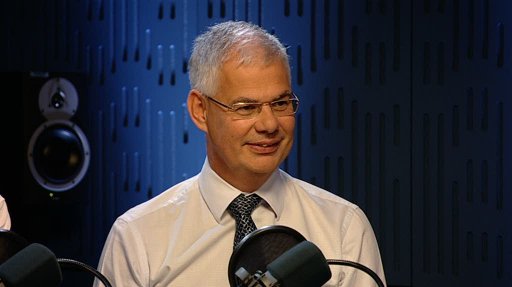
Green was speaking on Radio 4’s The Bottom Line about corporate “cock-ups and conspiracies”. Other guests were Phil Smith, chief executive of Cisco UK and Ireland, and entrepreneur Luke Johnson.

Green, who joined Logica as CEO in January 2008, said he was in one of the bidders for the NPfIT when he was at BT.

The plan, he said, had been to put the same system into every hospital but later foundation hospitals were able to opt out of the NPfIT.

“Half way through [the NHS IT programme] foundation hospitals were invented,  and suddenly foundation hospitals did not have to go with what the NHS said at all”.

He added: “There were fundamental errors in the whole procurement process, and then real difficulty in delivering what had been promised.”

Evan Davis said the NHS IT scheme had cost billions, achieved little and had been running for years. He asked Green: “What’s the story?”

Green said some things went well including the supply of a network that connects pharmacies and doctors. But …

“What  had been promised by the supply chain was fantastic software that had not been designed yet that was going to completely revolutionise hospitals and delivering that proved to be horrendous… in the end it is foolish to set out on a programme that is going to take seven years with a fixed procurement up front, which says we all know everything about it …”

Lessons

Green spoke of the need for the supplier to understand exactly what the customer wants and whether it is deliverable before the parties agree to draw up a project specification.

“I think the world is beginning to learn about incrementalism. Let’s do something that we can all see and understand.

“Some of our clients we now work with in common teams – we call it co-management – and only when we have worked out exactly what is going to work in the client, and we can deliver, do we specify it as a project.

“Those things tend to go a lot better. We have got used to the fact that we don’t know everything.”

Luke Johnson

Luke Johnson, who is a former chairman of Channel 4, criticised IT suppliers for not getting it right often enough.  “I have bought quite a lot of projects and been involved as a customer many times… As a customer it is a very scary thing because clearly you are not an expert. Your providers are experts and yet they do not seem to be able to get it right often enough it seems to me, given how much they charge.”

Green said there is a high failure rate in the IT industry. “The client sets out one view at the beginning and then they have to change. The sensible defence to this is the partitioning into smaller items and relationships.

“We bluntly always think of our clients over the long run. You need to know people so that you can sit down and have a decent conversation. Too often when these things start to go wrong everybody runs for the contract. Experienced buyers and sellers do not do that: they run for each other and they talk it through, and they work it out, and they put it back on track.

“It’s value that matters. It’s doing something that really changes Patisserie Valerie’s business. [Luke Johnson is chairman of Patisserie Valerie.] What can you do that would transform that. If you can get that done, then if it over-runs by 20% it probably does not matter.”

Luke Johnson: “It depends how much money you’ve got.”

Lowest-price bids

Phil Smith, Cisco

Phil Smith of Cisco said government often has the biggest problems because “they squeeze so much in procurement there is little good value and goodwill left”.He said that on good projects problems are tackled by cooperation but “if every piece of value has been squeezed out before you procure it, your only option is to get something back from it”.

Beware procurement experts

Johnson said if procurement experts take control, and their mantra is to save money, it can often lead to trouble. “I fear that in many aspects of business, it gets down exclusively to price rather than value.

“Quality is out the window. They [procurement experts] can show a saving so they have justified their bonus but the supplier may be rubbish.”

Green said government is in a difficult position when a project starts to go wrong. “You are stuck in a procurement and the poor individual responsible is almost certainly facing a union or a consumer group or a doctor who doesn’t want the thing to happen anyway.”

Evan Davis made the valid point that the costs of projects in the public sector have to be underestimated to get approved. Realistic estimates would be rejected as too costly.

“… The person who is championing this project has to demonstrate to superiors that it is not too expensive. It is only by taking the cheapest bid and starting the thing off that you can sell the project higher up and of course down the line it costs a heck of a lot more.”

Luke Johnson: “We all know in many sectors there are providers that will take things at cost or even less with a view that they will somehow bulk it out and make a margin on the way. They know the client will need variations.

Innovation means taking risks

Luke Johnson: “If you want an innovative society, if you want one that is willing to take risks, to generate new technologies, new jobs, new businesses, then it involves failures and cock-ups.

“I think the British have got vastly better in recent years in accepting that as part of the journey and that is incredibly healthy.”

BBC R4’s The Bottom Line – Cock-ups and conspiracies.

New child support system has 90,000 requirements – in phase one

                               A new old-style government IT disaster?

By Tony Collins

While officials in the Cabinet Office offcials try to simplify and cut costs of Government IT, a part of the Department for Work and Pensions has commissioned a system with 90,000 requirements in phase one.

The projected costs of the child maintenance system have risen by 85% and the delivery date has slipped by more than two years.

Even with 90,000 requirements, phase one, which is due to go live in October, excludes 70 requirements that are “deemed critical” says a report published today by the National Audit Office.

The NAO report indicates that the Child Maintenance and Enforcement Commission has commissioned an old-style large IT system using traditional developing techniques and relying on large companies.

G-Cloud and SMEs have not featured in the Commission’s IT strategy – and it abandoned agile techniques last year on its child maintenance project.

The Commission put the cost of its new child maintenance system at £149m in January 2011. Ten months later it put the cost at £275m, an 85% increase. The Commission was unable to give the NAO a full explanation for the difference.

Lessons from past failures not learned?

Today’s NAO report says there is a risk the Commission will repeat mistakes by the Child Support Agency whose IT system and business processes were criticised in several Parliamentary reports. The Commission takes in the work of the Child Support Agency – and indeed runs its own systems and the Child Support Agency’s in parallel.

Officials at the Commission told the NAO they have a good track record of holding back IT releases until they are satisfied they will work.  “Nevertheless, we found that the Commission is at risk of repeating many of the mistakes of 2003,” said the NAO. Those mistakes include over-optimism and a lack of internal expertise to handle suppliers.

Mixing “agile” and “waterfall” doesn’t work

Initially civil servants at the Commission tried to “mix and match” agile and traditional developing techniques – which Agile advocates say should not be attempted.

In 2011 the Commission gave up on agile and “reverted to a more traditional approach to system development” says the NAO report.

The mix and match approach meant there were two distinct routes for specifying requirements and “resulted in duplicated, conflicting and ambiguous specifications”.  The Commission did not have previous experience of using the agile approach.

The Commission’s child maintenance system was due to go live in April 2010 but the delivery date has slipped three times. Phase one is now due to go live in October 2012 and phase two in July next year but the NAO report raises questions about whether the go-lives will happen successfully. The Commission has not planned in its financial estimates for the failure of the system.

The NAO finds that the Commission has struggled to make its requirements for the new system clear. The Commission’s main developer Tata Consulting Services has had protracted discussions over the meaning and implementation of requirements.

The NAO also hints that IT costs may be out of control. It says the Commission may not secure value for money without properly considering alternative options for restructuring and “adequately controlling its IT development …”

These are some of the NAO’s findings:

IT costs could increase further

“The new system is based on ‘commercial off-the-shelf’ products. However, a recent audit by Oracle identified that the performance, maintainability and adaptability of the new system would be key risks. This could increase the cost of supporting the system. The scheme does not yet include plans for the integration with HM Revenue & Customs’ Real Time Information system due to be implemented in 2013, or introducing Universal Credit because of the differing timescales,” says the NAO which adds:

“Achieving the Commission’s plans without further cost increases or delays appears unlikely. The Commission reported to the audit committee in October 2011 on the high risk that the change programme may not deliver phase two functionality within agreed timescales … The Commission did not develop a benefits realisation plan until November 2011.”

103,000 of Commission’s 1.1m cases are handled manually

“Ongoing technical problems have resulted in a large number of cases being removed from the IT system and managed manually. These are known as clerical cases … The Commission has had to operate the ‘old’ and ‘current’ schemes in parallel.  Due to flaws in the IT systems for each scheme, some 100,000 cases have had to be processe:d separately by clerical staff at a cost of £48 million,” says the NAO. It takes 900 contractors to manage the clerical cases.

Comment

Despite numerous NAO reports on failures of Government IT-based projects over the past 30 years the disasters are still happening, with the same mistakes repeated: over-optimism in every aspect of the project including timetables and financial estimates; excessive complexity and over-specification, no sign of cost-consciousness and, worst of all, an apparent indifference to being held accountable for a major failure.

A glance at the monthly outgoings of the Commission (well done to the coalition for requiring departments and agencies to publish contracts over £25,000) show sizeable and regular payments to familiar names among the large suppliers: HP Enterprise Services (formerly EDS), Capgemini, Tata Consultancy Services, BT Global Services and Capita. There is hardly an SME in sight and no sign of imaginative thinking.

Meanwhile some senior officials at the Commission put in monthly expenses for thousands of pounds in travel, accomodation and subsistence for “Commission meetings”. One wonders: to what useful effect?

Officials at the Cabinet Office are trying to change the culture of departments and agencies. They are encouraging departmental heads to do things differently. They advocate the use of  SMEs to show how new ways of working can trounce traditional approaches to projects.

But the Cabinet Office has little influence on the Department of Work and Pensions. Indeed the DWP has lost its impressive chief innovator James Gardner.

We praise the NAO for noting that the Commission risks repeating the IT-related and project management mistakes of the Child Support Agency. But we note with concern that the NAO still puts up with Whitehall’s non-publication of  Gateway reviews, which are independent reports on the progress or otherwise of big and risky IT-based projects.

Would the Commission have been so apparently careless of the risks if it had known that regular Gateway reports on its shortcomings would be published?

How many more government IT-based projects are late, over budget and at risk of failing, their weaknesses hidden by an unwritten agreement between the coalition and civil servants to keep Gateway reviews secret?

NAO report – Child Maintenance and Enforcement Commission: cost reduction

Government repeating child support mistakes – ComputerworldUK

Cerner system “too entrenched to be scrapped”

By Tony Collins

A report by Deloitte on problematic Cerner installations at some hospitals in Australia calls for the government to appoint a chief medical information officer to oversee computer projects across the State.

The Deloitte report is a reminder that new IT in hospitals can have good – and adverse – safety implications for patients.

Obtained by the Sydney Morning Herald under Australia’s Freedom of Information Act, the Deloitte report is said to accept complaints last year that the system put patients’ health at risk by providing insufficient alerts to clinicians when messages did not reach their destination.  Deloitte found no evidence of harm to patients.

Though the Deloitte report is specific to the Cerner “FirstNet”  system as installed at some emergency departments in New South Wales, the idea of a chief medical information officer is arguably a good one for the UK where the Department of Health’s CIO (currently Katie Davis, interim Managing Director, NHS Informatics) is not responsible for the medical implications of IT go-lives in NHS hospitals.

New systems bypass the sort of regulation that helps protects the public against harm from medical devices. After hospital IT disasters there is no requirement for a genuinely independent investigation, as happens after airline crashes.

The Sydney Morning Herald [SMH] reports Deloitte as saying that the FirstNet system, which was installed to help run emergency departments across New South Wales, is chronically underfunded.

Deloitte was asked to report on the system after some hospital staff last year lost confidence in the software and returned to manual record-keeping.

Despite continuing problems and excessive time spent on data entry, the FirstNet system is too entrenched to be scrapped and the government should instead invest in bringing it up to scratch, said Deloitte.

”With some exception, FirstNet reporting is inadequate for effective governance of [emergency department] operations,” said Deloitte as reported by the SMH.

Nurses and doctors had complained that the system increased the amount of time they spent at a screen and reduced contact with patients. But the Deloitte report said more time spent on data entry ”was essential to realise the eventual benefits of an eventual [electronic medical record]”, such as greater accuracy of test results and medicine orders.

Upgrades were improving safety at some hospitals but needed to be across the state.

The government should appoint a chief medical information officer to oversee computing projects across the state, and pay for continuing development and training for FirstNet, said Deloitte.

The Health Minister, Jillian Skinner, said clinicians did not want to scrap FirstNet because they didn’t “want to start anew”.

The list of hospitals that have had serious problems after IT installations is growing, in part because the increasing use of technology in healthcare. Though hospital staff tend to learn in time to manage new systems, the unanswered question is whether patient care and treatment – and potentially their health and safety – should be damaged in an unregulated way until the problems are solved or mitigated.

Below is the UK list where it is known that the installation of new IT has caused serious disruption.  Any effect on individual patients has gone unreported:

Barts and The London

Royal Free Hampstead

Weston Area Health Trust

Milton Keynes Hospital NHS Trust

Worthing and Southlands

Barnet and Chase Farm Hospitals NHS Trust

Nuffield Orthopaedic

North Bristol.

St George’s Healthcare NHS Trust

University Hospitals of Morecambe Bay NHS Foundation Trust

Birmingham Women’s Foundation Trust

NHS Bury

**

Links:

Does Hospital IT need airline-style certification?

Hospital computer system found lacking – Sydney Morning Herald

Jon Patrick’s essay on the effectiveness and impact of Cerner’s FirstNet system in some hospitals in New South Wales.

Some success in cutting Whitehall costs

By Tony Collins

The coalition government, Cabinet Office, Treasury, departments and agencies have succeeded in cutting central government costs, according to a National Audit Office report published today.

The NAO found that “in particular, large reductions have been made in spending on consultants, temporary staff, property and information technology” in 2010-11.

Departments cut their spend on consultants by £645m in – a real-terms reduction of 37%, said the NAO which also identified “£537m reduced capital spending on IT-related items”.

Unlike some previous reports of the NAO that have questioned the credibility of officialdom’s claims of savings, the NAO’s latest report “Cost reduction in central government: summary of progress” found that the savings claimed by the Cabinet Office, Treasury and government were usually genuine.

Where departments have cut costs by cancelling IT projects or having contracts renegotiated – as opposed to simplifying and streamlining the way they work – the NAO was unsure whether the savings could be sustained.

Said the NAO

“Central government departments took effective action in 2010-11 to reduce costs and successfully managed within the reduced spending limits announced following the 2010 election.

“This resulted in a 2.3% real-terms reduction in spending within departments’ control, compared with 2009-10. Some £3.75bn or around half the reduction was in areas targeted by the Efficiency and Reform Group for cuts in back‑office and avoidable costs.”

Are IT cuts sustainable without a change in working practices?

The NAO said:

 “The fall of 35 per cent in IT capital spend is partly the result of decisions to permanently halt or reduce spending on specific projects, and partly the result of action to reduce the costs of IT products and services including through contract renegotiation.

“However, it is unlikely that IT capital spending will remain at this lower level in total, given the key role of IT and online services in increasing productivity.”

The NAO mentioned the actions of some departments by name.

–          The Home Office cut costs in part by “significant reductions in IT, estates and consultancy spending”.

– HM Revenue & Customs, the Department for Work and Pensions and the Ministry of Defence aimed to secure the bulk of cost reductions from within their organisations. HM Revenue & Customs has established comprehensive governance arrangements to reduce costs, with a central team and programme management infrastructure. The Department for Work and Pensions put in place a transformation programme board in May 2011 to oversee the redesign of its corporate centre and broader cultural change. “However, it cannot finalise plans beyond 2011-12 as they depend on the future business model after the introduction of Universal Credit,” said the NAO. The DWP’s finance team has provided ‘What the Future Holds’ updates and interactive briefings for staff.

– The NAO said it “identified strong leadership as a key factor in the success of the Foreign and Commonwealth Office’s cost reduction efforts”.

– The Centre for Environment, Fisheries and Aquaculture Services within the Department for Environment, Food and Rural Affairs “held sufficiently detailed information to be able to challenge its project managers to reduce costs without affecting services”. The NAO said the “resulting savings identified from some 200 projects made up 30 per cent of the Agency’s efforts to meet their efficiency savings target”.

In July 2011, the Cabinet Office’s Efficiency and Reform Group reported to the Public Accounts Committee that it had helped save some £3.75bn through various initiatives. “Our analysis of the audited accounts of the 17 main departments confirms that spending in the areas targeted was reduced on this scale”, said the NAO.

Comment

The NAO report shows that within some departments officials are cutting costs by simply reducing grants but some parts of central government are making an effort to do things differently.

We hope the coalition and Cabinet Office keep up the pressure for cost-cutting because, in IT alone, the potential savings are in the billions. The NAO report shows there has been a good start. We hope that the officials who are achieving lasting success will pass on their learning experiences to those who are struggling to make cuts sustainable.

NAO report Cost reduction in central government – a summary of progress

NPfIT Cerner go-live at Bristol has “more problems than anticipated”

By Tony Collins

The BBC reports that there are “more problems than anticipated” with a patient-booking system at two Bristol hospitals run by North Bristol NHS Trust.

The trust describes the problems as “teething”.  Consultants say the problems are “potentially dangerous”.

Last month North Bristol went live with the Cerner Millennium system under an NPfIT contract with BT. The Trust says problems are due to software being used incorrectly. They have led to some patients missing their operations and the wrong patients being booked for operations, says the BBC.

Emails from executives at Frenchay and Southmead hospitals, seen by the BBC, said staff should be “vigilant” to check lists were “completely accurate”.

BBC Points West’s health correspondent Matthew Hill said emails sent by consultants to hospital bosses claimed operation lists printed by the system were “complete fiction” and “potentially dangerous”.

One consultant told the BBC he had been put down to operate on patients from a completely different speciality.

The trust said there had been “teething problems” and that there had been “more problems than anticipated”.

In an email to staff the trust said the change of system had been “a very big change” so there was “no surprise” there had been difficulties.

A trust spokesman said there were a series of problems around outpatients and the associated clinics and some of the data moved from old systems had not migrated as planned.

“We need to ensure that we rebuild and recreate the clinics to match what people expect them to be on the ground,” he said.

“In theatres we have had some issues but have absolutely ensured from the outset that clinical safety has been at the top and have ensured any risks and issues have been mitigated.”

Conservative MP Richard Bacon, a member of the Public Accounts Committee, has established through a Parliamentary question that the cost of the North Bristol Cerner implementation is much higher than for a non-NPfIT installation in the same city.

Health Minister Simon Burns told Bacon that the costs of a Cerner Millennium deployment at the North Bristol NHS Trust were £15.2m for deployment and an annual service charge of £2m.

This brought the total cost of the Cerner system over seven years to about £29m, which was more than three times the £8.2m price of a similar deployment outside of the NPfIT at University Hospitals Bristol Foundation Trust.

Comment

Several Cerner implementations under the NPfIT have gone awry but the problems have eventually been resolved. The question is whether patient care and treatment is affected in the meantime. The lack of openness over problems with patient care in the NHS mean that the answer will probably never be known, which underlines the need for better regulation of hospital IT implementations.

Does hospital IT need airline-style safety certification?