Monthly Archives: February 2022

Post Office reveals estimates for its legal costs over IT scandal

Photo: Andrew Buchanan,- Unsplash

By Tony Collins

The Post Office’s maximum legal costs over the Horizon IT scandal are estimated to be about £177m – 16 times the compensation received by 500 victims whose High Court case exposed the UK’s widest miscarriage of justice.

A breakdown of the Post Office’s estimated costs is set out in a  letter from the postal affairs minister Paul Scully to Labour MP Darren Jones who chairs the House of Commons Business, Energy and Industrial Strategy Committee. Scully’s letter follows a hearing of the committee in January 2022 on compensation related to the scandal. 

The Post Office, which is 100% owned by the government, used its own prosecutions unit to accuse about 700 sub-postmasters and sub-postmistresses of fraud, theft or false accounting on the basis of financial discrepancies – shortfalls – shown on the organisation’s Horizon accounts system. 

Dozens went to jail or were made bankrupt on the basis of unreliable data from the faulty Horizon system which was supplied by Fujitsu. The Post Office and Fujitsu hid Horizon’s faults from the courts.

In 2019, former sub-postmaster Alan Bates and his legal team won a group litigation against the Post Office which exposed Horizon’s faults and institutional mendacity on a grand scale.

Following the litigation, the Post Office set up various schemes to compensate victims of the scandal but Bates’ group is excluded from claiming under any of them.

To compound the group’s sense of injustice, Scully, Boris Johnson and other ministers have left Bates’ members to pay a £46m legal tab for taking on a state-owned institution in the High Court.  This means that the group’s members have received a total of about £11m in compensation – an average of only £20,000 each – from a £57.75m settlement. Many of the group’s members lost hundreds of thousands of pounds. But Scully’s ministerial speeches – which were drafted by officials at the Department for Business, Energy  and Industrial Strategy – say the High Court settlement was “full and final”.

Now it has emerged that the Department for BEIS expects maximum legal and related costs of about £177m for dealing with the Horizon IT scandal. This is 16 times the amount about 500 members of the Bates group have received in compensation.  

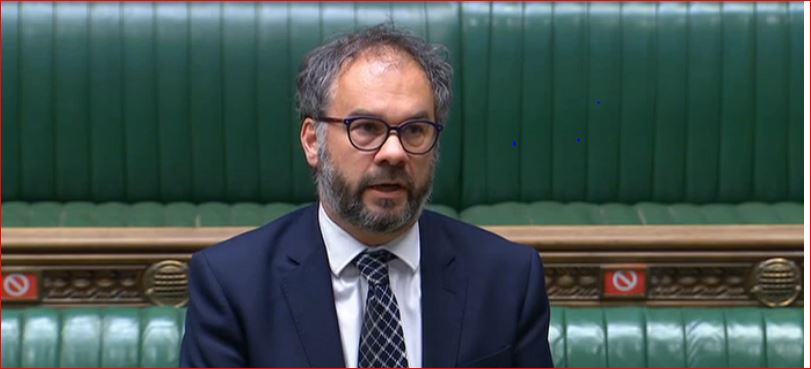
Paul Scully MP, business and postal affairs minister.

Below is a breakdown of costs and compensation as set out to the BEIS committee. Scully’s letter emphasises that some of the figures are the maximum possible cost, rather than the expected amounts. Scully also suggests there may be further costs in the coming year that have not yet been finalised.

The figures cover only the period after 2016 when the Bates group litigation began. The costs before the group litigation, including the Post Office’s Complaint Review and Mediation Scheme, are not included in the figures.

These are the figures from 2016 to 27 January 2022:

Costs

Horizon-related costs made within BEIS budgets and costs. The sums include maximum anticipated legal costs.

-£43m related to the Bates v Post Office High Court hearing which included the Post Office’s legal and professional consultancy fees connected with the litigation and other costs indirectly related to the litigation.

– £69m legal and administrative costs of the Historical Shortfall Scheme. It includes design, set-up and running costs of the scheme and is an estimate upon closure of the scheme once all payments have been made

– £16m current forecast of legal and administrative costs of paying compensation following overturned convictions (about £6m has been paid in such compensation to date).  

– £30m of “other Post Office costs” up to the end of 2021. This comprises legal fees relating to legal obligations, response and support activities in relation to postmasters who wish to appeal their Horizon-related convictions. It includes costs associated with identifying and contacting potential future appellants, discovery and disclosure of more than 4.5 million documents and preparation and representation at hearings before the Court.

– £19m of “other legal, project management, governance, operational reviews, improvement implementation and contracts, regarding Horizon-related issues and requirements, to the end of FY2021/22”.

Total £177m

*Additional cost estimates for the rest of 2021/22 and 2022/23 are not yet finalised. Scully says these figures will be provided in a future update to the BEIS Select Committee on Horizon-related costs.

Compensation

– £57.75m settlement of the 2016-2019 Bates v Post Office High Court case, of which about £46m went in Bates’ costs, leaving the “successful” litigants with £11m, an average of £20,000 each. Many lost hundreds of thousands of pounds in the scandal, including Lee Castleton who lost £348, 000 and went bankrupt.  

– £153m for the Historical Shortfall Scheme (likely estimated overall amount). There are 2,361 eligible claimants, about 900 of whom have received offers to date. How many have refused offers is unclear but the Post Office says the “vast majority” of the 900 have accepted an offer and have been paid.  

– £780m is the maximum potential spend on compensating those whose convictions have been overturned. It covers an interim payment of up to £100,000, which is paid within 28 days of an overturned Horizon-related conviction, and the final settlement. Actual costs will be determined by the total number of overturned convictions and the individual settlements reached. The £780m estimate comprises £94.4m for interim payments and £685.6m for final settlements.

Total: £990.75m

Government costs to date of the Horizon IT public inquiry

– £1.6m costs of running the inquiry in the years 2020/21 and 2021/22. The inquiry is not expected to finish until the summer of 2023 or possibly later.  

Comment

In the current era of Covid-related state spending that runs into hundreds of billions, £177m for the legal and related costs (excluding compensation) of dealing with Horizon IT scandal seems a small amount – until it is set against the paltry total of £11m paid to the Bates 555 group.

The business minister Scully and the prime minister Johnson express much sympathy for the ordeals suffered by the Bates 555. But ministerial sympathy costs nothing; it doesn’t return the 555 to the financial position they would be in now had the state not tried to ruin many of them.  

Nearly 120 MPs have signed an Early Day Motion calling for the Bates 555 litigants to “receive compensation that is commensurate with the suffering they have faced” and strongly urges the Government to “put in place an external compensation scheme that is outside the scope of the Post Office and provide this group with the redress they not only deserve but are entitled”.

In addition, the BEIS select committee has produced an excellent report this month that demands fair compensation for the Bates group.

But perhaps if Bates had access to the Post Office’s pot of money for lawyers, his campaign for fair compensation would not have to rely on a Parliamentary campaign for justice, a complaint to the Parliamentary Ombudsman and pressure on the government through media coverage.

Since the early 2000s, Bates’ campaign for justice has been a David and Goliath affair. Without access to the seemingly unlimited funds the Post Office enjoys, it still is.     

**

The British people are waking up to a scandal that happened under their noses – Computer Weekly

33 former staff died before getting justice in Post Office IT scandal – Daily Mail’s front page – 14 Feb 2022

The Great Post Office Scandal – by Nick Wallis

43 years of state IT disasters – and they’re still happening– Part 1

43 years of state IT disasters – and they’re still happening Part 2

43 years of IT disasters – and they’re still happening – Part 3
False confessions in Post Office IT scandal to be investigated, says Sunday Mirror

By Tony Collins

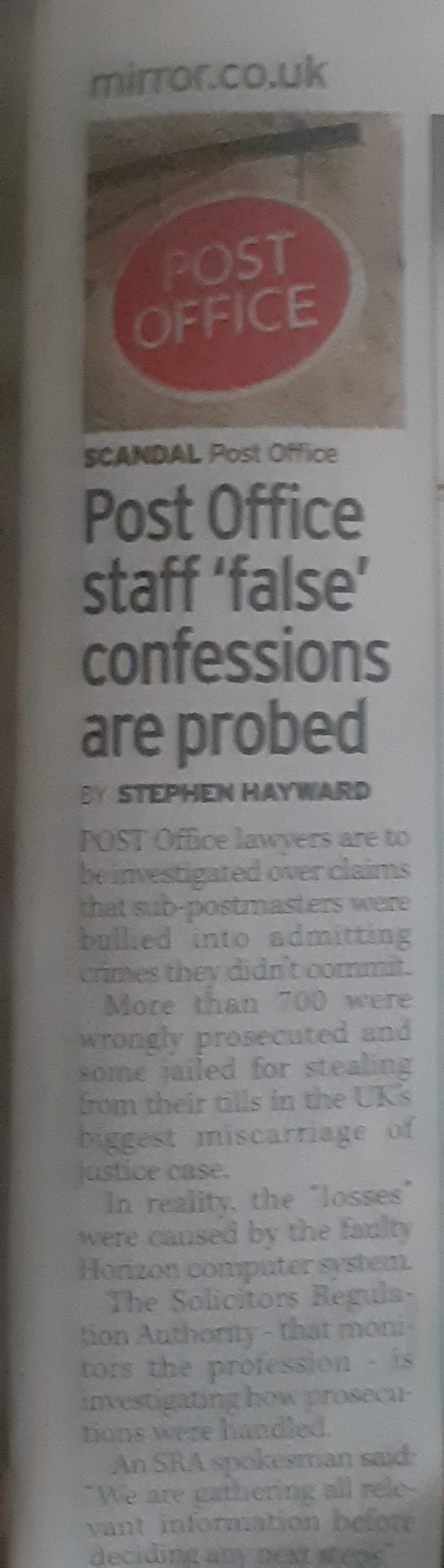
Post Office lawyers are to be investigated over claims that sub-postmasters were bullied into admitting crimes they didn’t commit, said the Sunday Mirror yesterday.

The Sunday Times also has a story yesterday under the headline “Post Office lawyers in Horizon scandal to be investigated”. It said the Solicitors Regulation Authority is investigating the part played by Post Office lawyers in Horizon-related convictions that have been overturned.

About 700 post office workers were wrongly prosecuted and some were jailed for theft, false accounting or fraud on the basis of “losses” shown on the Post Office’s Horizon system. In reality, the Post Office’s Horizon accounting system caused numerous unexplained shortfalls for which sub-postmasters and sub-postmistresses were blamed. The Post Office and Horizon’s supplier Fujitsu hid the system’s faults from the criminal courts and civil court judges.

The Solicitors Regulation Authority [SRA] has applied to the High Court for an order under 44B of the Solicitors Act 1974, which can be used to require the provision of documents where the SRA is satisfied it is necessary to do so for the purpose of investigating whether there has been professional misconduct by a solicitor or whether there has been a failure to comply with any legal or regulatory obligations.

The SRA will normally only exercise this power as part of an investigation and where the solicitor has declined to offer up the requested documents voluntarily. But the Post Office said the wording of the  disclosure notice has been agreed with the SRA. It told the Law Society Gazette that it is “fully complying with the notice and will be providing relevant documents within the timeframe requested”. The Post Office said, “The disclosure notice does not relate to individuals that are involved with the Post Office today.”

It’s unclear whether the Solicitors Regulation Authority is committed to a full investigation of the possible misconduct of particular lawyers or whether it merely gathering documents. The Authority told the Sunday Mirror,

“We are gathering all relevant information before deciding any next steps.”

The SRA has been reluctant in the past to investigate lawyers involved in the Post Office Horizon scandal. Barrister Jacob Meagher is among critics of the SRA’s lack of action.  There are, however, a growing number of detailed complaints about lawyers involved in the scandal, which may make it difficult for the SRA to refuse a full investigation.

Among those who have written to the SRA is Aria Grace Law which represented Tracy Felstead, Janet Skinner and Seema Misra in their successful appeals against Horizon-related convictions. Aria Grace Law’s letter to the SRA’s Chief Executive Officer in May 2021 said,

“There is no doubt from the judgment of the Court of Appeal dated 23rd April 2021 that from 2013, the Post Office pursued a policy of denial that it knew of any substantial weakness or defect in the Horizon IT system. That was false. That strategy can only have been devised by the Post Office by and with reference to legal advice and by the Post Office board upon such advice. Doing so has been found by the Court of Appeal to have subverted the criminal justice system and to have undermined public confidence in it. My clients would like a personal assurance from you that the organisation of which you are CEO will be fully and effectively investigating this matter without any delay. On their behalf, I look forward to that confirmation.”

Sub-postmasters and sub-postmistresses told the Horizon public inquiry last week that they were offered deals by Post Office prosecutors: if the accused agreed to plead guilty to false accounting and not mention Horizon, the Post Office would drop the more serious theft charge.

Among those who accepted the plea bargain was Jo Hamilton who was planning to plead not guilty to theft. Hamilton told the inquiry: “… The Post Office offered a plea bargain, ‘If you plead guilty to 14 counts of false accounting, don’t mention Horizon on sentencing and repay all the money [£36,000], we’ll drop the theft’.”

Jo Hamilton giving evidence to Horizon inquiry 14 February 2022

Hamilton agreed and was spared prison but given a supervision order and had a criminal record from 2008 until her conviction was quashed last year. She told the inquiry,

“It just is a horrible thing to be accused of dishonesty when you’re not dishonest.”

She had to re-mortgage and have a collection in the local community to “repay” £36,000 demanded by the Post Office because of Horizon-based shortfalls in her accounts. Her parents had strokes within three months of each other.  

Noel Thomas

Former sub-postmaster Noel Thomas accepted a Post Office plea bargain in which he agreed not to mention Horizon but he still went to prison. He had worked for the Post Office for 42 years. He told the Horizon inquiry that about 10 minutes before he went into court charged with theft his barrister approached him and said, ‘They’re offering you a bargain …They’re going to drop the theft as long as you take the charge of false accounting and also that you don’t mention Horizon’.  And I said, “Well, what does that mean? Will it keep me out of jail?” and he said, ‘Well, hopefully’.   I did sign a piece of paper with my barrister to say that I wouldn’t mention Horizon …” But still Thomas received a nine-month prison sentence.  His conviction was quashed last year.

In 2021, the Court of Appeal criticised the actions of some Post Office prosecutors and found that many of the accused were denied a fair trial. Even though the Post Office suspected the IT system was faulty, it continued to hound sub-postmasters through the courts.

In Hamilton’s case she discovered from a report by forensic accountants Second Sight that Post Office investigators had known that there was no evidence she had stolen anything or deliberately-inflated cash figures. Despite knowing this, the Post Office charged her with theft – until they dropped the charge as part of a plea bargain.

When Hamilton discovered the existence of the document containing the investigator’s comments, she asked the Post Office for a copy of his report, without success. Hamilton told the inquiry that when the report was not forthcoming, she emailed the Post Office saying she would get a copy of it from Second Sight. Hamilton told the inquiry

“… then they [the Post Office] wrote back to me and said, ‘You will never have that document. It’s a legally privileged document’ and they don’t know why Second Sight quoted it in their report.”

 But Hamilton eventually saw the document at the Court of Appeal hearings last year. At the Horizon inquiry last week she was asked whether it said exactly what Second Sight had reported it as saying.

“Yes, exactly,” said Hamilton. “There was that paragraph ‘having examined all the Horizon records, I can find no evidence of theft or deliberate cash inflated figures’.  But it was that piece that just made me so angry … why did they do that?”

The SRA has powers to give a written rebuke, impose a fine, publish details of the case, or disqualify the lawyer in question from acting as a head of legal practice or head of finance and administration or being a manager or employee. It can also refer a case to the Solicitors Disciplinary Tribunal which can strike off or suspend a lawyer for a specified period or indefinitely. The Tribunal can also impose unlimited fines.

Any further reluctance of the SRA to act decisively in the widest miscarriage of justice in British legal history may raise questions about whether it is unwilling to act against a major public corporation and its representatives. The Post Office is 100%-owned by government.

**

The British people are waking up to a scandal that happened under their noses – Computer Weekly

33 former staff died before getting justice in Post Office IT scandal – Daily Mail’s front page – 14 Feb 2022

The Great Post Office Scandal – by Nick Wallis

43 years of state IT disasters – and they’re still happening– Part 1

43 years of state IT disasters – and they’re still happening Part 2

43 years of IT disasters – and they’re still happening – Part 3
MPs demand fair compensation for Bates 555 in Post Office IT scandal – but what now?

By Tony Collins

A cross-party committee of MPs has called on the government to commit urgently to “ensuring that the 555 are fully compensated for all of their losses on the same basis as other victims of this scandal receiving compensation”.

The committee’s statement refers to the 555 members of the Justice For Sub-postmasters Alliance who defeated the Post Office in the High Court in 2019 by proving that its Horizon system was faulty and caused shortfalls for which sub-postmasters were wrongly blamed.

Today’s report of the Business, Energy and Industrial Strategy Committee asks the government to consider paying the 555’s legal fees, which were about £46m. It says the payment ought to be an interim amount pending determination of full compensation.

If the government agrees to pay the £46m it would mean average individual payments to the 555 of about £83,000.

To date, the Post Office has paid the 555 an average of only 20,000 each after costs. Typically, the 555 lost hundreds of thousands of pounds each.

The Post Office wrongly prosecuted more than 700 sub-postmasters and sub-postmistresses for fraud, false accounting or fraud on the basis of untrustworthy Horizon data. To date, only 72 convictions have been overturned. Most victims of the scandal are not seeking to have their convictions overturned. Some are known to want nothing more to do with the Post Office.

Today’s committee report is the first independent Parliamentary appraisal of the Post Office and ministerial actions since the end of the High Court action in December 2019. Much of the report will make uncomfortable reading for business ministers and senior civil servants.

It says,

“We are deeply disappointed that the 555 group action litigants, who took the Post Office Ltd. (POL) to court and who exposed the Horizon scandal, should be worse off than other victims of Horizon who would otherwise not be in a position to make claims.
“It is a perverse situation that the prolonged legal proceedings and the resulting delay to POL’s decision to settle have reduced the compensation the 555 were entitled to. Both the Post Office Ltd. and the Minister accept that this is unjust. We agree with the POL CEO, Nick Read, that it will be impossible for the POL to move forward until this issue is fully addressed. Our view is that the responsibility for addressing this injustice lies with the Government. Consideration should be given to recompense the legal fees of the 555 as an initial payment whilst full determination is considered.
“We demand that the Government as a matter of urgency commit to ensuring that the 555 are fully compensated for all of their losses on the same basis as other victims of this scandal receiving compensation.”

Some bullet points from the report:

  • There’s an “unacceptable irony” that the Bates 555 group has made possible a “Historical Shortfall Scheme” for thousands of victims of the scandal but the group is itself denied access to fair compensation through the scheme.
  • There’s a need for an independent intermediary body as a trusted first point of contact for those wrongly convicted because of Horizon, in particular for the 576 convicted sub-postmasters who have not yet come forward.
  • The Committee wants monthly updates on the number of interim payments made for those whose convictions have been overturned, including the number of final payments made, and the range of amounts paid out to reach full, fair and final settlements. The report says this is needed “because of the nature of the Horizon scandal, transparency on these issues is crucial to restoring trust.”
  • There’s a need for far more information on why some sub-postmasters whose convictions have been overturned are being denied interim compensation payments. The Committee will need convincing that the scheme has genuinely independent oversight.
  • The Committee is “concerned that a firm involved with the discredited HBOS Reading scandal is involved with the Historical Shortfall Scheme, and that the Post Office Ltd. (POL) CEO was unaware of the issues surrounding the HBOS compensation scheme. Though Herbert Smith Freehills may have experience in establishing such schemes we are not reassured by the Minister or the POL CEO’s arguments that the issues associated with the HBOS scheme do not necessarily question their role in the Historical Shortfall Scheme. In responding to this report, we expect the Government to explain how the Historic Shortfall Scheme differs from the HBOS Reading scheme and what safeguards have been built in to avoid the problems that the latter scheme experienced.”
  • There is much criticism in the Committee’s report of the Historical Shortfall compensation Scheme, which has received claims for compensation from more than 2,500 sub-postmasters and sub-postmistresses. The Committee questions the scheme’s independence and is concerned that the Post Office is involved in making initial recommendations regarding claims. It says that, given that the Post Office bears a major part of the responsibility for the Horizon scandal, “it seems perverse that POL is making initial recommendations regarding claims”. The Committee adds, “It is worth remembering that a key criticism made of POL at the height of the scandal was that effectively it acted as judge, jury and executioner when deciding on convictions of sub-postmasters.”
  • The slowness in paying compensation claims means more claimants will die awaiting their cash, given their age profiles. “We are disappointed that so few claims have been processed by the Historic Shortfall Scheme considering it was closed over a year ago. The conclusion of only 30% of claims does not represent significant progress.”
  • The Committee is concerned about the low amounts of compensation, the difficulties in making claims, the lack of support and expert advice available and onus being on the claimant to prove losses when the Post Office may not have the relevant paperwork.
  • The Committee wants details of claims refused where there was paperwork missing.
  • Given that the Post Office has profited from taking money from sub-postmasters on the basis of Horizon data, there needs to be a “significant level of benefit of doubt when compensation is calculated”.
  • The Committee calls for more transparency over the costs of compensation schemes. The Committee noted that it hadn’t been told about a £685.6m direct grant to the Post Office over Post Office historical matters.

Comment – What happens now?

Ministers are free to accept or reject any of the Committee’s recommendations. They must, however, publish a formal response, usually within two months.

There is no doubt that the Committee’s report will add to pressure on government and the Treasury to pay at least the Bates 555 group’s £46m legal costs.

The traditional government reply to awkward reports of Parliamentary committees is to fudge, which can mean seeming to accept recommendations without actually acting on them. But the Parliamentary momentum for the Bates 555 to be properly and fairly compensated may now be too great for ministers to continue with the present undeclared strategy of promising much, talking regularly to the 555 and delaying actual government-funded compensation payments indefinitely.

Postal Affairs minister Paul Scully

That said, there is little appetite in Whitehall to pay the 555 any government money, especially as the group’s expose of the scandal has made the Post Office technically insolvent and created a huge amount of extra work for the civil service. There is also the technical problem of proving to the Treasury that compensating the 555 is value for money. This is where ministers come in. With the help of Downing Street and the Treasury, the Postal Affairs minister Paul Scully could make things happen. But to date he has been has been weak and vacillating.

The hope now is that’s BEIS’s commendable report will help create an unstoppable Parliamentary force for the right thing to be done. There is nothing in the report that any right-thinking person could denigrate or dismiss. The report is a landmark in the post-litigation era of the Post Office IT scandal.

**

MPs demand urgent compensation for Post Office scandal victim group – Computer Weekly

Post Office received £1bn taxpayer subsidy last year as part of IT scandal compensation – Karl Flinders, Computer Weekly

The Great Post Office Scandal

43 years of state IT-based project disasters and they’re still happening – Part 3 – Campaign4Change

43 years of state IT project disasters – and they’re still happening. Part 3

Among the systemic reasons for around £40bn of IT-related failures may be truth decay, excessive secrecy, no consequences for getting it wrong and the misleading of Parliament – a decades-old “conceal-and-deny” approach.

A public inquiry into the Post Office IT scandal, chaired by a much-respected judge Sir Wyn Williams, is looking at the Horizon system as supplied by Fujitsu. But what of the Whitehall culture that made a cover-up of Horizon’s faults possible, a culture that makes central government, with some impressive exceptions, a dysfunctional buyer of large-scale IT systems?

By Tony Collins

Part 3 – The Whitehall Bubble

Libra and ICL [Fujitsu]  

The Libra project to computerise magistrates’ courts got off to a bad start when ICL [later rebranded Fujitsu] was the only bidder. Its bid price of £146m increased to £184m by the time the contract was signed seven months later. In the following year, 1999, ICL [which was by then starting to roll out its Horizon system to thousands of post offices], sought to renegotiate the Libra contract because its cash flow forecasts showed a £39m deficit over the life of the deal.

ICL said that it would be unable to continue with Libra if this gap in its finances could not be closed. It wanted the negotiations to be concluded by 21 March 2000 as it would otherwise have had to declare a loss in its 1999–2000 accounts. It needed to make a decision on whether to walk away by that date.

Whitehall officials and ICL agreed a revised contract for £319m over 14.5 years which included more PCs and printers. But ICL brought in a new management team that re-evaluated the plan and found it was not deliverable. ICL told the Department – a predecessor of the Ministry of Justice – that its forecast losses were now so high that it could not continue with the project unless the contract was substantially renegotiated.

This was the second time ICL wanted the contract renegotiated.

The supplier was in breach of the contract for failing to meet the delivery date for core software at the first courts site. But officials decided to negotiate with ICL rather than terminate the contract and sue for damages. Suing ICL appears never to have been a serious option given that civil service decision-makers had not been on hand when needed and there had been a lack of clarity at the start of the contract about exactly what the magistrates’ courts wanted. Suing was also not possible because Whitehall considered the systems too important to allow ICL to default.

In any case, Whitehall’s leaders would not let senior civil servants go into a witness box in an open courtroom where they might reveal how dysfunctional Whitehall departments could be, especially in the commissioning of large-scale IT-based systems.

One common result of the state’s dysfunctional IT buying big problem was that suppliers and buyers usually discovered only after contracts were signed that the project as configured was doomed.         

Walk away?

ICL told officials that its maximum potential loss on the project was £200m and that it would repudiate the contract unless the Department negotiated to cover the loss.

At one point, senior managers from ICL made it clear to project officials that deadlines were being dictated by their parent company, Fujitsu, in Japan.

Next, the Department and ICL signed a legally binding Memorandum of Understanding, which placed Whitehall officials in a less favourable position than they would have been if they had simply continued with the existing contractual arrangements and relied on existing contractual rights.

In the end, the Department signed a revised contract with ICL (by then known as Fujitsu Services) for £232m over 8.5 years to supply mainly PCs, printers and networks – but not the much more tricky software to handle magistrates’ cases. The software had been the main reason for buying the system.

Whitehall officials had to buy the case-handling software separately. This meant the total costs of Libra soared to £390m, up from the initial bid price of £146m. The Public Accounts Committee branded Libra as “one of the worst IT projects ever seen”.

That ICL had threatened to walk away from the contract and had twice sought to renegotiate it were state secrets until the National Audit Office produced an impressively-detailed report in 2003.

But the National Audit Office’s investigation came about because MPs on the House of Commons’ Public Accounts Committee persuaded the NAO to investigate. Had Computer Weekly not been publishing articles on Libra there might never have been an NAO report on the project.  

There are indeed no checks and balances within the Whitehall system to ensure that all major IT-related project failures are independently investigated or that Parliament is given a truthful picture when big programmes begin to fail.

Misleading Parliament by omission – the norm on major failing state IT-based projects

Parliament was given the impression all was well with Libra when the scheme was, in fact, at its lowest point. Parliamentary replies to MPs’ questions misled not by lies but by omitting inconvenient truths.

John Berkow

In November 2021, Conservative MP John Berkow, then in opposition, asked the Lord Chancellor’s Department for that year’s costs of Libra.

The government minister’s reply gave not a hint that ICL (then wholly owned by Fujitsu) was in breach of contract, threatening to repudiate the contract because of potential losses of £200m and the total estimated costs at that time had soared from the initial £146m to £319m. This was the reply ….

“The estimated costs of the Libra project in 2001–02 amount to £26.5 million. This is made up of internal costs, payments to ICL for the rollout of the first phase of the project and payments by the Magistrates Courts Service for the ongoing usage of Libra.”

That was the end of his reply. And not a hint that, at that time, new case-handling software for the courts had been delayed indefinitely.

Separately the Lord Chancellor and Chief Secretary to the Treasury published a combined report in 2001 that included Libra as one of their “achievements” of the past year.

Inconvenient truths were nowhere in sight. The report made no mention of Libra delays, major cost overruns or the supplier’s breach of contract and uncertainty over whether case management software would ever be rolled out successfully.

Instead, the report contained a foreword by then Lord Chancellor which used the future tense when referring to Libra. [It’s commonplace when things go wrong on major IT-related projects that Whitehall reports on what will be achieved, which avoids explaining the failures to date – a variation on the “conceal-and-deny” theme.]

The Whitehall report on Libra said,

“The Libra project will provide computer systems and equipment to around 500 magistrates’ courts in England and Wales. It will offer standard office automation throughout the magistrates’ courts and dedicated IT support for key business processes. The major benefits it will bring are:
– linking with other criminal justice organisations to speed the flow of information (joined-up service delivery);
– enabling police and other prosecuting authorities to provide summons information electronically;
– the provision of hearing information and key case information on a secure website for other criminal justice agencies and solicitors to access;
– a nationwide network infrastructure with external e-mail for all staff;
– courtroom computing – providing online access during hearings;
–  a data warehouse for policy evaluation and performance information;
–  potential for the future – the national infrastructure and central database provide the platform for re-examining business process and electronic service delivery.”

Watchdogs with few teeth  

Nick Davies, Programme Director at the Institute for Government, told LBC this month of weaknesses in checks and balances on the award of major state contracts. He said that watchdogs have limited power and not many teeth.  He said,

Nick Davies

“The problem in so many of these cases is that government is effectively marking its own homework.”

He said that if watchdogs find something wrong they have to rely on government “to do the right thing”. But he added that “too often many governments but particularly this one” have shown that they do not think rules apply to them.

He also suggested that open government remains as elusive as ever. He said,

“Generally when it comes to government spending and transparency … this government has taken backward steps.”

He said that fewer freedom of information requests are being answered satisfactorily and government has failed to publish contract awards “months and months into the pandemic when the initial rush was over … when they were actually required to do so”.

Libra and other similarly-flawed government IT-based programmes suggest a structural failure of checks and balances in Whitehall. Although the National Audit Office and the Public Accounts Committee publish reports on some IT-based project failures, departments need pay no attention to any lessons when they come to buy new large-scale IT systems.      

In 2017, the Commons’ Public Administration and Constitutional Affairs Committee said [Lessons still to be learned from Chilcott inquiry] that  

“… our system currently lacks ‘a statutory or a convention-based enforcement system to ensure compliance with proper standards and accepted rules of how government should be conducted’.

The National Audit Office has also expressed concerns about Whitehall’s conflicts of interest in reporting impartially to Parliament in its report “Accountability for Taxpayers’ money”.”  

https://www.nao.org.uk/wp-content/uploads/2016/02/Accountability-for-Taxpayers-money.pdf.

There is indeed nothing to stop governments continuing to commission flawed IT-based projects and giving falsely-reassuring statements to Parliament on their progress.

It means that the state, as a dysfunctional buyer of large-scale IT over decades, remains under no pressure to change.

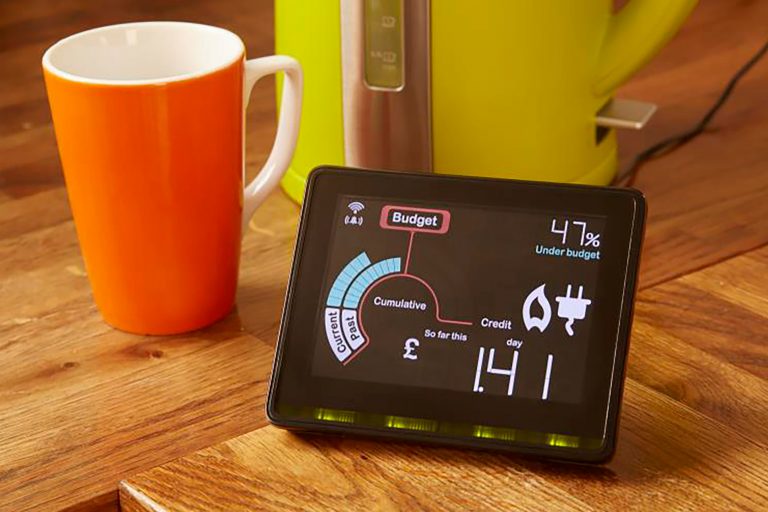
Smart Meters – a failing £11bn programme or another Whitehall “success”?

The Department for Business, Energy and Industrial Strategy continues to issue reassuring statements on the roll-out of smart meters. One of its latest statements, in 2022, is this,

“Smart meter technology is designed to accommodate the evolution of communication services over time, meaning people’s original smart meters can remain connected.”

That may be the intention but is it a reality?

Many experts support the idea of smart meters in principle. But they say costs of the roll-out have soared and the technology – which does not work with 4G or 5G – has obsolescence built in. New “smart” meters work only on 2G or 3G which are to be phased out.  

Nick Hunn, a technology specialist at WiFore Wireless Consulting, last month told the Financial Mail on Sunday,

Many billions more will now have to be spent replacing smart meters.”     

Alex Henney, a former Government adviser on energy said,

“What is being provided is obsolete equipment at a ludicrously high cost. This troubled roll-out of smart meters is nothing but a total waste of taxpayers’ money. 

“The Government does not seem to have given any thought about forcing smart meters on to us without realising they will become obsolete when the mobile signals change.” 

But the Department for Business, Energy and Industrial Strategy, which is in charge of the smart meters roll-out, continues to publish statements that give no hint of any serious problems. The Department says on the GOV.UK website that the rollout is,

“… modernising the energy system and transforming the consumer experience by replacing traditional meters with smart meters. It is delivering accurate billing, advancing competition in energy provision, enabling faster and easier switching, and improving customer service and information.”

The Department describes the roll-out of smart meters as “successful”. It says the roll-out involves £13bn of private energy sector investment (which is to be recouped from consumers), delivers benefits of £19bn (which are unproven), and supports 15,000 jobs.

Inconvenient truths

The National Audit Office, in a report on smart meters, urged the Department for Business, Energy and Industrial Strategy, to

“make sure the team culture does not become defensive, and resistant to inconvenient truths”.

In 2018, the National Audit Office reported that 70% of the original “SMETS 1” smart meters did not work when householders switched suppliers. It said,

“The facts are that the programme is late, the costs are escalating, and in 2017 the cost of installing smart meters was 50% higher than the Department assumed…

“The full functionality of the system is also dependent on the development of technology that is not yet developed.”

The NAO also said,

“ … it is currently uncertain whether the industry cost savings forecast by the Department will materialise.”

But the Department for BEIS is entitled to reject anything said by the National Audit Office in its value-for-money reports. Indeed, from BEIS’s viewpoint, it may be better support its ministers by continuing to be defensive and resistant to inconvenient truths than being candid about the roll-out’s problems which could lead to political embarrassment.  

It was left to Rachel Reeves MP, then head of the Business, Energy and Industrial Strategy Select Committee, to tell it like it is. She said,

“The smart meter rollout has been beset by problems and delays… yet, from our evidence hearing and the subsequent Ministerial correspondence, the Government’s tendency is to sugar-coat and pretend that everything will turn out alright in the end.”

Her comment about “sugar-coat” could apply to almost every government statement on a major IT-based programme in the past 43 years.

But the absence of any compulsion to tell the truth about the state’s biggest IT-based projects could explain why Whitehall has found it easy to normalise a “conceal-and-deny” approach to its most egregious blunders.    

Part 4 – Pathway and Horizon – to follow

**

Moving witness statements to Post Office Horizon inquiry – transcripts and video:

Day 1 – 14 February 2022

Day 2 – 15 February 2022

33 former staff died before getting justice in Post Office IT scandal – Daily Mail’s front page – 14 Feb 2022

The Great Post Office Scandal – by Nick Wallis

43 years of state IT disasters – and they’re still happening– Part 1

43 years of state IT disasters – Part 2